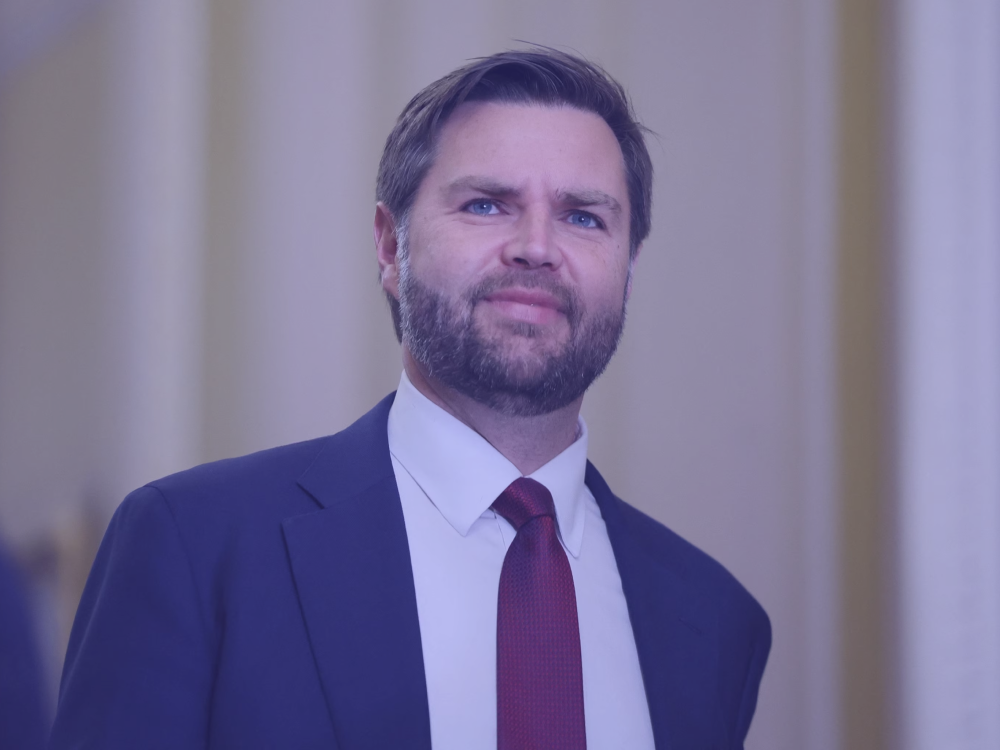
JD Vance grew up in a struggling Ohio town, escaped poverty, and wrote a memoir that made him famous across the world.
Then, having spent years attacking Donald Trump, he became his most loyal ally — and, in January 2025, Vice President of the United States.
In this episode, we look at the life, the book, and the unlikely journey of one of the most controversial figures in American politics.
Tap a purple word for its meaning. Tap a time to play from there.
[00:00:05] Hello, hello, hello, and welcome to English Learning for Curious Minds, by Leonardo English, the show where you can listen to fascinating stories and learn weird and wonderful things about the world at the same time as improving your English.
[00:00:21] I'm Alastair Budge, and today we are going to be talking about the American vice president, JD Vance.
[00:00:30] Love him or loathe him, he is important, and by the time you listen to this episode, perhaps he will be even more so.
[00:00:39] So today we will take a look at his life, where he came from, how he says this shaped his political views, and his journey so far almost to the top of American politics. OK then, let's not waste a minute and get right into it.
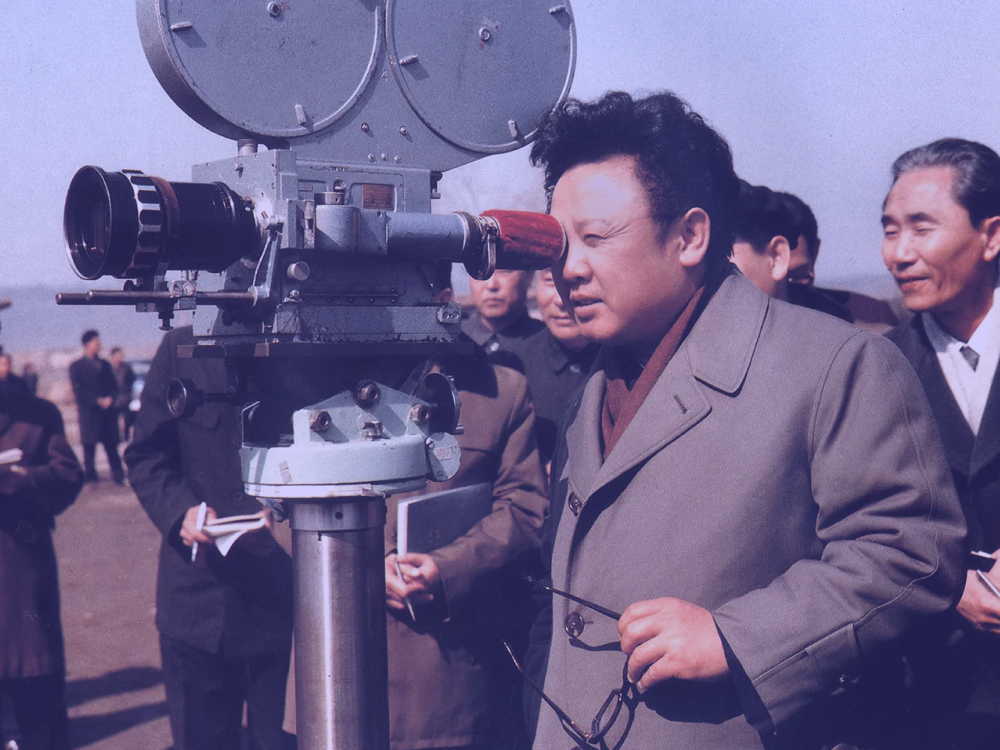
[00:01:00] In 1937, George Orwell published The Road to Wigan Pier.
[00:01:07] In it, he describes the harsh day-to-day lives of the working class in the North of England.
[00:01:15] From details about the mechanics of washing clothes right through to the daily struggle to get enough money to feed their families, it shone a light on the bleak reality of life in industrial towns and cities.
[00:01:32] To his middle-class readers sipping their tea and sitting on comfortable armchairs, the book pulled back the curtain on a world they knew existed, but understood effectively nothing about.
[00:01:49] And in the second half of the book, Orwell turned on his own readers.
[00:01:56] He argued that the very people most likely to be reading the book — who were educated, comfortable, and said that they supported better social welfare — these were precisely the people who were standing in the way of change. It wasn’t because they had bad intentions, but because of something more uncomfortable: they found the working class sort of disgusting, their smell, their manners, their way of life. Orwell’s readers might claim to support liberal, even socialist policies, but quietly they were physically repulsed by the lives of the people these policies were meant to help.
[00:02:46] His editor suggested Orwell remove the entire second half altogether. Orwell refused.
[00:02:55] The book became something of a window into a world people said they cared about, that politicians said they represented, but which Orwell contested they had no real understanding of.
[00:03:11] This book, and the idea in the second half of it, well it never really went away.
[00:03:18] Every generation or so, when something happens that makes the comfortable classes realise they understood their country far less than they thought, someone picks it up again.
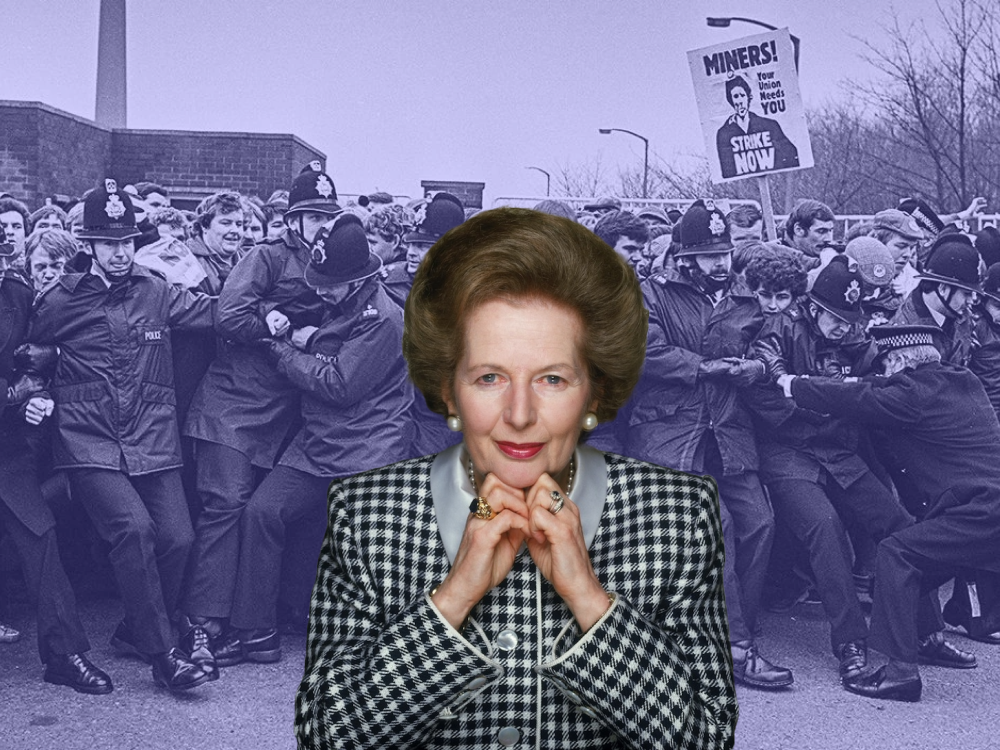
[00:03:31] It happened after Margaret Thatcher. It happened after Brexit.
[00:03:36] Each time, it serves as a reminder that there are whole worlds within a society that most people simply do not see or understand, especially those in positions of political power.
[00:03:51] Almost exactly eighty years after the publication of The Road to Wigan Pier, in 2016, on the other side of the Atlantic, another book was published.
[00:04:05] It was called Hillbilly Elegy, and was the memoir of a then 31-year-old investment professional called JD Vance.
[00:04:17] Now, JD Vance is no Orwell but he does tell quite a good story.
[00:04:23] And the story was his own: a chaotic childhood, a mother with drug problems, his struggle to break out of a system that seemed to drag so many others down.
[00:04:37] It was also a political commentary on a part of America that he said had been left behind: the Rust Belt, which is the stretch of the northeastern and midwestern United States that was once the industrial heartland, but has been in serious decline.
[00:04:57] States like Ohio, Pennsylvania, Michigan, and Indiana.
[00:05:03] It was also an attempt to explain what had happened to communities like the one he came from. Why had they struggled so much? Why was violence so endemic? Why had they been particularly devastated by the opioid crisis? Why did so many young men end up in prison or without jobs?
[00:05:27] This book was published in June 2016, and, as you may remember, this was just as a rather unusual presidential election was reaching its most intense phase.
[00:05:42] A year beforehand, Donald Trump had announced his candidacy for the presidency, and he had been winning support in precisely the kind of communities Vance wrote about.
[00:05:55] Trump claimed to understand these communities, but he made no claim to be like them; his entire brand was about wealth and power, New York penthouses and golden chandeliers.
[00:06:11] Suddenly, journalists and television producers needed someone to explain these communities to the rest of America. JD Vance, with his unusual combination of Yale degree and Rust Belt background, well, he was perfectly placed to do exactly that.
[00:06:32] Almost overnight, JD Vance became a national figure — someone whose voice was sought out whenever people wanted to understand what was happening in those forgotten corners of America.
[00:06:46] The publicity turbocharged his book, and it became a massive bestseller. It spent well over a year on the New York Times bestseller list. It was translated into dozens of languages. And in 2020, it would get its own film version, directed by Ron Howard.
[00:07:08] And then on the 15th of July, 2024, as part of his campaign for re-election, Donald Trump would announce that his running mate and candidate for Vice President would be none other than the then 39-year-old JD Vance.
[00:07:26] But to understand why Trump chose him, and why the choice made sense to so many Americans, we need to understand where he started.
[00:07:38] His name at birth, in August 1984, was James Donald Bowman, and he was born and raised in Middletown, Ohio.
[00:07:50] His family background was complicated from the very beginning.
[00:07:54] His parents divorced when he was still a toddler. His father all but disappeared from his life. His mother struggled deeply with drug addiction, both heroin and prescription opioids.
[00:08:08] And his early life was unstable, often unhappy, and at times, frightening.
[00:08:16] He writes about this very openly in Hillbilly Elegy. He described living through multiple stepfathers, the constant instability, and real fear, sometimes even for his life. There’s a particularly memorable scene in the book where his mother is driving with him in the backseat and she threatens to kill them both by crashing the car.
[00:08:43] But amid all of this chaos, there were two people who provided some stability: his grandparents, Mamaw and Papaw.
[00:08:53] Mamaw, in particular, is a figure who appears again and again in everything Vance has written or said about his childhood.
[00:09:02] She was tough, fiercely loyal, deeply religious in her own way, and utterly determined that her grandson would not be swallowed up by the circumstances around him.
[00:09:16] She made sure he had what he needed to go to school. She gave him a place to live when his home life became unbearable. She pushed him to do things that he wouldn't have done on his own.
[00:09:30] And by the time Vance was around fifteen or sixteen years old, he had moved out of his mother's home permanently and was living with his grandmother.
[00:09:41] He graduated from high school in 2003, and rather than going straight to university or trying to get a job, he enlisted in the military as what’s called a “combat correspondent”, essentially a military journalist, someone who follows the troops, takes pictures, and writes articles.
[00:10:03] He served for four years, including a tour in Iraq.
[00:10:09] As he would describe in his memoir, the military gave him something that his childhood had not: structure, discipline, and a sense of belonging.
[00:10:21] When he left the military in 2007, he used a government scheme called the GI Bill to study at Ohio State University.
[00:10:31] At school, his grades had been fine, but nothing special.
[00:10:37] At college, or at university as we’d say in the UK, something clearly changed. He graduated in 2009 with the highest honours, with a degree in political science and philosophy.
[00:10:53] Now, Ohio State is a well-rated public university, but his next step would be into a world as foreign to him as the world of the Lancashire miners was to a doctor from Bristol: he was accepted into Yale Law School.
[00:11:12] Yale Law School is not just any university. It's one of the most prestigious universities in the United States, a place where Supreme Court justices, senators, and presidents have passed through.
[00:11:27] For a kid from small-town Ohio, whose mother had battled addiction and whose childhood had been defined by instability, getting into Yale was, to put it simply, extraordinary.
[00:11:41] And Vance said that when he first arrived, he felt completely out of place.
[00:11:47] He was surrounded by people who had gone to elite private schools, whose parents were surgeons and lawyers and politicians. He did not know the unwritten rules. He did not know which fork to use at a formal dinner. He did not speak the language of the professional class in the way his classmates seemed to do effortlessly.
[00:12:11] But he was smart, he worked hard, and he had something his classmates often lacked: a story. A real, raw, lived experience of a part of America that most of his professors and fellow students had never seen.
[00:12:29] At Yale, he met two women who would change his life.
[00:12:35] The first was a fellow student, and the woman who would become his wife, Usha.
[00:12:41] She was the daughter of Indian immigrants and was herself a highly accomplished lawyer.
[00:12:48] The second was a professor named Amy Chua, whose name you might recognise from her book about being a Tiger Mum, and how children benefit from being pushed to study, play musical instruments, and so on.
[00:13:04] Chua had published her book, Battle Hymn of the Tiger Mother, in 2011. It quickly became a bestseller, and had brought the already successful Chua countless opportunities.
[00:13:20] She knew Vance’s backstory, and encouraged him to write about his life.
[00:13:27] He did. And the result was Hillbilly Elegy, a book that opened doors Vance didn’t even know existed.
[00:13:37] Now, after graduating from Yale, he spent a few years in the legal world, first working for a district judge, and then at a corporate law firm.
[00:13:49] But being a lawyer, he soon discovered, wasn’t for him.
[00:13:54] He moved to California and started working in venture capital, investing in technology startups. He eventually ended up working for a firm backed by Peter Thiel, the billionaire tech investor, who became something of a mentor to Vance.
[00:14:13] Now, Thiel is a fascinating and controversial figure.
[00:14:18] He was one of the founders of PayPal, an early investor in Facebook, and has accumulated enormous wealth and political influence. He is also someone who has been quite open about his desire to reshape American politics in a more nationalist, anti-establishment direction.
[00:14:41] When Vance launched his political career, Thiel provided much of the financial backing. Vance was working for Thiel when he published his bestselling memoir.
[00:14:53] For Vance's critics, this raises an obvious question. Here is a man who presents himself as the champion of forgotten, working-class Americans, and yet his political career and success were largely bankrolled by one of the wealthiest and most powerful figures in Silicon Valley.
[00:15:15] The very world, in other words, that Vance himself has described as a self-serving elite.
[00:15:23] Whether that is a damning contradiction or simply the reality of how American politics is funded, well, that’s something you can make up your own mind about.
[00:15:34] Now, to understand how the political career began, we need to go back briefly to the book, and what happened in its aftermath. We've already talked about the book's extraordinary timing and its immediate impact, in terms of Vance being called upon as the authoritative source on understanding the working class America.
[00:15:58] But there is something else worth understanding about what happened to Vance in the years that followed its publication.
[00:16:06] For a time, he occupied a curious position.
[00:16:12] He was famous for understanding Trump voters. He was the man editors and television producers called when they needed someone to explain them: to give them a human face, to make them understandable to a coastal, affluent audience.
[00:16:29] But privately, JD Vance found Trump reprehensible.
[00:16:36] In messages that later became public, he called Trump a morally reprehensible human being, and said he went back and forth between thinking, and I’m quoting directly: “Trump is a cynical a--hole like Nixon who wouldn't be that bad [and might even prove useful] or that he's America's Hitler.”
[00:16:59] He did not vote for Trump in 2016, and was a public “Never Trumper”.
[00:17:06] But sometime during Trump’s first term, he changed his tune.
[00:17:14] When Vance announced in 2021 that he was running for a seat in the United States Senate, representing Ohio, he ran as a strong Trump supporter.
[00:17:26] He publicly apologised for his earlier criticisms, deleted social media posts in which he had attacked Trump, and asked for Trump's endorsement.
[00:17:38] Trump gave it. And with that endorsement, Vance won the Republican primary in Ohio and then the Senate seat itself in November 2022.
[00:17:51] His critics say this transformation tells you everything you need to know about his character, that he is a deeply opportunistic politician who will say whatever is necessary to advance his career.
[00:18:06] His supporters say that people are allowed to change their minds, that Vance genuinely came to believe that Trump's instincts about the working class were correct, and that the transformation represents an honest evolution of his thinking.
[00:18:23] I’ll leave that without comment, but what is certainly true is that without Trump's endorsement, Vance would almost certainly not have won the primary.
[00:18:34] The working-class champion needed the billionaire's blessing to get through the door.
[00:18:40] And as a senator, Vance quickly established himself as one of the most prominent voices of what is sometimes called America First conservatism, or national conservatism.
[00:18:54] So, what does that mean in practice?
[00:18:57] Well, the overarching theme is, as the term suggests, to put American interests first, both at home and abroad.
[00:19:08] On foreign policy, Vance has been consistent in arguing that the United States spends too much money and political energy on foreign conflicts — particularly in Europe and the Middle East — when it should be focusing on problems at home.
[00:19:25] He has been one of the most prominent sceptics of American aid to Ukraine, and has argued that Europe needs to take far greater responsibility for its own defence rather than relying on American support.
[00:19:40] On the economy, he positions himself as someone who speaks on behalf of ordinary working people against what he sees as a self-serving elite class of politicians, journalists, and business leaders. He has been more willing than many traditional conservatives to support measures that protect American manufacturing, even when those conflict with the free trade principles his party has historically championed.
[00:20:10] On social issues, he is very conservative. He is anti-abortion, and has spoken extensively about the importance of what he calls family formation, and the danger of falling birth rates in America. Essentially he is all about encouraging people to get married and have children.
[00:20:31] On immigration, he has taken a very strict position, supporting tight restrictions on both legal and illegal immigration.
[00:20:41] And on matters of culture and free expression, he has been increasingly critical of what he sees as the suppression of conservative voices, both in the United States and in Europe.
[00:20:56] You might remember his speech at the Munich Security Conference in 2025, where rather than reassuring European allies, he spent his time warning them that the real threat to their continent came not from Russia or China, but from their own leaders.
[00:21:16] Now, we’re not going to make this episode too much about the politics of JD Vance, and what he has and hasn’t done since becoming Vice President.
[00:21:27] That’s something of an impossible task, and no doubt by the time you listen to this, something new and unpredictable will have happened.
[00:21:36] Instead, we are going to look forward, to the future.
[00:21:41] Donald Trump, under the American Constitution, cannot serve more than two terms as President. His second term began in January 2025 and will end in January 2029.
[00:21:56] After that, he cannot run again.
[00:21:59] This means that the 2028 presidential election will be an open contest for the Republican Party. And as of early 2026, JD Vance is widely seen as the most likely Republican candidate. The most recent polls have him with a 45% chance of becoming the Republican nominee, with Donald Trump Jr trailing behind at 17%.
[00:22:29] Clearly, a lot can change and no doubt will change between now and November 2028, but were Vance to be nominated, and were he to win, he would become the President of the United States at the age of just 44, making him one of the youngest presidents in US history.
[00:22:50] So, to bring us back to where we started.
[00:22:54] George Orwell's great question — the one his editor wanted to cut, the one that made The Road to Wigan Pier uncomfortable to its readers — was whether the people who claimed to speak for the working class actually understood them.
[00:23:10] Whether they had earned that right. Whether their sympathy was real, or whether it was something more convenient and more self-serving.
[00:23:21] A similar question can certainly be asked of JD Vance.
[00:23:25] He grew up in Middletown. He knows what a community looks like when the jobs disappear and don't come back.
[00:23:34] But he also went to Yale, worked for Peter Thiel, and is now one of the most powerful people in the world.
[00:23:43] His supporters see that journey, from a chaotic childhood in small-town Ohio to the second-highest office in the land, they see this as proof that the American dream is still real, and exists in a man who will support and champion them in a way that the coastal elites never will.
[00:24:04] His critics see the same journey and ask other questions: was the Trump reversal an honest change of heart, or a calculated political move?
[00:24:16] And can a man whose career was funded by one of Silicon Valley's wealthiest investors really be the champion of forgotten America?
[00:24:26] These are not questions with easy answers.
[00:24:29] And whatever you make of him, the story of JD Vance is still being written.
[00:24:37] OK then. That is it for today's episode on JD Vance — the man from Middletown, Ohio, who might one day be the most powerful person on earth.
[00:24:47] As always, I would love to know what you thought of this episode.
[00:24:51] What do you think about JD Vance? And what do you think his story tells us?
[00:24:56] You can head right into our community forum, which is at community.leonardoenglish.com and get chatting away to other curious minds.
[00:25:04] You've been listening to English Learning for Curious Minds by Leonardo English.
[00:25:09] I'm Alastair Budge, you stay safe, and I'll catch you in the next episode.
Join today and get instant access to 600+ episodes, interactive transcripts, PDF study packs and more.
Become a memberAlready a member? Login
30-day money back guarantee. Cancel anytime.

JD Vance grew up in a struggling Ohio town, escaped poverty, and wrote a memoir that made him famous across the world.
Then, having spent years attacking Donald Trump, he became his most loyal ally — and, in January 2025, Vice President of the United States.
In this episode, we look at the life, the book, and the unlikely journey of one of the most controversial figures in American politics.

[00:00:05] Hello, hello, hello, and welcome to English Learning for Curious Minds, by Leonardo English, the show where you can listen to fascinating stories and learn weird and wonderful things about the world at the same time as improving your English.
[00:00:21] I'm Alastair Budge, and today we are going to be talking about the American vice president, JD Vance.
[00:00:30] Love him or loathe him, he is important, and by the time you listen to this episode, perhaps he will be even more so.
[00:00:39] So today we will take a look at his life, where he came from, how he says this shaped his political views, and his journey so far almost to the top of American politics. OK then, let's not waste a minute and get right into it.
[00:01:00] In 1937, George Orwell published The Road to Wigan Pier.
[00:01:07] In it, he describes the harsh day-to-day lives of the working class in the North of England.
[00:01:15] From details about the mechanics of washing clothes right through to the daily struggle to get enough money to feed their families, it shone a light on the bleak reality of life in industrial towns and cities.
[00:01:32] To his middle-class readers sipping their tea and sitting on comfortable armchairs, the book pulled back the curtain on a world they knew existed, but understood effectively nothing about.
[00:01:49] And in the second half of the book, Orwell turned on his own readers.
[00:01:56] He argued that the very people most likely to be reading the book — who were educated, comfortable, and said that they supported better social welfare — these were precisely the people who were standing in the way of change. It wasn’t because they had bad intentions, but because of something more uncomfortable: they found the working class sort of disgusting, their smell, their manners, their way of life. Orwell’s readers might claim to support liberal, even socialist policies, but quietly they were physically repulsed by the lives of the people these policies were meant to help.
[00:02:46] His editor suggested Orwell remove the entire second half altogether. Orwell refused.
[00:02:55] The book became something of a window into a world people said they cared about, that politicians said they represented, but which Orwell contested they had no real understanding of.
[00:03:11] This book, and the idea in the second half of it, well it never really went away.
[00:03:18] Every generation or so, when something happens that makes the comfortable classes realise they understood their country far less than they thought, someone picks it up again.
[00:03:31] It happened after Margaret Thatcher. It happened after Brexit.
[00:03:36] Each time, it serves as a reminder that there are whole worlds within a society that most people simply do not see or understand, especially those in positions of political power.
[00:03:51] Almost exactly eighty years after the publication of The Road to Wigan Pier, in 2016, on the other side of the Atlantic, another book was published.
[00:04:05] It was called Hillbilly Elegy, and was the memoir of a then 31-year-old investment professional called JD Vance.
[00:04:17] Now, JD Vance is no Orwell but he does tell quite a good story.
[00:04:23] And the story was his own: a chaotic childhood, a mother with drug problems, his struggle to break out of a system that seemed to drag so many others down.
[00:04:37] It was also a political commentary on a part of America that he said had been left behind: the Rust Belt, which is the stretch of the northeastern and midwestern United States that was once the industrial heartland, but has been in serious decline.
[00:04:57] States like Ohio, Pennsylvania, Michigan, and Indiana.
[00:05:03] It was also an attempt to explain what had happened to communities like the one he came from. Why had they struggled so much? Why was violence so endemic? Why had they been particularly devastated by the opioid crisis? Why did so many young men end up in prison or without jobs?
[00:05:27] This book was published in June 2016, and, as you may remember, this was just as a rather unusual presidential election was reaching its most intense phase.
[00:05:42] A year beforehand, Donald Trump had announced his candidacy for the presidency, and he had been winning support in precisely the kind of communities Vance wrote about.
[00:05:55] Trump claimed to understand these communities, but he made no claim to be like them; his entire brand was about wealth and power, New York penthouses and golden chandeliers.
[00:06:11] Suddenly, journalists and television producers needed someone to explain these communities to the rest of America. JD Vance, with his unusual combination of Yale degree and Rust Belt background, well, he was perfectly placed to do exactly that.
[00:06:32] Almost overnight, JD Vance became a national figure — someone whose voice was sought out whenever people wanted to understand what was happening in those forgotten corners of America.
[00:06:46] The publicity turbocharged his book, and it became a massive bestseller. It spent well over a year on the New York Times bestseller list. It was translated into dozens of languages. And in 2020, it would get its own film version, directed by Ron Howard.
[00:07:08] And then on the 15th of July, 2024, as part of his campaign for re-election, Donald Trump would announce that his running mate and candidate for Vice President would be none other than the then 39-year-old JD Vance.
[00:07:26] But to understand why Trump chose him, and why the choice made sense to so many Americans, we need to understand where he started.
[00:07:38] His name at birth, in August 1984, was James Donald Bowman, and he was born and raised in Middletown, Ohio.
[00:07:50] His family background was complicated from the very beginning.
[00:07:54] His parents divorced when he was still a toddler. His father all but disappeared from his life. His mother struggled deeply with drug addiction, both heroin and prescription opioids.
[00:08:08] And his early life was unstable, often unhappy, and at times, frightening.
[00:08:16] He writes about this very openly in Hillbilly Elegy. He described living through multiple stepfathers, the constant instability, and real fear, sometimes even for his life. There’s a particularly memorable scene in the book where his mother is driving with him in the backseat and she threatens to kill them both by crashing the car.
[00:08:43] But amid all of this chaos, there were two people who provided some stability: his grandparents, Mamaw and Papaw.
[00:08:53] Mamaw, in particular, is a figure who appears again and again in everything Vance has written or said about his childhood.
[00:09:02] She was tough, fiercely loyal, deeply religious in her own way, and utterly determined that her grandson would not be swallowed up by the circumstances around him.
[00:09:16] She made sure he had what he needed to go to school. She gave him a place to live when his home life became unbearable. She pushed him to do things that he wouldn't have done on his own.
[00:09:30] And by the time Vance was around fifteen or sixteen years old, he had moved out of his mother's home permanently and was living with his grandmother.
[00:09:41] He graduated from high school in 2003, and rather than going straight to university or trying to get a job, he enlisted in the military as what’s called a “combat correspondent”, essentially a military journalist, someone who follows the troops, takes pictures, and writes articles.
[00:10:03] He served for four years, including a tour in Iraq.
[00:10:09] As he would describe in his memoir, the military gave him something that his childhood had not: structure, discipline, and a sense of belonging.
[00:10:21] When he left the military in 2007, he used a government scheme called the GI Bill to study at Ohio State University.
[00:10:31] At school, his grades had been fine, but nothing special.
[00:10:37] At college, or at university as we’d say in the UK, something clearly changed. He graduated in 2009 with the highest honours, with a degree in political science and philosophy.
[00:10:53] Now, Ohio State is a well-rated public university, but his next step would be into a world as foreign to him as the world of the Lancashire miners was to a doctor from Bristol: he was accepted into Yale Law School.
[00:11:12] Yale Law School is not just any university. It's one of the most prestigious universities in the United States, a place where Supreme Court justices, senators, and presidents have passed through.
[00:11:27] For a kid from small-town Ohio, whose mother had battled addiction and whose childhood had been defined by instability, getting into Yale was, to put it simply, extraordinary.
[00:11:41] And Vance said that when he first arrived, he felt completely out of place.
[00:11:47] He was surrounded by people who had gone to elite private schools, whose parents were surgeons and lawyers and politicians. He did not know the unwritten rules. He did not know which fork to use at a formal dinner. He did not speak the language of the professional class in the way his classmates seemed to do effortlessly.
[00:12:11] But he was smart, he worked hard, and he had something his classmates often lacked: a story. A real, raw, lived experience of a part of America that most of his professors and fellow students had never seen.
[00:12:29] At Yale, he met two women who would change his life.
[00:12:35] The first was a fellow student, and the woman who would become his wife, Usha.
[00:12:41] She was the daughter of Indian immigrants and was herself a highly accomplished lawyer.
[00:12:48] The second was a professor named Amy Chua, whose name you might recognise from her book about being a Tiger Mum, and how children benefit from being pushed to study, play musical instruments, and so on.
[00:13:04] Chua had published her book, Battle Hymn of the Tiger Mother, in 2011. It quickly became a bestseller, and had brought the already successful Chua countless opportunities.
[00:13:20] She knew Vance’s backstory, and encouraged him to write about his life.
[00:13:27] He did. And the result was Hillbilly Elegy, a book that opened doors Vance didn’t even know existed.
[00:13:37] Now, after graduating from Yale, he spent a few years in the legal world, first working for a district judge, and then at a corporate law firm.
[00:13:49] But being a lawyer, he soon discovered, wasn’t for him.
[00:13:54] He moved to California and started working in venture capital, investing in technology startups. He eventually ended up working for a firm backed by Peter Thiel, the billionaire tech investor, who became something of a mentor to Vance.
[00:14:13] Now, Thiel is a fascinating and controversial figure.
[00:14:18] He was one of the founders of PayPal, an early investor in Facebook, and has accumulated enormous wealth and political influence. He is also someone who has been quite open about his desire to reshape American politics in a more nationalist, anti-establishment direction.
[00:14:41] When Vance launched his political career, Thiel provided much of the financial backing. Vance was working for Thiel when he published his bestselling memoir.
[00:14:53] For Vance's critics, this raises an obvious question. Here is a man who presents himself as the champion of forgotten, working-class Americans, and yet his political career and success were largely bankrolled by one of the wealthiest and most powerful figures in Silicon Valley.
[00:15:15] The very world, in other words, that Vance himself has described as a self-serving elite.
[00:15:23] Whether that is a damning contradiction or simply the reality of how American politics is funded, well, that’s something you can make up your own mind about.
[00:15:34] Now, to understand how the political career began, we need to go back briefly to the book, and what happened in its aftermath. We've already talked about the book's extraordinary timing and its immediate impact, in terms of Vance being called upon as the authoritative source on understanding the working class America.
[00:15:58] But there is something else worth understanding about what happened to Vance in the years that followed its publication.
[00:16:06] For a time, he occupied a curious position.
[00:16:12] He was famous for understanding Trump voters. He was the man editors and television producers called when they needed someone to explain them: to give them a human face, to make them understandable to a coastal, affluent audience.
[00:16:29] But privately, JD Vance found Trump reprehensible.
[00:16:36] In messages that later became public, he called Trump a morally reprehensible human being, and said he went back and forth between thinking, and I’m quoting directly: “Trump is a cynical a--hole like Nixon who wouldn't be that bad [and might even prove useful] or that he's America's Hitler.”
[00:16:59] He did not vote for Trump in 2016, and was a public “Never Trumper”.
[00:17:06] But sometime during Trump’s first term, he changed his tune.
[00:17:14] When Vance announced in 2021 that he was running for a seat in the United States Senate, representing Ohio, he ran as a strong Trump supporter.
[00:17:26] He publicly apologised for his earlier criticisms, deleted social media posts in which he had attacked Trump, and asked for Trump's endorsement.
[00:17:38] Trump gave it. And with that endorsement, Vance won the Republican primary in Ohio and then the Senate seat itself in November 2022.
[00:17:51] His critics say this transformation tells you everything you need to know about his character, that he is a deeply opportunistic politician who will say whatever is necessary to advance his career.
[00:18:06] His supporters say that people are allowed to change their minds, that Vance genuinely came to believe that Trump's instincts about the working class were correct, and that the transformation represents an honest evolution of his thinking.
[00:18:23] I’ll leave that without comment, but what is certainly true is that without Trump's endorsement, Vance would almost certainly not have won the primary.
[00:18:34] The working-class champion needed the billionaire's blessing to get through the door.
[00:18:40] And as a senator, Vance quickly established himself as one of the most prominent voices of what is sometimes called America First conservatism, or national conservatism.
[00:18:54] So, what does that mean in practice?
[00:18:57] Well, the overarching theme is, as the term suggests, to put American interests first, both at home and abroad.
[00:19:08] On foreign policy, Vance has been consistent in arguing that the United States spends too much money and political energy on foreign conflicts — particularly in Europe and the Middle East — when it should be focusing on problems at home.
[00:19:25] He has been one of the most prominent sceptics of American aid to Ukraine, and has argued that Europe needs to take far greater responsibility for its own defence rather than relying on American support.
[00:19:40] On the economy, he positions himself as someone who speaks on behalf of ordinary working people against what he sees as a self-serving elite class of politicians, journalists, and business leaders. He has been more willing than many traditional conservatives to support measures that protect American manufacturing, even when those conflict with the free trade principles his party has historically championed.
[00:20:10] On social issues, he is very conservative. He is anti-abortion, and has spoken extensively about the importance of what he calls family formation, and the danger of falling birth rates in America. Essentially he is all about encouraging people to get married and have children.
[00:20:31] On immigration, he has taken a very strict position, supporting tight restrictions on both legal and illegal immigration.
[00:20:41] And on matters of culture and free expression, he has been increasingly critical of what he sees as the suppression of conservative voices, both in the United States and in Europe.
[00:20:56] You might remember his speech at the Munich Security Conference in 2025, where rather than reassuring European allies, he spent his time warning them that the real threat to their continent came not from Russia or China, but from their own leaders.
[00:21:16] Now, we’re not going to make this episode too much about the politics of JD Vance, and what he has and hasn’t done since becoming Vice President.
[00:21:27] That’s something of an impossible task, and no doubt by the time you listen to this, something new and unpredictable will have happened.
[00:21:36] Instead, we are going to look forward, to the future.
[00:21:41] Donald Trump, under the American Constitution, cannot serve more than two terms as President. His second term began in January 2025 and will end in January 2029.
[00:21:56] After that, he cannot run again.
[00:21:59] This means that the 2028 presidential election will be an open contest for the Republican Party. And as of early 2026, JD Vance is widely seen as the most likely Republican candidate. The most recent polls have him with a 45% chance of becoming the Republican nominee, with Donald Trump Jr trailing behind at 17%.
[00:22:29] Clearly, a lot can change and no doubt will change between now and November 2028, but were Vance to be nominated, and were he to win, he would become the President of the United States at the age of just 44, making him one of the youngest presidents in US history.
[00:22:50] So, to bring us back to where we started.
[00:22:54] George Orwell's great question — the one his editor wanted to cut, the one that made The Road to Wigan Pier uncomfortable to its readers — was whether the people who claimed to speak for the working class actually understood them.
[00:23:10] Whether they had earned that right. Whether their sympathy was real, or whether it was something more convenient and more self-serving.
[00:23:21] A similar question can certainly be asked of JD Vance.
[00:23:25] He grew up in Middletown. He knows what a community looks like when the jobs disappear and don't come back.
[00:23:34] But he also went to Yale, worked for Peter Thiel, and is now one of the most powerful people in the world.
[00:23:43] His supporters see that journey, from a chaotic childhood in small-town Ohio to the second-highest office in the land, they see this as proof that the American dream is still real, and exists in a man who will support and champion them in a way that the coastal elites never will.
[00:24:04] His critics see the same journey and ask other questions: was the Trump reversal an honest change of heart, or a calculated political move?
[00:24:16] And can a man whose career was funded by one of Silicon Valley's wealthiest investors really be the champion of forgotten America?
[00:24:26] These are not questions with easy answers.
[00:24:29] And whatever you make of him, the story of JD Vance is still being written.
[00:24:37] OK then. That is it for today's episode on JD Vance — the man from Middletown, Ohio, who might one day be the most powerful person on earth.
[00:24:47] As always, I would love to know what you thought of this episode.
[00:24:51] What do you think about JD Vance? And what do you think his story tells us?
[00:24:56] You can head right into our community forum, which is at community.leonardoenglish.com and get chatting away to other curious minds.
[00:25:04] You've been listening to English Learning for Curious Minds by Leonardo English.
[00:25:09] I'm Alastair Budge, you stay safe, and I'll catch you in the next episode.
[00:00:05] Hello, hello, hello, and welcome to English Learning for Curious Minds, by Leonardo English, the show where you can listen to fascinating stories and learn weird and wonderful things about the world at the same time as improving your English.
[00:00:21] I'm Alastair Budge, and today we are going to be talking about the American vice president, JD Vance.
[00:00:30] Love him or loathe him, he is important, and by the time you listen to this episode, perhaps he will be even more so.
[00:00:39] So today we will take a look at his life, where he came from, how he says this shaped his political views, and his journey so far almost to the top of American politics. OK then, let's not waste a minute and get right into it.
[00:01:00] In 1937, George Orwell published The Road to Wigan Pier.
[00:01:07] In it, he describes the harsh day-to-day lives of the working class in the North of England.
[00:01:15] From details about the mechanics of washing clothes right through to the daily struggle to get enough money to feed their families, it shone a light on the bleak reality of life in industrial towns and cities.
[00:01:32] To his middle-class readers sipping their tea and sitting on comfortable armchairs, the book pulled back the curtain on a world they knew existed, but understood effectively nothing about.
[00:01:49] And in the second half of the book, Orwell turned on his own readers.
[00:01:56] He argued that the very people most likely to be reading the book — who were educated, comfortable, and said that they supported better social welfare — these were precisely the people who were standing in the way of change. It wasn’t because they had bad intentions, but because of something more uncomfortable: they found the working class sort of disgusting, their smell, their manners, their way of life. Orwell’s readers might claim to support liberal, even socialist policies, but quietly they were physically repulsed by the lives of the people these policies were meant to help.
[00:02:46] His editor suggested Orwell remove the entire second half altogether. Orwell refused.
[00:02:55] The book became something of a window into a world people said they cared about, that politicians said they represented, but which Orwell contested they had no real understanding of.
[00:03:11] This book, and the idea in the second half of it, well it never really went away.
[00:03:18] Every generation or so, when something happens that makes the comfortable classes realise they understood their country far less than they thought, someone picks it up again.
[00:03:31] It happened after Margaret Thatcher. It happened after Brexit.
[00:03:36] Each time, it serves as a reminder that there are whole worlds within a society that most people simply do not see or understand, especially those in positions of political power.
[00:03:51] Almost exactly eighty years after the publication of The Road to Wigan Pier, in 2016, on the other side of the Atlantic, another book was published.
[00:04:05] It was called Hillbilly Elegy, and was the memoir of a then 31-year-old investment professional called JD Vance.
[00:04:17] Now, JD Vance is no Orwell but he does tell quite a good story.
[00:04:23] And the story was his own: a chaotic childhood, a mother with drug problems, his struggle to break out of a system that seemed to drag so many others down.
[00:04:37] It was also a political commentary on a part of America that he said had been left behind: the Rust Belt, which is the stretch of the northeastern and midwestern United States that was once the industrial heartland, but has been in serious decline.
[00:04:57] States like Ohio, Pennsylvania, Michigan, and Indiana.
[00:05:03] It was also an attempt to explain what had happened to communities like the one he came from. Why had they struggled so much? Why was violence so endemic? Why had they been particularly devastated by the opioid crisis? Why did so many young men end up in prison or without jobs?
[00:05:27] This book was published in June 2016, and, as you may remember, this was just as a rather unusual presidential election was reaching its most intense phase.
[00:05:42] A year beforehand, Donald Trump had announced his candidacy for the presidency, and he had been winning support in precisely the kind of communities Vance wrote about.
[00:05:55] Trump claimed to understand these communities, but he made no claim to be like them; his entire brand was about wealth and power, New York penthouses and golden chandeliers.
[00:06:11] Suddenly, journalists and television producers needed someone to explain these communities to the rest of America. JD Vance, with his unusual combination of Yale degree and Rust Belt background, well, he was perfectly placed to do exactly that.
[00:06:32] Almost overnight, JD Vance became a national figure — someone whose voice was sought out whenever people wanted to understand what was happening in those forgotten corners of America.
[00:06:46] The publicity turbocharged his book, and it became a massive bestseller. It spent well over a year on the New York Times bestseller list. It was translated into dozens of languages. And in 2020, it would get its own film version, directed by Ron Howard.
[00:07:08] And then on the 15th of July, 2024, as part of his campaign for re-election, Donald Trump would announce that his running mate and candidate for Vice President would be none other than the then 39-year-old JD Vance.
[00:07:26] But to understand why Trump chose him, and why the choice made sense to so many Americans, we need to understand where he started.
[00:07:38] His name at birth, in August 1984, was James Donald Bowman, and he was born and raised in Middletown, Ohio.
[00:07:50] His family background was complicated from the very beginning.
[00:07:54] His parents divorced when he was still a toddler. His father all but disappeared from his life. His mother struggled deeply with drug addiction, both heroin and prescription opioids.
[00:08:08] And his early life was unstable, often unhappy, and at times, frightening.
[00:08:16] He writes about this very openly in Hillbilly Elegy. He described living through multiple stepfathers, the constant instability, and real fear, sometimes even for his life. There’s a particularly memorable scene in the book where his mother is driving with him in the backseat and she threatens to kill them both by crashing the car.
[00:08:43] But amid all of this chaos, there were two people who provided some stability: his grandparents, Mamaw and Papaw.
[00:08:53] Mamaw, in particular, is a figure who appears again and again in everything Vance has written or said about his childhood.
[00:09:02] She was tough, fiercely loyal, deeply religious in her own way, and utterly determined that her grandson would not be swallowed up by the circumstances around him.
[00:09:16] She made sure he had what he needed to go to school. She gave him a place to live when his home life became unbearable. She pushed him to do things that he wouldn't have done on his own.
[00:09:30] And by the time Vance was around fifteen or sixteen years old, he had moved out of his mother's home permanently and was living with his grandmother.
[00:09:41] He graduated from high school in 2003, and rather than going straight to university or trying to get a job, he enlisted in the military as what’s called a “combat correspondent”, essentially a military journalist, someone who follows the troops, takes pictures, and writes articles.
[00:10:03] He served for four years, including a tour in Iraq.
[00:10:09] As he would describe in his memoir, the military gave him something that his childhood had not: structure, discipline, and a sense of belonging.
[00:10:21] When he left the military in 2007, he used a government scheme called the GI Bill to study at Ohio State University.
[00:10:31] At school, his grades had been fine, but nothing special.
[00:10:37] At college, or at university as we’d say in the UK, something clearly changed. He graduated in 2009 with the highest honours, with a degree in political science and philosophy.
[00:10:53] Now, Ohio State is a well-rated public university, but his next step would be into a world as foreign to him as the world of the Lancashire miners was to a doctor from Bristol: he was accepted into Yale Law School.
[00:11:12] Yale Law School is not just any university. It's one of the most prestigious universities in the United States, a place where Supreme Court justices, senators, and presidents have passed through.
[00:11:27] For a kid from small-town Ohio, whose mother had battled addiction and whose childhood had been defined by instability, getting into Yale was, to put it simply, extraordinary.
[00:11:41] And Vance said that when he first arrived, he felt completely out of place.
[00:11:47] He was surrounded by people who had gone to elite private schools, whose parents were surgeons and lawyers and politicians. He did not know the unwritten rules. He did not know which fork to use at a formal dinner. He did not speak the language of the professional class in the way his classmates seemed to do effortlessly.
[00:12:11] But he was smart, he worked hard, and he had something his classmates often lacked: a story. A real, raw, lived experience of a part of America that most of his professors and fellow students had never seen.
[00:12:29] At Yale, he met two women who would change his life.
[00:12:35] The first was a fellow student, and the woman who would become his wife, Usha.
[00:12:41] She was the daughter of Indian immigrants and was herself a highly accomplished lawyer.
[00:12:48] The second was a professor named Amy Chua, whose name you might recognise from her book about being a Tiger Mum, and how children benefit from being pushed to study, play musical instruments, and so on.
[00:13:04] Chua had published her book, Battle Hymn of the Tiger Mother, in 2011. It quickly became a bestseller, and had brought the already successful Chua countless opportunities.
[00:13:20] She knew Vance’s backstory, and encouraged him to write about his life.
[00:13:27] He did. And the result was Hillbilly Elegy, a book that opened doors Vance didn’t even know existed.
[00:13:37] Now, after graduating from Yale, he spent a few years in the legal world, first working for a district judge, and then at a corporate law firm.
[00:13:49] But being a lawyer, he soon discovered, wasn’t for him.
[00:13:54] He moved to California and started working in venture capital, investing in technology startups. He eventually ended up working for a firm backed by Peter Thiel, the billionaire tech investor, who became something of a mentor to Vance.
[00:14:13] Now, Thiel is a fascinating and controversial figure.
[00:14:18] He was one of the founders of PayPal, an early investor in Facebook, and has accumulated enormous wealth and political influence. He is also someone who has been quite open about his desire to reshape American politics in a more nationalist, anti-establishment direction.
[00:14:41] When Vance launched his political career, Thiel provided much of the financial backing. Vance was working for Thiel when he published his bestselling memoir.
[00:14:53] For Vance's critics, this raises an obvious question. Here is a man who presents himself as the champion of forgotten, working-class Americans, and yet his political career and success were largely bankrolled by one of the wealthiest and most powerful figures in Silicon Valley.
[00:15:15] The very world, in other words, that Vance himself has described as a self-serving elite.
[00:15:23] Whether that is a damning contradiction or simply the reality of how American politics is funded, well, that’s something you can make up your own mind about.
[00:15:34] Now, to understand how the political career began, we need to go back briefly to the book, and what happened in its aftermath. We've already talked about the book's extraordinary timing and its immediate impact, in terms of Vance being called upon as the authoritative source on understanding the working class America.
[00:15:58] But there is something else worth understanding about what happened to Vance in the years that followed its publication.
[00:16:06] For a time, he occupied a curious position.
[00:16:12] He was famous for understanding Trump voters. He was the man editors and television producers called when they needed someone to explain them: to give them a human face, to make them understandable to a coastal, affluent audience.
[00:16:29] But privately, JD Vance found Trump reprehensible.
[00:16:36] In messages that later became public, he called Trump a morally reprehensible human being, and said he went back and forth between thinking, and I’m quoting directly: “Trump is a cynical a--hole like Nixon who wouldn't be that bad [and might even prove useful] or that he's America's Hitler.”
[00:16:59] He did not vote for Trump in 2016, and was a public “Never Trumper”.
[00:17:06] But sometime during Trump’s first term, he changed his tune.
[00:17:14] When Vance announced in 2021 that he was running for a seat in the United States Senate, representing Ohio, he ran as a strong Trump supporter.
[00:17:26] He publicly apologised for his earlier criticisms, deleted social media posts in which he had attacked Trump, and asked for Trump's endorsement.
[00:17:38] Trump gave it. And with that endorsement, Vance won the Republican primary in Ohio and then the Senate seat itself in November 2022.
[00:17:51] His critics say this transformation tells you everything you need to know about his character, that he is a deeply opportunistic politician who will say whatever is necessary to advance his career.
[00:18:06] His supporters say that people are allowed to change their minds, that Vance genuinely came to believe that Trump's instincts about the working class were correct, and that the transformation represents an honest evolution of his thinking.
[00:18:23] I’ll leave that without comment, but what is certainly true is that without Trump's endorsement, Vance would almost certainly not have won the primary.
[00:18:34] The working-class champion needed the billionaire's blessing to get through the door.
[00:18:40] And as a senator, Vance quickly established himself as one of the most prominent voices of what is sometimes called America First conservatism, or national conservatism.
[00:18:54] So, what does that mean in practice?
[00:18:57] Well, the overarching theme is, as the term suggests, to put American interests first, both at home and abroad.
[00:19:08] On foreign policy, Vance has been consistent in arguing that the United States spends too much money and political energy on foreign conflicts — particularly in Europe and the Middle East — when it should be focusing on problems at home.
[00:19:25] He has been one of the most prominent sceptics of American aid to Ukraine, and has argued that Europe needs to take far greater responsibility for its own defence rather than relying on American support.
[00:19:40] On the economy, he positions himself as someone who speaks on behalf of ordinary working people against what he sees as a self-serving elite class of politicians, journalists, and business leaders. He has been more willing than many traditional conservatives to support measures that protect American manufacturing, even when those conflict with the free trade principles his party has historically championed.
[00:20:10] On social issues, he is very conservative. He is anti-abortion, and has spoken extensively about the importance of what he calls family formation, and the danger of falling birth rates in America. Essentially he is all about encouraging people to get married and have children.
[00:20:31] On immigration, he has taken a very strict position, supporting tight restrictions on both legal and illegal immigration.
[00:20:41] And on matters of culture and free expression, he has been increasingly critical of what he sees as the suppression of conservative voices, both in the United States and in Europe.
[00:20:56] You might remember his speech at the Munich Security Conference in 2025, where rather than reassuring European allies, he spent his time warning them that the real threat to their continent came not from Russia or China, but from their own leaders.
[00:21:16] Now, we’re not going to make this episode too much about the politics of JD Vance, and what he has and hasn’t done since becoming Vice President.
[00:21:27] That’s something of an impossible task, and no doubt by the time you listen to this, something new and unpredictable will have happened.
[00:21:36] Instead, we are going to look forward, to the future.
[00:21:41] Donald Trump, under the American Constitution, cannot serve more than two terms as President. His second term began in January 2025 and will end in January 2029.
[00:21:56] After that, he cannot run again.
[00:21:59] This means that the 2028 presidential election will be an open contest for the Republican Party. And as of early 2026, JD Vance is widely seen as the most likely Republican candidate. The most recent polls have him with a 45% chance of becoming the Republican nominee, with Donald Trump Jr trailing behind at 17%.
[00:22:29] Clearly, a lot can change and no doubt will change between now and November 2028, but were Vance to be nominated, and were he to win, he would become the President of the United States at the age of just 44, making him one of the youngest presidents in US history.
[00:22:50] So, to bring us back to where we started.
[00:22:54] George Orwell's great question — the one his editor wanted to cut, the one that made The Road to Wigan Pier uncomfortable to its readers — was whether the people who claimed to speak for the working class actually understood them.
[00:23:10] Whether they had earned that right. Whether their sympathy was real, or whether it was something more convenient and more self-serving.
[00:23:21] A similar question can certainly be asked of JD Vance.
[00:23:25] He grew up in Middletown. He knows what a community looks like when the jobs disappear and don't come back.
[00:23:34] But he also went to Yale, worked for Peter Thiel, and is now one of the most powerful people in the world.
[00:23:43] His supporters see that journey, from a chaotic childhood in small-town Ohio to the second-highest office in the land, they see this as proof that the American dream is still real, and exists in a man who will support and champion them in a way that the coastal elites never will.
[00:24:04] His critics see the same journey and ask other questions: was the Trump reversal an honest change of heart, or a calculated political move?
[00:24:16] And can a man whose career was funded by one of Silicon Valley's wealthiest investors really be the champion of forgotten America?
[00:24:26] These are not questions with easy answers.
[00:24:29] And whatever you make of him, the story of JD Vance is still being written.
[00:24:37] OK then. That is it for today's episode on JD Vance — the man from Middletown, Ohio, who might one day be the most powerful person on earth.
[00:24:47] As always, I would love to know what you thought of this episode.
[00:24:51] What do you think about JD Vance? And what do you think his story tells us?
[00:24:56] You can head right into our community forum, which is at community.leonardoenglish.com and get chatting away to other curious minds.
[00:25:04] You've been listening to English Learning for Curious Minds by Leonardo English.
[00:25:09] I'm Alastair Budge, you stay safe, and I'll catch you in the next episode.
[00:00:05] Hello, hello, hello, and welcome to English Learning for Curious Minds, by Leonardo English, the show where you can listen to fascinating stories and learn weird and wonderful things about the world at the same time as improving your English.
[00:00:21] I'm Alastair Budge, and today we are going to be talking about the American vice president, JD Vance.
[00:00:30] Love him or loathe him, he is important, and by the time you listen to this episode, perhaps he will be even more so.
[00:00:39] So today we will take a look at his life, where he came from, how he says this shaped his political views, and his journey so far almost to the top of American politics. OK then, let's not waste a minute and get right into it.
[00:01:00] In 1937, George Orwell published The Road to Wigan Pier.
[00:01:07] In it, he describes the harsh day-to-day lives of the working class in the North of England.
[00:01:15] From details about the mechanics of washing clothes right through to the daily struggle to get enough money to feed their families, it shone a light on the bleak reality of life in industrial towns and cities.
[00:01:32] To his middle-class readers sipping their tea and sitting on comfortable armchairs, the book pulled back the curtain on a world they knew existed, but understood effectively nothing about.
[00:01:49] And in the second half of the book, Orwell turned on his own readers.
[00:01:56] He argued that the very people most likely to be reading the book — who were educated, comfortable, and said that they supported better social welfare — these were precisely the people who were standing in the way of change. It wasn’t because they had bad intentions, but because of something more uncomfortable: they found the working class sort of disgusting, their smell, their manners, their way of life. Orwell’s readers might claim to support liberal, even socialist policies, but quietly they were physically repulsed by the lives of the people these policies were meant to help.
[00:02:46] His editor suggested Orwell remove the entire second half altogether. Orwell refused.
[00:02:55] The book became something of a window into a world people said they cared about, that politicians said they represented, but which Orwell contested they had no real understanding of.
[00:03:11] This book, and the idea in the second half of it, well it never really went away.
[00:03:18] Every generation or so, when something happens that makes the comfortable classes realise they understood their country far less than they thought, someone picks it up again.
[00:03:31] It happened after Margaret Thatcher. It happened after Brexit.
[00:03:36] Each time, it serves as a reminder that there are whole worlds within a society that most people simply do not see or understand, especially those in positions of political power.
[00:03:51] Almost exactly eighty years after the publication of The Road to Wigan Pier, in 2016, on the other side of the Atlantic, another book was published.
[00:04:05] It was called Hillbilly Elegy, and was the memoir of a then 31-year-old investment professional called JD Vance.
[00:04:17] Now, JD Vance is no Orwell but he does tell quite a good story.
[00:04:23] And the story was his own: a chaotic childhood, a mother with drug problems, his struggle to break out of a system that seemed to drag so many others down.
[00:04:37] It was also a political commentary on a part of America that he said had been left behind: the Rust Belt, which is the stretch of the northeastern and midwestern United States that was once the industrial heartland, but has been in serious decline.
[00:04:57] States like Ohio, Pennsylvania, Michigan, and Indiana.
[00:05:03] It was also an attempt to explain what had happened to communities like the one he came from. Why had they struggled so much? Why was violence so endemic? Why had they been particularly devastated by the opioid crisis? Why did so many young men end up in prison or without jobs?
[00:05:27] This book was published in June 2016, and, as you may remember, this was just as a rather unusual presidential election was reaching its most intense phase.
[00:05:42] A year beforehand, Donald Trump had announced his candidacy for the presidency, and he had been winning support in precisely the kind of communities Vance wrote about.
[00:05:55] Trump claimed to understand these communities, but he made no claim to be like them; his entire brand was about wealth and power, New York penthouses and golden chandeliers.
[00:06:11] Suddenly, journalists and television producers needed someone to explain these communities to the rest of America. JD Vance, with his unusual combination of Yale degree and Rust Belt background, well, he was perfectly placed to do exactly that.
[00:06:32] Almost overnight, JD Vance became a national figure — someone whose voice was sought out whenever people wanted to understand what was happening in those forgotten corners of America.
[00:06:46] The publicity turbocharged his book, and it became a massive bestseller. It spent well over a year on the New York Times bestseller list. It was translated into dozens of languages. And in 2020, it would get its own film version, directed by Ron Howard.
[00:07:08] And then on the 15th of July, 2024, as part of his campaign for re-election, Donald Trump would announce that his running mate and candidate for Vice President would be none other than the then 39-year-old JD Vance.
[00:07:26] But to understand why Trump chose him, and why the choice made sense to so many Americans, we need to understand where he started.
[00:07:38] His name at birth, in August 1984, was James Donald Bowman, and he was born and raised in Middletown, Ohio.
[00:07:50] His family background was complicated from the very beginning.
[00:07:54] His parents divorced when he was still a toddler. His father all but disappeared from his life. His mother struggled deeply with drug addiction, both heroin and prescription opioids.
[00:08:08] And his early life was unstable, often unhappy, and at times, frightening.
[00:08:16] He writes about this very openly in Hillbilly Elegy. He described living through multiple stepfathers, the constant instability, and real fear, sometimes even for his life. There’s a particularly memorable scene in the book where his mother is driving with him in the backseat and she threatens to kill them both by crashing the car.
[00:08:43] But amid all of this chaos, there were two people who provided some stability: his grandparents, Mamaw and Papaw.
[00:08:53] Mamaw, in particular, is a figure who appears again and again in everything Vance has written or said about his childhood.
[00:09:02] She was tough, fiercely loyal, deeply religious in her own way, and utterly determined that her grandson would not be swallowed up by the circumstances around him.
[00:09:16] She made sure he had what he needed to go to school. She gave him a place to live when his home life became unbearable. She pushed him to do things that he wouldn't have done on his own.
[00:09:30] And by the time Vance was around fifteen or sixteen years old, he had moved out of his mother's home permanently and was living with his grandmother.
[00:09:41] He graduated from high school in 2003, and rather than going straight to university or trying to get a job, he enlisted in the military as what’s called a “combat correspondent”, essentially a military journalist, someone who follows the troops, takes pictures, and writes articles.
[00:10:03] He served for four years, including a tour in Iraq.
[00:10:09] As he would describe in his memoir, the military gave him something that his childhood had not: structure, discipline, and a sense of belonging.
[00:10:21] When he left the military in 2007, he used a government scheme called the GI Bill to study at Ohio State University.
[00:10:31] At school, his grades had been fine, but nothing special.
[00:10:37] At college, or at university as we’d say in the UK, something clearly changed. He graduated in 2009 with the highest honours, with a degree in political science and philosophy.
[00:10:53] Now, Ohio State is a well-rated public university, but his next step would be into a world as foreign to him as the world of the Lancashire miners was to a doctor from Bristol: he was accepted into Yale Law School.
[00:11:12] Yale Law School is not just any university. It's one of the most prestigious universities in the United States, a place where Supreme Court justices, senators, and presidents have passed through.
[00:11:27] For a kid from small-town Ohio, whose mother had battled addiction and whose childhood had been defined by instability, getting into Yale was, to put it simply, extraordinary.
[00:11:41] And Vance said that when he first arrived, he felt completely out of place.
[00:11:47] He was surrounded by people who had gone to elite private schools, whose parents were surgeons and lawyers and politicians. He did not know the unwritten rules. He did not know which fork to use at a formal dinner. He did not speak the language of the professional class in the way his classmates seemed to do effortlessly.
[00:12:11] But he was smart, he worked hard, and he had something his classmates often lacked: a story. A real, raw, lived experience of a part of America that most of his professors and fellow students had never seen.
[00:12:29] At Yale, he met two women who would change his life.
[00:12:35] The first was a fellow student, and the woman who would become his wife, Usha.
[00:12:41] She was the daughter of Indian immigrants and was herself a highly accomplished lawyer.
[00:12:48] The second was a professor named Amy Chua, whose name you might recognise from her book about being a Tiger Mum, and how children benefit from being pushed to study, play musical instruments, and so on.
[00:13:04] Chua had published her book, Battle Hymn of the Tiger Mother, in 2011. It quickly became a bestseller, and had brought the already successful Chua countless opportunities.
[00:13:20] She knew Vance’s backstory, and encouraged him to write about his life.
[00:13:27] He did. And the result was Hillbilly Elegy, a book that opened doors Vance didn’t even know existed.
[00:13:37] Now, after graduating from Yale, he spent a few years in the legal world, first working for a district judge, and then at a corporate law firm.
[00:13:49] But being a lawyer, he soon discovered, wasn’t for him.
[00:13:54] He moved to California and started working in venture capital, investing in technology startups. He eventually ended up working for a firm backed by Peter Thiel, the billionaire tech investor, who became something of a mentor to Vance.
[00:14:13] Now, Thiel is a fascinating and controversial figure.
[00:14:18] He was one of the founders of PayPal, an early investor in Facebook, and has accumulated enormous wealth and political influence. He is also someone who has been quite open about his desire to reshape American politics in a more nationalist, anti-establishment direction.
[00:14:41] When Vance launched his political career, Thiel provided much of the financial backing. Vance was working for Thiel when he published his bestselling memoir.
[00:14:53] For Vance's critics, this raises an obvious question. Here is a man who presents himself as the champion of forgotten, working-class Americans, and yet his political career and success were largely bankrolled by one of the wealthiest and most powerful figures in Silicon Valley.
[00:15:15] The very world, in other words, that Vance himself has described as a self-serving elite.
[00:15:23] Whether that is a damning contradiction or simply the reality of how American politics is funded, well, that’s something you can make up your own mind about.
[00:15:34] Now, to understand how the political career began, we need to go back briefly to the book, and what happened in its aftermath. We've already talked about the book's extraordinary timing and its immediate impact, in terms of Vance being called upon as the authoritative source on understanding the working class America.
[00:15:58] But there is something else worth understanding about what happened to Vance in the years that followed its publication.
[00:16:06] For a time, he occupied a curious position.
[00:16:12] He was famous for understanding Trump voters. He was the man editors and television producers called when they needed someone to explain them: to give them a human face, to make them understandable to a coastal, affluent audience.
[00:16:29] But privately, JD Vance found Trump reprehensible.
[00:16:36] In messages that later became public, he called Trump a morally reprehensible human being, and said he went back and forth between thinking, and I’m quoting directly: “Trump is a cynical a--hole like Nixon who wouldn't be that bad [and might even prove useful] or that he's America's Hitler.”
[00:16:59] He did not vote for Trump in 2016, and was a public “Never Trumper”.
[00:17:06] But sometime during Trump’s first term, he changed his tune.
[00:17:14] When Vance announced in 2021 that he was running for a seat in the United States Senate, representing Ohio, he ran as a strong Trump supporter.
[00:17:26] He publicly apologised for his earlier criticisms, deleted social media posts in which he had attacked Trump, and asked for Trump's endorsement.
[00:17:38] Trump gave it. And with that endorsement, Vance won the Republican primary in Ohio and then the Senate seat itself in November 2022.
[00:17:51] His critics say this transformation tells you everything you need to know about his character, that he is a deeply opportunistic politician who will say whatever is necessary to advance his career.
[00:18:06] His supporters say that people are allowed to change their minds, that Vance genuinely came to believe that Trump's instincts about the working class were correct, and that the transformation represents an honest evolution of his thinking.
[00:18:23] I’ll leave that without comment, but what is certainly true is that without Trump's endorsement, Vance would almost certainly not have won the primary.
[00:18:34] The working-class champion needed the billionaire's blessing to get through the door.
[00:18:40] And as a senator, Vance quickly established himself as one of the most prominent voices of what is sometimes called America First conservatism, or national conservatism.
[00:18:54] So, what does that mean in practice?
[00:18:57] Well, the overarching theme is, as the term suggests, to put American interests first, both at home and abroad.
[00:19:08] On foreign policy, Vance has been consistent in arguing that the United States spends too much money and political energy on foreign conflicts — particularly in Europe and the Middle East — when it should be focusing on problems at home.
[00:19:25] He has been one of the most prominent sceptics of American aid to Ukraine, and has argued that Europe needs to take far greater responsibility for its own defence rather than relying on American support.
[00:19:40] On the economy, he positions himself as someone who speaks on behalf of ordinary working people against what he sees as a self-serving elite class of politicians, journalists, and business leaders. He has been more willing than many traditional conservatives to support measures that protect American manufacturing, even when those conflict with the free trade principles his party has historically championed.
[00:20:10] On social issues, he is very conservative. He is anti-abortion, and has spoken extensively about the importance of what he calls family formation, and the danger of falling birth rates in America. Essentially he is all about encouraging people to get married and have children.
[00:20:31] On immigration, he has taken a very strict position, supporting tight restrictions on both legal and illegal immigration.
[00:20:41] And on matters of culture and free expression, he has been increasingly critical of what he sees as the suppression of conservative voices, both in the United States and in Europe.
[00:20:56] You might remember his speech at the Munich Security Conference in 2025, where rather than reassuring European allies, he spent his time warning them that the real threat to their continent came not from Russia or China, but from their own leaders.
[00:21:16] Now, we’re not going to make this episode too much about the politics of JD Vance, and what he has and hasn’t done since becoming Vice President.
[00:21:27] That’s something of an impossible task, and no doubt by the time you listen to this, something new and unpredictable will have happened.
[00:21:36] Instead, we are going to look forward, to the future.
[00:21:41] Donald Trump, under the American Constitution, cannot serve more than two terms as President. His second term began in January 2025 and will end in January 2029.
[00:21:56] After that, he cannot run again.
[00:21:59] This means that the 2028 presidential election will be an open contest for the Republican Party. And as of early 2026, JD Vance is widely seen as the most likely Republican candidate. The most recent polls have him with a 45% chance of becoming the Republican nominee, with Donald Trump Jr trailing behind at 17%.
[00:22:29] Clearly, a lot can change and no doubt will change between now and November 2028, but were Vance to be nominated, and were he to win, he would become the President of the United States at the age of just 44, making him one of the youngest presidents in US history.
[00:22:50] So, to bring us back to where we started.
[00:22:54] George Orwell's great question — the one his editor wanted to cut, the one that made The Road to Wigan Pier uncomfortable to its readers — was whether the people who claimed to speak for the working class actually understood them.
[00:23:10] Whether they had earned that right. Whether their sympathy was real, or whether it was something more convenient and more self-serving.
[00:23:21] A similar question can certainly be asked of JD Vance.
[00:23:25] He grew up in Middletown. He knows what a community looks like when the jobs disappear and don't come back.
[00:23:34] But he also went to Yale, worked for Peter Thiel, and is now one of the most powerful people in the world.
[00:23:43] His supporters see that journey, from a chaotic childhood in small-town Ohio to the second-highest office in the land, they see this as proof that the American dream is still real, and exists in a man who will support and champion them in a way that the coastal elites never will.
[00:24:04] His critics see the same journey and ask other questions: was the Trump reversal an honest change of heart, or a calculated political move?
[00:24:16] And can a man whose career was funded by one of Silicon Valley's wealthiest investors really be the champion of forgotten America?
[00:24:26] These are not questions with easy answers.
[00:24:29] And whatever you make of him, the story of JD Vance is still being written.
[00:24:37] OK then. That is it for today's episode on JD Vance — the man from Middletown, Ohio, who might one day be the most powerful person on earth.
[00:24:47] As always, I would love to know what you thought of this episode.
[00:24:51] What do you think about JD Vance? And what do you think his story tells us?
[00:24:56] You can head right into our community forum, which is at community.leonardoenglish.com and get chatting away to other curious minds.
[00:25:04] You've been listening to English Learning for Curious Minds by Leonardo English.
[00:25:09] I'm Alastair Budge, you stay safe, and I'll catch you in the next episode.