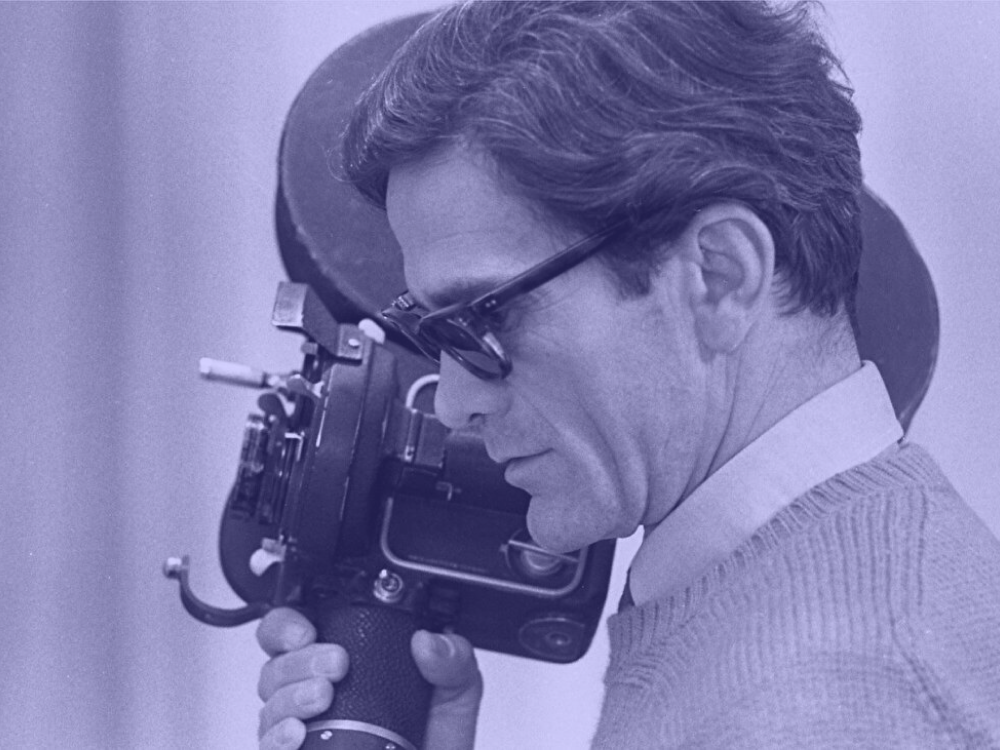
Charles Ponzi promised investors impossible profits, using new money to pay earlier investors.
His eight-month fraud gave the world a term still used for financial scams today.

Tap a purple word for its meaning. Tap a time to play from there.
[00:00:05] Hello, hello, hello, and welcome to English Learning for Curious Minds, by Leonardo English, the show where you can listen to fascinating stories and learn weird and wonderful things about the world at the same time as improving your English.
[00:00:21] I'm Alastair Budge, and today it's time for the final part of our three-part series on famous con artists.
[00:00:31] In case you missed them, in part one, we met Victor Lustig, the man who sold the Eiffel Tower. In part two, it was Gregor MacGregor, the Scottish soldier who invented an entire country.
[00:00:44] But today it's a man whose name is now a byword for fraud, Carlo Ponzi.
[00:00:51] So, let's not waste a minute and get right into it.
[00:00:57] If you open up a dictionary and look up the words "Ponzi scheme", you'll see a definition that's something like this: a form of fraud in which early investors are paid with money taken from later investors, rather than any real profit.
[00:01:16] The term appears in newspapers practically every week.
[00:01:20] It has been applied to collapsed banks, to cryptocurrency projects, to celebrity investment funds, and, in the biggest case of all, to Bernie Madoff, who you might remember from episode 167.
[00:01:36] Behind the dictionary entry there was a real man, a small, smartly dressed Italian immigrant with a straw hat, a gold-topped cane and a dazzling smile.
[00:01:49] For eight glorious months in 1920, he was the most famous man in Boston. Crowds cheered him in the street.
[00:01:58] At the peak, a million dollars a day poured into his office.
[00:02:04] Of course, it was one great big lie; this was the original ponzi scheme.
[00:02:12] The man behind it, Carlo Ponzi, was born in 1882 in a small town close to Bologna, in northern Italy. He didn't come from a particularly wealthy family, and his parents scraped together what money they could to send him to university in Rome, hoping he would restore the family's previous fortunes.
[00:02:37] He did not. By his own account, he treated university as a paid holiday, spending four years in cafés and theatres until the money dried up. He left with no degree, no money and no prospects.
[00:02:54] So, like millions of other young Italians of his generation, he got on a boat to America, the land where anything was possible.
[00:03:06] He arrived in Boston in November 1903, aged twenty-one.
[00:03:12] He arrived with practically nothing — just two dollars and fifty cents in his pocket. The rest of his money, he would later say, he lost at the card tables during the voyage.
[00:03:26] Like most Italian immigrants, his early years in America were tough. He washed dishes and slept on the floor of a restaurant kitchen, while trying to learn English at the same time. He was promoted to waiter, and then fired for shortchanging the customers, in other words, giving them less money back in change than he should have.
[00:03:49] In 1907 he moved to Montreal, in Canada, and got a job as a clerk in a bank called Banco Zarossi. It was a bank that served the city's Italian immigrants, and it was here that he would learn an important lesson.
[00:04:07] Banco Zarossi paid six per cent interest on deposits, double what anyone else was offering. Of course, people queued up to hand over their savings.
[00:04:20] How did the bank manage to offer such generous interest rates? Well, the secret was that the generous interest payments were not coming from profits at all. The bank was paying its older customers with the money arriving from the newer ones. When the gap grew too big to hide, the owner of the bank stuffed a suitcase with cash and fled to Mexico, leaving his customers with nothing.
[00:04:49] And, of course, leaving the young Carlo, now Charles Ponzi, without a job.
[00:04:56] Ponzi found a chequebook belonging to one of the bank's former customers, and had the bright idea of writing himself a cheque from it, making it out to himself and forging the customer's signature. He was caught almost immediately, and spent three years in a Canadian prison.
[00:05:15] After he was released in 1911, he drifted back towards the United States and promptly earned another two years in prison, this time for helping to smuggle Italian immigrants across the border.
[00:05:29] So, by his mid-thirties, Charles Ponzi's record read: no degree, no money, two prison sentences, and a long list of failed schemes.
[00:05:42] But in 1918 his luck appeared to turn. Back in Boston, he met Rose Gnecco, who was a quiet, kind young woman from an Italian-American family. They married, and Ponzi threw himself into one business idea after another, determined to get his own slice of the American dream.
[00:06:07] One of those ideas involved publishing a trade magazine for exporters. It failed, of course. But because of it, in the summer of 1919, a letter arrived from a company in Spain.
[00:06:23] And folded inside that letter was a small piece of paper that would change his life.
[00:06:30] That piece of paper was something called an international reply coupon.
[00:06:37] It solved a small, practical problem of the postal age: how do you send someone in another country the postage for their reply, so they don't need to pay to reply to you?
[00:06:50] You attach one of these coupons with your letter.
[00:06:53] In 1906, the world's postal services had agreed on this system. You could buy one of these coupons in any member country, Spain, in this case. Send it abroad, and the person receiving it could exchange it at their local post office for stamps.
[00:07:14] The price of the coupon was fixed in each country.
[00:07:18] And that, Ponzi realised, was a crack in the system.
[00:07:24] After the First World War, most major European economies were on their knees, and currencies like the Italian lira had lost much of their value against the dollar.
[00:07:36] But the official coupon prices had not been changed.
[00:07:42] Which meant you could take one American dollar, change it into Italian lire, and buy a whole stack of reply coupons in Italy. Then ship them to the United States, exchange them for American stamps, and you would hold stamps worth far more than your original dollar.
[00:08:04] On paper, in theory, the profit was spectacular, potentially several hundred per cent.
[00:08:12] And, best of all, it was legal. It was a classic arbitrage strategy — buying something cheaply in one market and selling it at a higher price in another.
[00:08:25] But if you're thinking, "hang on, it sounds fine in theory, but it's a huge hassle to take stamps across the Atlantic and swap them for other stamps at post offices and then convert these for cash", you're right. But hold that thought.
[00:08:42] The important thing was the theory, not the practicality, this was what Ponzi's entire business plan rested on.
[00:08:51] In December 1919, Ponzi founded a company with a grand, official-sounding name: the Securities Exchange Company.
[00:09:01] His offer was simple. Lend me your money, he said, and the company would put it to work in the reply coupon trade: buying coupons cheaply in Europe, turning them into American stamps, and turning the stamps into dollars.
[00:09:20] The profits, he promised, were so enormous that he could pay you fifty per cent interest in forty-five days. In ninety days, he would double your money.
[00:09:34] The first group of investors put in 1,800 dollars between them. Forty-five days later, Ponzi paid them their interest, in full.
[00:09:46] As word spread, more and more investors came to Ponzi, practically begging him to take their money. The scheme really did work. After forty-five days, Ponzi's company would pay out fifty per cent interest. Wait another forty-five days and you would double your money.
[00:10:06] This little Italian man could do the impossible.
[00:10:11] And the money started to flood in.
[00:10:15] A few thousand dollars in February 1920. Tens of thousands by March. By May, hundreds of thousands. By July, it was pouring in at a rate of a million dollars a day, with queues stretching from his office on School Street around the block.
[00:10:34] Ponzi hired agents all over New England and paid them a commission of ten per cent, so an army of enthusiastic salesmen was soon recruiting on his behalf.
[00:10:47] Three quarters of the Boston police force was said to have invested. Priests invested. Widows invested. People mortgaged their houses to buy Ponzi's notes.
[00:10:58] Importantly, most people did not even collect their gains. When their forty-five days were up, they simply reinvested everything, the original sum plus interest, chasing the next fifty per cent. After all, why would you take your money out when Ponzi simply doubled it every ninety days? There was no other investment opportunity like it.
[00:11:24] The scheme, as you might imagine, made Ponzi a very rich man.
[00:11:29] He bought a twelve-room mansion. He bought a Locomobile, the finest car in America. He bought a controlling stake in the Hanover Trust Company, a real Boston bank.
[00:11:41] He brought his elderly mother over from Italy in a first-class cabin on an ocean liner.
[00:11:48] When he walked from his car to his office, crowds cheered him.
[00:11:52] There's one story of someone shouting to him that he was the greatest Italian who had ever lived. No, Ponzi protested: Columbus had discovered America, and Marconi had invented the radio.
[00:12:06] "But Charlie," came the reply, "you discovered money!"
[00:12:11] Now, you probably already know how he was able to deliver such high returns, and if you don't, you heard it at the start of the episode with the definition of a Ponzi scheme.
[00:12:24] The returns were not coming from international reply coupons. In fact, there is no evidence that Ponzi ever really did any of this arbitrage.
[00:12:34] The money he paid out simply came from people who invested afterwards. Like a pyramid, money was taken from the bottom to pay those at the top, people who got in earlier. The mathematics of such a scheme never work out in the end, because you run out of potential investors before long.
[00:12:55] But strangely enough, it seems like Ponzi thought he could make it work, that he could fill the hole by investing in regular, honest businesses. He bought a macaroni company, and part of a wine company, hoping that real profits from real businesses might be able to pay off his impossible promises.
[00:13:18] They never could.
[00:13:21] And while early publicity had been great business for Ponzi, he didn't want too much.
[00:13:28] In late July, 1920, the Boston Post ran a front-page story about the miracle worker of School Street. The following morning brought the biggest crowds Ponzi had ever seen, pushing fresh hundreds of thousands of dollars through his door.
[00:13:46] The Post's editors also started digging, trying to answer the question: how, exactly, does this man double everyone's money?
[00:13:58] Ponzi had been clear about his methods. Reply coupons, he said. But something didn't seem to add up.
[00:14:06] The Post contacted a man called Clarence Barron, who was the most respected financial journalist in America. It asked him to look at the coupon story.
[00:14:18] Barron did some simple sums, some back-of-the-envelope maths.
[00:14:24] For Ponzi's scheme to be real, given the money he had taken in, roughly 160 million international reply coupons would need to have been bought and moved and cashed.
[00:14:38] Barron checked with the postal authorities. The total number of coupons in circulation, anywhere on Earth, was about 27,000. Fishy. Alarm bells started to ring.
[00:14:54] And there was also the fact that Ponzi's own money wasn't invested in the scheme; he kept it in ordinary banks, earning a comparatively pitiful five per cent interest.
[00:15:08] Here was a man who claimed he could double your money in ninety days, so why wasn't he doing it himself? If the machine was real, why didn't its inventor use it?
[00:15:21] The Post printed all of this on its front page, and, well, it was not good news for Ponzi. The queues outside his office the following morning weren't there to put money in, they were from angry investors trying to get their money out.
[00:15:39] Ponzi, presumably, knew this was a possibility. He met the crowds personally, looking completely calm and unworried. He had coffee and doughnuts brought out to the queue.
[00:15:52] He paid every claim in full, on the spot, millions of dollars over a few days, and he did it with such style that some people actually changed their minds, putting their money back into the scheme.
[00:16:07] It was a magnificent performance. But he was finished. The writing was on the wall.
[00:16:14] And the end came from three directions at the same time.
[00:16:19] First, there was his own publicity man, a former journalist named William McMasters. He had seen enough from inside the operation to understand exactly what was happening, and he later described Ponzi as "a financial idiot" who could barely add.
[00:16:38] McMasters went to the Boston Post, and at the start of August the paper declared, on his evidence, that Ponzi was hopelessly insolvent, that his debts were far bigger than everything he owned.
[00:16:54] Then came the state's bank examiners. They had been watching Ponzi's enormous overdrafts with alarm, and they moved in on Hanover Trust and shut it down.
[00:17:07] And then the auditors finished counting. Ponzi's company's debts were bigger than everything it owned, by around seven million dollars. There was no vault of stamps, and there were no warehouses of coupons. In the entire life of a business supposedly built on international reply coupons, the auditors found that Ponzi had bought a mere sixty-one dollars' worth.
[00:17:35] On the 12th of August 1920, less than eight months after he started, Charles Ponzi surrendered to the federal authorities.
[00:17:45] The final reckoning was brutal. Somewhere between fifteen and twenty million dollars had gone into the scheme, taken from tens of thousands of ordinary people, and worth hundreds of millions in today's terms. Investors eventually got back less than thirty cents for each dollar. At least five banks collapsed along with it.
[00:18:10] Ponzi pleaded guilty to federal fraud charges in November 1920 and got five years. The state of Massachusetts then pursued him for further charges, and eventually added another seven to nine years to the sentence.
[00:18:27] The mansion, the luxury car, it all went. Ponzi was left with nothing.
[00:18:34] He appealed the charge, and oddly enough, was released on bail.
[00:18:40] And Ponzi being Ponzi, he couldn't resist the urge to get another scheme up and running. He fled to Florida where he planned to capitalise on a real estate boom.
[00:18:52] Of course, it was another fraud: he promised investors an outrageous return of 200 per cent in sixty days, but the land he sold was swampland. Wet, often literally underwater, and utterly worthless.
[00:19:11] It didn't take long for it to fail, and when he was found out, he was arrested and convicted.
[00:19:18] Again he appealed the conviction, was released on bond, and yet again he fled. This time, though, it seemed like he took it more seriously. He shaved his head, grew a moustache, and signed on as a deckhand on a ship bound for Italy.
[00:19:37] And he would have made it had he been able to keep his true identity a secret. He could not. He couldn't resist telling a shipmate who he was, and before the ship took to the Atlantic, the police arrested him. This time, there would be no bail.
[00:19:56] He served out his sentence in Massachusetts. And in 1934, he was deported to Italy, grey, heavier, and looking twenty years older than he was.
[00:20:09] His last years were a long, sad decline. A divorce from his long-suffering wife. A string of failed schemes in Rome. A job in Brazil with an Italian airline. Work as a translator. A stroke, which left him partially paralysed and blind in one eye.
[00:20:29] Charles Ponzi died in January 1949, in the charity ward of a hospital in Rio de Janeiro. He was practically destitute, with his estate coming to seventy-five dollars, just about enough to pay for his funeral.
[00:20:46] Did he regret it? If he did, he certainly didn't show it.
[00:20:52] In an interview with an American reporter from his hospital bed there was no trace of apology. Those Bostonians had got their money's worth, he insisted. "Without malice aforethought, I had given them the best show that was ever staged in their territory since the landing of the Pilgrims. It was easily worth fifteen million bucks to watch me put the thing over."
[00:21:16] He came to the United States with two dollars and fifty cents to his name, intending to make something of himself.
[00:21:24] A hundred years later, people do remember Charles Ponzi, or at least they know the word Ponzi. It is just spelt with a small "p" these days, and sits in the dictionary, filed under fraud.
[00:21:40] OK, then, that is it for today's episode on Charles Ponzi, the man who gave fraud his name.
[00:21:46] And with that comes an end to our three-part mini-series on famous con artists. In case you missed parts one and two, those were on Victor Lustig, the man who sold the Eiffel Tower, and Gregor MacGregor, the man who invented a country.
[00:22:02] And if you want to hear the tale of another, real-life Ponzi scheme, episode number 167 tells the story of Bernie Madoff.
[00:22:11] You've been listening to English Learning for Curious Minds by Leonardo English.
[00:22:16] I'm Alastair Budge, you stay safe, and I'll catch you in the next episode.
Join today and get instant access to 600+ episodes, interactive transcripts, PDF study packs and more.
Become a memberAlready a member? Login
30-day money back guarantee. Cancel anytime.

Charles Ponzi promised investors impossible profits, using new money to pay earlier investors.
His eight-month fraud gave the world a term still used for financial scams today.

[00:00:05] Hello, hello, hello, and welcome to English Learning for Curious Minds, by Leonardo English, the show where you can listen to fascinating stories and learn weird and wonderful things about the world at the same time as improving your English.
[00:00:21] I'm Alastair Budge, and today it's time for the final part of our three-part series on famous con artists.
[00:00:31] In case you missed them, in part one, we met Victor Lustig, the man who sold the Eiffel Tower. In part two, it was Gregor MacGregor, the Scottish soldier who invented an entire country.
[00:00:44] But today it's a man whose name is now a byword for fraud, Carlo Ponzi.
[00:00:51] So, let's not waste a minute and get right into it.
[00:00:57] If you open up a dictionary and look up the words "Ponzi scheme", you'll see a definition that's something like this: a form of fraud in which early investors are paid with money taken from later investors, rather than any real profit.
[00:01:16] The term appears in newspapers practically every week.
[00:01:20] It has been applied to collapsed banks, to cryptocurrency projects, to celebrity investment funds, and, in the biggest case of all, to Bernie Madoff, who you might remember from episode 167.
[00:01:36] Behind the dictionary entry there was a real man, a small, smartly dressed Italian immigrant with a straw hat, a gold-topped cane and a dazzling smile.
[00:01:49] For eight glorious months in 1920, he was the most famous man in Boston. Crowds cheered him in the street.
[00:01:58] At the peak, a million dollars a day poured into his office.
[00:02:04] Of course, it was one great big lie; this was the original ponzi scheme.
[00:02:12] The man behind it, Carlo Ponzi, was born in 1882 in a small town close to Bologna, in northern Italy. He didn't come from a particularly wealthy family, and his parents scraped together what money they could to send him to university in Rome, hoping he would restore the family's previous fortunes.
[00:02:37] He did not. By his own account, he treated university as a paid holiday, spending four years in cafés and theatres until the money dried up. He left with no degree, no money and no prospects.
[00:02:54] So, like millions of other young Italians of his generation, he got on a boat to America, the land where anything was possible.
[00:03:06] He arrived in Boston in November 1903, aged twenty-one.
[00:03:12] He arrived with practically nothing — just two dollars and fifty cents in his pocket. The rest of his money, he would later say, he lost at the card tables during the voyage.
[00:03:26] Like most Italian immigrants, his early years in America were tough. He washed dishes and slept on the floor of a restaurant kitchen, while trying to learn English at the same time. He was promoted to waiter, and then fired for shortchanging the customers, in other words, giving them less money back in change than he should have.
[00:03:49] In 1907 he moved to Montreal, in Canada, and got a job as a clerk in a bank called Banco Zarossi. It was a bank that served the city's Italian immigrants, and it was here that he would learn an important lesson.
[00:04:07] Banco Zarossi paid six per cent interest on deposits, double what anyone else was offering. Of course, people queued up to hand over their savings.
[00:04:20] How did the bank manage to offer such generous interest rates? Well, the secret was that the generous interest payments were not coming from profits at all. The bank was paying its older customers with the money arriving from the newer ones. When the gap grew too big to hide, the owner of the bank stuffed a suitcase with cash and fled to Mexico, leaving his customers with nothing.
[00:04:49] And, of course, leaving the young Carlo, now Charles Ponzi, without a job.
[00:04:56] Ponzi found a chequebook belonging to one of the bank's former customers, and had the bright idea of writing himself a cheque from it, making it out to himself and forging the customer's signature. He was caught almost immediately, and spent three years in a Canadian prison.
[00:05:15] After he was released in 1911, he drifted back towards the United States and promptly earned another two years in prison, this time for helping to smuggle Italian immigrants across the border.
[00:05:29] So, by his mid-thirties, Charles Ponzi's record read: no degree, no money, two prison sentences, and a long list of failed schemes.
[00:05:42] But in 1918 his luck appeared to turn. Back in Boston, he met Rose Gnecco, who was a quiet, kind young woman from an Italian-American family. They married, and Ponzi threw himself into one business idea after another, determined to get his own slice of the American dream.
[00:06:07] One of those ideas involved publishing a trade magazine for exporters. It failed, of course. But because of it, in the summer of 1919, a letter arrived from a company in Spain.
[00:06:23] And folded inside that letter was a small piece of paper that would change his life.
[00:06:30] That piece of paper was something called an international reply coupon.
[00:06:37] It solved a small, practical problem of the postal age: how do you send someone in another country the postage for their reply, so they don't need to pay to reply to you?
[00:06:50] You attach one of these coupons with your letter.
[00:06:53] In 1906, the world's postal services had agreed on this system. You could buy one of these coupons in any member country, Spain, in this case. Send it abroad, and the person receiving it could exchange it at their local post office for stamps.
[00:07:14] The price of the coupon was fixed in each country.
[00:07:18] And that, Ponzi realised, was a crack in the system.
[00:07:24] After the First World War, most major European economies were on their knees, and currencies like the Italian lira had lost much of their value against the dollar.
[00:07:36] But the official coupon prices had not been changed.
[00:07:42] Which meant you could take one American dollar, change it into Italian lire, and buy a whole stack of reply coupons in Italy. Then ship them to the United States, exchange them for American stamps, and you would hold stamps worth far more than your original dollar.
[00:08:04] On paper, in theory, the profit was spectacular, potentially several hundred per cent.
[00:08:12] And, best of all, it was legal. It was a classic arbitrage strategy — buying something cheaply in one market and selling it at a higher price in another.
[00:08:25] But if you're thinking, "hang on, it sounds fine in theory, but it's a huge hassle to take stamps across the Atlantic and swap them for other stamps at post offices and then convert these for cash", you're right. But hold that thought.
[00:08:42] The important thing was the theory, not the practicality, this was what Ponzi's entire business plan rested on.
[00:08:51] In December 1919, Ponzi founded a company with a grand, official-sounding name: the Securities Exchange Company.
[00:09:01] His offer was simple. Lend me your money, he said, and the company would put it to work in the reply coupon trade: buying coupons cheaply in Europe, turning them into American stamps, and turning the stamps into dollars.
[00:09:20] The profits, he promised, were so enormous that he could pay you fifty per cent interest in forty-five days. In ninety days, he would double your money.
[00:09:34] The first group of investors put in 1,800 dollars between them. Forty-five days later, Ponzi paid them their interest, in full.
[00:09:46] As word spread, more and more investors came to Ponzi, practically begging him to take their money. The scheme really did work. After forty-five days, Ponzi's company would pay out fifty per cent interest. Wait another forty-five days and you would double your money.
[00:10:06] This little Italian man could do the impossible.
[00:10:11] And the money started to flood in.
[00:10:15] A few thousand dollars in February 1920. Tens of thousands by March. By May, hundreds of thousands. By July, it was pouring in at a rate of a million dollars a day, with queues stretching from his office on School Street around the block.
[00:10:34] Ponzi hired agents all over New England and paid them a commission of ten per cent, so an army of enthusiastic salesmen was soon recruiting on his behalf.
[00:10:47] Three quarters of the Boston police force was said to have invested. Priests invested. Widows invested. People mortgaged their houses to buy Ponzi's notes.
[00:10:58] Importantly, most people did not even collect their gains. When their forty-five days were up, they simply reinvested everything, the original sum plus interest, chasing the next fifty per cent. After all, why would you take your money out when Ponzi simply doubled it every ninety days? There was no other investment opportunity like it.
[00:11:24] The scheme, as you might imagine, made Ponzi a very rich man.
[00:11:29] He bought a twelve-room mansion. He bought a Locomobile, the finest car in America. He bought a controlling stake in the Hanover Trust Company, a real Boston bank.
[00:11:41] He brought his elderly mother over from Italy in a first-class cabin on an ocean liner.
[00:11:48] When he walked from his car to his office, crowds cheered him.
[00:11:52] There's one story of someone shouting to him that he was the greatest Italian who had ever lived. No, Ponzi protested: Columbus had discovered America, and Marconi had invented the radio.
[00:12:06] "But Charlie," came the reply, "you discovered money!"
[00:12:11] Now, you probably already know how he was able to deliver such high returns, and if you don't, you heard it at the start of the episode with the definition of a Ponzi scheme.
[00:12:24] The returns were not coming from international reply coupons. In fact, there is no evidence that Ponzi ever really did any of this arbitrage.
[00:12:34] The money he paid out simply came from people who invested afterwards. Like a pyramid, money was taken from the bottom to pay those at the top, people who got in earlier. The mathematics of such a scheme never work out in the end, because you run out of potential investors before long.
[00:12:55] But strangely enough, it seems like Ponzi thought he could make it work, that he could fill the hole by investing in regular, honest businesses. He bought a macaroni company, and part of a wine company, hoping that real profits from real businesses might be able to pay off his impossible promises.
[00:13:18] They never could.
[00:13:21] And while early publicity had been great business for Ponzi, he didn't want too much.
[00:13:28] In late July, 1920, the Boston Post ran a front-page story about the miracle worker of School Street. The following morning brought the biggest crowds Ponzi had ever seen, pushing fresh hundreds of thousands of dollars through his door.
[00:13:46] The Post's editors also started digging, trying to answer the question: how, exactly, does this man double everyone's money?
[00:13:58] Ponzi had been clear about his methods. Reply coupons, he said. But something didn't seem to add up.
[00:14:06] The Post contacted a man called Clarence Barron, who was the most respected financial journalist in America. It asked him to look at the coupon story.
[00:14:18] Barron did some simple sums, some back-of-the-envelope maths.
[00:14:24] For Ponzi's scheme to be real, given the money he had taken in, roughly 160 million international reply coupons would need to have been bought and moved and cashed.
[00:14:38] Barron checked with the postal authorities. The total number of coupons in circulation, anywhere on Earth, was about 27,000. Fishy. Alarm bells started to ring.
[00:14:54] And there was also the fact that Ponzi's own money wasn't invested in the scheme; he kept it in ordinary banks, earning a comparatively pitiful five per cent interest.
[00:15:08] Here was a man who claimed he could double your money in ninety days, so why wasn't he doing it himself? If the machine was real, why didn't its inventor use it?
[00:15:21] The Post printed all of this on its front page, and, well, it was not good news for Ponzi. The queues outside his office the following morning weren't there to put money in, they were from angry investors trying to get their money out.
[00:15:39] Ponzi, presumably, knew this was a possibility. He met the crowds personally, looking completely calm and unworried. He had coffee and doughnuts brought out to the queue.
[00:15:52] He paid every claim in full, on the spot, millions of dollars over a few days, and he did it with such style that some people actually changed their minds, putting their money back into the scheme.
[00:16:07] It was a magnificent performance. But he was finished. The writing was on the wall.
[00:16:14] And the end came from three directions at the same time.
[00:16:19] First, there was his own publicity man, a former journalist named William McMasters. He had seen enough from inside the operation to understand exactly what was happening, and he later described Ponzi as "a financial idiot" who could barely add.
[00:16:38] McMasters went to the Boston Post, and at the start of August the paper declared, on his evidence, that Ponzi was hopelessly insolvent, that his debts were far bigger than everything he owned.
[00:16:54] Then came the state's bank examiners. They had been watching Ponzi's enormous overdrafts with alarm, and they moved in on Hanover Trust and shut it down.
[00:17:07] And then the auditors finished counting. Ponzi's company's debts were bigger than everything it owned, by around seven million dollars. There was no vault of stamps, and there were no warehouses of coupons. In the entire life of a business supposedly built on international reply coupons, the auditors found that Ponzi had bought a mere sixty-one dollars' worth.
[00:17:35] On the 12th of August 1920, less than eight months after he started, Charles Ponzi surrendered to the federal authorities.
[00:17:45] The final reckoning was brutal. Somewhere between fifteen and twenty million dollars had gone into the scheme, taken from tens of thousands of ordinary people, and worth hundreds of millions in today's terms. Investors eventually got back less than thirty cents for each dollar. At least five banks collapsed along with it.
[00:18:10] Ponzi pleaded guilty to federal fraud charges in November 1920 and got five years. The state of Massachusetts then pursued him for further charges, and eventually added another seven to nine years to the sentence.
[00:18:27] The mansion, the luxury car, it all went. Ponzi was left with nothing.
[00:18:34] He appealed the charge, and oddly enough, was released on bail.
[00:18:40] And Ponzi being Ponzi, he couldn't resist the urge to get another scheme up and running. He fled to Florida where he planned to capitalise on a real estate boom.
[00:18:52] Of course, it was another fraud: he promised investors an outrageous return of 200 per cent in sixty days, but the land he sold was swampland. Wet, often literally underwater, and utterly worthless.
[00:19:11] It didn't take long for it to fail, and when he was found out, he was arrested and convicted.
[00:19:18] Again he appealed the conviction, was released on bond, and yet again he fled. This time, though, it seemed like he took it more seriously. He shaved his head, grew a moustache, and signed on as a deckhand on a ship bound for Italy.
[00:19:37] And he would have made it had he been able to keep his true identity a secret. He could not. He couldn't resist telling a shipmate who he was, and before the ship took to the Atlantic, the police arrested him. This time, there would be no bail.
[00:19:56] He served out his sentence in Massachusetts. And in 1934, he was deported to Italy, grey, heavier, and looking twenty years older than he was.
[00:20:09] His last years were a long, sad decline. A divorce from his long-suffering wife. A string of failed schemes in Rome. A job in Brazil with an Italian airline. Work as a translator. A stroke, which left him partially paralysed and blind in one eye.
[00:20:29] Charles Ponzi died in January 1949, in the charity ward of a hospital in Rio de Janeiro. He was practically destitute, with his estate coming to seventy-five dollars, just about enough to pay for his funeral.
[00:20:46] Did he regret it? If he did, he certainly didn't show it.
[00:20:52] In an interview with an American reporter from his hospital bed there was no trace of apology. Those Bostonians had got their money's worth, he insisted. "Without malice aforethought, I had given them the best show that was ever staged in their territory since the landing of the Pilgrims. It was easily worth fifteen million bucks to watch me put the thing over."
[00:21:16] He came to the United States with two dollars and fifty cents to his name, intending to make something of himself.
[00:21:24] A hundred years later, people do remember Charles Ponzi, or at least they know the word Ponzi. It is just spelt with a small "p" these days, and sits in the dictionary, filed under fraud.
[00:21:40] OK, then, that is it for today's episode on Charles Ponzi, the man who gave fraud his name.
[00:21:46] And with that comes an end to our three-part mini-series on famous con artists. In case you missed parts one and two, those were on Victor Lustig, the man who sold the Eiffel Tower, and Gregor MacGregor, the man who invented a country.
[00:22:02] And if you want to hear the tale of another, real-life Ponzi scheme, episode number 167 tells the story of Bernie Madoff.
[00:22:11] You've been listening to English Learning for Curious Minds by Leonardo English.
[00:22:16] I'm Alastair Budge, you stay safe, and I'll catch you in the next episode.
[00:00:05] Hello, hello, hello, and welcome to English Learning for Curious Minds, by Leonardo English, the show where you can listen to fascinating stories and learn weird and wonderful things about the world at the same time as improving your English.
[00:00:21] I'm Alastair Budge, and today it's time for the final part of our three-part series on famous con artists.
[00:00:31] In case you missed them, in part one, we met Victor Lustig, the man who sold the Eiffel Tower. In part two, it was Gregor MacGregor, the Scottish soldier who invented an entire country.
[00:00:44] But today it's a man whose name is now a byword for fraud, Carlo Ponzi.
[00:00:51] So, let's not waste a minute and get right into it.
[00:00:57] If you open up a dictionary and look up the words "Ponzi scheme", you'll see a definition that's something like this: a form of fraud in which early investors are paid with money taken from later investors, rather than any real profit.
[00:01:16] The term appears in newspapers practically every week.
[00:01:20] It has been applied to collapsed banks, to cryptocurrency projects, to celebrity investment funds, and, in the biggest case of all, to Bernie Madoff, who you might remember from episode 167.
[00:01:36] Behind the dictionary entry there was a real man, a small, smartly dressed Italian immigrant with a straw hat, a gold-topped cane and a dazzling smile.
[00:01:49] For eight glorious months in 1920, he was the most famous man in Boston. Crowds cheered him in the street.
[00:01:58] At the peak, a million dollars a day poured into his office.
[00:02:04] Of course, it was one great big lie; this was the original ponzi scheme.
[00:02:12] The man behind it, Carlo Ponzi, was born in 1882 in a small town close to Bologna, in northern Italy. He didn't come from a particularly wealthy family, and his parents scraped together what money they could to send him to university in Rome, hoping he would restore the family's previous fortunes.
[00:02:37] He did not. By his own account, he treated university as a paid holiday, spending four years in cafés and theatres until the money dried up. He left with no degree, no money and no prospects.
[00:02:54] So, like millions of other young Italians of his generation, he got on a boat to America, the land where anything was possible.
[00:03:06] He arrived in Boston in November 1903, aged twenty-one.
[00:03:12] He arrived with practically nothing — just two dollars and fifty cents in his pocket. The rest of his money, he would later say, he lost at the card tables during the voyage.
[00:03:26] Like most Italian immigrants, his early years in America were tough. He washed dishes and slept on the floor of a restaurant kitchen, while trying to learn English at the same time. He was promoted to waiter, and then fired for shortchanging the customers, in other words, giving them less money back in change than he should have.
[00:03:49] In 1907 he moved to Montreal, in Canada, and got a job as a clerk in a bank called Banco Zarossi. It was a bank that served the city's Italian immigrants, and it was here that he would learn an important lesson.
[00:04:07] Banco Zarossi paid six per cent interest on deposits, double what anyone else was offering. Of course, people queued up to hand over their savings.
[00:04:20] How did the bank manage to offer such generous interest rates? Well, the secret was that the generous interest payments were not coming from profits at all. The bank was paying its older customers with the money arriving from the newer ones. When the gap grew too big to hide, the owner of the bank stuffed a suitcase with cash and fled to Mexico, leaving his customers with nothing.
[00:04:49] And, of course, leaving the young Carlo, now Charles Ponzi, without a job.
[00:04:56] Ponzi found a chequebook belonging to one of the bank's former customers, and had the bright idea of writing himself a cheque from it, making it out to himself and forging the customer's signature. He was caught almost immediately, and spent three years in a Canadian prison.
[00:05:15] After he was released in 1911, he drifted back towards the United States and promptly earned another two years in prison, this time for helping to smuggle Italian immigrants across the border.
[00:05:29] So, by his mid-thirties, Charles Ponzi's record read: no degree, no money, two prison sentences, and a long list of failed schemes.
[00:05:42] But in 1918 his luck appeared to turn. Back in Boston, he met Rose Gnecco, who was a quiet, kind young woman from an Italian-American family. They married, and Ponzi threw himself into one business idea after another, determined to get his own slice of the American dream.
[00:06:07] One of those ideas involved publishing a trade magazine for exporters. It failed, of course. But because of it, in the summer of 1919, a letter arrived from a company in Spain.
[00:06:23] And folded inside that letter was a small piece of paper that would change his life.
[00:06:30] That piece of paper was something called an international reply coupon.
[00:06:37] It solved a small, practical problem of the postal age: how do you send someone in another country the postage for their reply, so they don't need to pay to reply to you?
[00:06:50] You attach one of these coupons with your letter.
[00:06:53] In 1906, the world's postal services had agreed on this system. You could buy one of these coupons in any member country, Spain, in this case. Send it abroad, and the person receiving it could exchange it at their local post office for stamps.
[00:07:14] The price of the coupon was fixed in each country.
[00:07:18] And that, Ponzi realised, was a crack in the system.
[00:07:24] After the First World War, most major European economies were on their knees, and currencies like the Italian lira had lost much of their value against the dollar.
[00:07:36] But the official coupon prices had not been changed.
[00:07:42] Which meant you could take one American dollar, change it into Italian lire, and buy a whole stack of reply coupons in Italy. Then ship them to the United States, exchange them for American stamps, and you would hold stamps worth far more than your original dollar.
[00:08:04] On paper, in theory, the profit was spectacular, potentially several hundred per cent.
[00:08:12] And, best of all, it was legal. It was a classic arbitrage strategy — buying something cheaply in one market and selling it at a higher price in another.
[00:08:25] But if you're thinking, "hang on, it sounds fine in theory, but it's a huge hassle to take stamps across the Atlantic and swap them for other stamps at post offices and then convert these for cash", you're right. But hold that thought.
[00:08:42] The important thing was the theory, not the practicality, this was what Ponzi's entire business plan rested on.
[00:08:51] In December 1919, Ponzi founded a company with a grand, official-sounding name: the Securities Exchange Company.
[00:09:01] His offer was simple. Lend me your money, he said, and the company would put it to work in the reply coupon trade: buying coupons cheaply in Europe, turning them into American stamps, and turning the stamps into dollars.
[00:09:20] The profits, he promised, were so enormous that he could pay you fifty per cent interest in forty-five days. In ninety days, he would double your money.
[00:09:34] The first group of investors put in 1,800 dollars between them. Forty-five days later, Ponzi paid them their interest, in full.
[00:09:46] As word spread, more and more investors came to Ponzi, practically begging him to take their money. The scheme really did work. After forty-five days, Ponzi's company would pay out fifty per cent interest. Wait another forty-five days and you would double your money.
[00:10:06] This little Italian man could do the impossible.
[00:10:11] And the money started to flood in.
[00:10:15] A few thousand dollars in February 1920. Tens of thousands by March. By May, hundreds of thousands. By July, it was pouring in at a rate of a million dollars a day, with queues stretching from his office on School Street around the block.
[00:10:34] Ponzi hired agents all over New England and paid them a commission of ten per cent, so an army of enthusiastic salesmen was soon recruiting on his behalf.
[00:10:47] Three quarters of the Boston police force was said to have invested. Priests invested. Widows invested. People mortgaged their houses to buy Ponzi's notes.
[00:10:58] Importantly, most people did not even collect their gains. When their forty-five days were up, they simply reinvested everything, the original sum plus interest, chasing the next fifty per cent. After all, why would you take your money out when Ponzi simply doubled it every ninety days? There was no other investment opportunity like it.
[00:11:24] The scheme, as you might imagine, made Ponzi a very rich man.
[00:11:29] He bought a twelve-room mansion. He bought a Locomobile, the finest car in America. He bought a controlling stake in the Hanover Trust Company, a real Boston bank.
[00:11:41] He brought his elderly mother over from Italy in a first-class cabin on an ocean liner.
[00:11:48] When he walked from his car to his office, crowds cheered him.
[00:11:52] There's one story of someone shouting to him that he was the greatest Italian who had ever lived. No, Ponzi protested: Columbus had discovered America, and Marconi had invented the radio.
[00:12:06] "But Charlie," came the reply, "you discovered money!"
[00:12:11] Now, you probably already know how he was able to deliver such high returns, and if you don't, you heard it at the start of the episode with the definition of a Ponzi scheme.
[00:12:24] The returns were not coming from international reply coupons. In fact, there is no evidence that Ponzi ever really did any of this arbitrage.
[00:12:34] The money he paid out simply came from people who invested afterwards. Like a pyramid, money was taken from the bottom to pay those at the top, people who got in earlier. The mathematics of such a scheme never work out in the end, because you run out of potential investors before long.
[00:12:55] But strangely enough, it seems like Ponzi thought he could make it work, that he could fill the hole by investing in regular, honest businesses. He bought a macaroni company, and part of a wine company, hoping that real profits from real businesses might be able to pay off his impossible promises.
[00:13:18] They never could.
[00:13:21] And while early publicity had been great business for Ponzi, he didn't want too much.
[00:13:28] In late July, 1920, the Boston Post ran a front-page story about the miracle worker of School Street. The following morning brought the biggest crowds Ponzi had ever seen, pushing fresh hundreds of thousands of dollars through his door.
[00:13:46] The Post's editors also started digging, trying to answer the question: how, exactly, does this man double everyone's money?
[00:13:58] Ponzi had been clear about his methods. Reply coupons, he said. But something didn't seem to add up.
[00:14:06] The Post contacted a man called Clarence Barron, who was the most respected financial journalist in America. It asked him to look at the coupon story.
[00:14:18] Barron did some simple sums, some back-of-the-envelope maths.
[00:14:24] For Ponzi's scheme to be real, given the money he had taken in, roughly 160 million international reply coupons would need to have been bought and moved and cashed.
[00:14:38] Barron checked with the postal authorities. The total number of coupons in circulation, anywhere on Earth, was about 27,000. Fishy. Alarm bells started to ring.
[00:14:54] And there was also the fact that Ponzi's own money wasn't invested in the scheme; he kept it in ordinary banks, earning a comparatively pitiful five per cent interest.
[00:15:08] Here was a man who claimed he could double your money in ninety days, so why wasn't he doing it himself? If the machine was real, why didn't its inventor use it?
[00:15:21] The Post printed all of this on its front page, and, well, it was not good news for Ponzi. The queues outside his office the following morning weren't there to put money in, they were from angry investors trying to get their money out.
[00:15:39] Ponzi, presumably, knew this was a possibility. He met the crowds personally, looking completely calm and unworried. He had coffee and doughnuts brought out to the queue.
[00:15:52] He paid every claim in full, on the spot, millions of dollars over a few days, and he did it with such style that some people actually changed their minds, putting their money back into the scheme.
[00:16:07] It was a magnificent performance. But he was finished. The writing was on the wall.
[00:16:14] And the end came from three directions at the same time.
[00:16:19] First, there was his own publicity man, a former journalist named William McMasters. He had seen enough from inside the operation to understand exactly what was happening, and he later described Ponzi as "a financial idiot" who could barely add.
[00:16:38] McMasters went to the Boston Post, and at the start of August the paper declared, on his evidence, that Ponzi was hopelessly insolvent, that his debts were far bigger than everything he owned.
[00:16:54] Then came the state's bank examiners. They had been watching Ponzi's enormous overdrafts with alarm, and they moved in on Hanover Trust and shut it down.
[00:17:07] And then the auditors finished counting. Ponzi's company's debts were bigger than everything it owned, by around seven million dollars. There was no vault of stamps, and there were no warehouses of coupons. In the entire life of a business supposedly built on international reply coupons, the auditors found that Ponzi had bought a mere sixty-one dollars' worth.
[00:17:35] On the 12th of August 1920, less than eight months after he started, Charles Ponzi surrendered to the federal authorities.
[00:17:45] The final reckoning was brutal. Somewhere between fifteen and twenty million dollars had gone into the scheme, taken from tens of thousands of ordinary people, and worth hundreds of millions in today's terms. Investors eventually got back less than thirty cents for each dollar. At least five banks collapsed along with it.
[00:18:10] Ponzi pleaded guilty to federal fraud charges in November 1920 and got five years. The state of Massachusetts then pursued him for further charges, and eventually added another seven to nine years to the sentence.
[00:18:27] The mansion, the luxury car, it all went. Ponzi was left with nothing.
[00:18:34] He appealed the charge, and oddly enough, was released on bail.
[00:18:40] And Ponzi being Ponzi, he couldn't resist the urge to get another scheme up and running. He fled to Florida where he planned to capitalise on a real estate boom.
[00:18:52] Of course, it was another fraud: he promised investors an outrageous return of 200 per cent in sixty days, but the land he sold was swampland. Wet, often literally underwater, and utterly worthless.
[00:19:11] It didn't take long for it to fail, and when he was found out, he was arrested and convicted.
[00:19:18] Again he appealed the conviction, was released on bond, and yet again he fled. This time, though, it seemed like he took it more seriously. He shaved his head, grew a moustache, and signed on as a deckhand on a ship bound for Italy.
[00:19:37] And he would have made it had he been able to keep his true identity a secret. He could not. He couldn't resist telling a shipmate who he was, and before the ship took to the Atlantic, the police arrested him. This time, there would be no bail.
[00:19:56] He served out his sentence in Massachusetts. And in 1934, he was deported to Italy, grey, heavier, and looking twenty years older than he was.
[00:20:09] His last years were a long, sad decline. A divorce from his long-suffering wife. A string of failed schemes in Rome. A job in Brazil with an Italian airline. Work as a translator. A stroke, which left him partially paralysed and blind in one eye.
[00:20:29] Charles Ponzi died in January 1949, in the charity ward of a hospital in Rio de Janeiro. He was practically destitute, with his estate coming to seventy-five dollars, just about enough to pay for his funeral.
[00:20:46] Did he regret it? If he did, he certainly didn't show it.
[00:20:52] In an interview with an American reporter from his hospital bed there was no trace of apology. Those Bostonians had got their money's worth, he insisted. "Without malice aforethought, I had given them the best show that was ever staged in their territory since the landing of the Pilgrims. It was easily worth fifteen million bucks to watch me put the thing over."
[00:21:16] He came to the United States with two dollars and fifty cents to his name, intending to make something of himself.
[00:21:24] A hundred years later, people do remember Charles Ponzi, or at least they know the word Ponzi. It is just spelt with a small "p" these days, and sits in the dictionary, filed under fraud.
[00:21:40] OK, then, that is it for today's episode on Charles Ponzi, the man who gave fraud his name.
[00:21:46] And with that comes an end to our three-part mini-series on famous con artists. In case you missed parts one and two, those were on Victor Lustig, the man who sold the Eiffel Tower, and Gregor MacGregor, the man who invented a country.
[00:22:02] And if you want to hear the tale of another, real-life Ponzi scheme, episode number 167 tells the story of Bernie Madoff.
[00:22:11] You've been listening to English Learning for Curious Minds by Leonardo English.
[00:22:16] I'm Alastair Budge, you stay safe, and I'll catch you in the next episode.
[00:00:05] Hello, hello, hello, and welcome to English Learning for Curious Minds, by Leonardo English, the show where you can listen to fascinating stories and learn weird and wonderful things about the world at the same time as improving your English.
[00:00:21] I'm Alastair Budge, and today it's time for the final part of our three-part series on famous con artists.
[00:00:31] In case you missed them, in part one, we met Victor Lustig, the man who sold the Eiffel Tower. In part two, it was Gregor MacGregor, the Scottish soldier who invented an entire country.
[00:00:44] But today it's a man whose name is now a byword for fraud, Carlo Ponzi.
[00:00:51] So, let's not waste a minute and get right into it.
[00:00:57] If you open up a dictionary and look up the words "Ponzi scheme", you'll see a definition that's something like this: a form of fraud in which early investors are paid with money taken from later investors, rather than any real profit.
[00:01:16] The term appears in newspapers practically every week.
[00:01:20] It has been applied to collapsed banks, to cryptocurrency projects, to celebrity investment funds, and, in the biggest case of all, to Bernie Madoff, who you might remember from episode 167.
[00:01:36] Behind the dictionary entry there was a real man, a small, smartly dressed Italian immigrant with a straw hat, a gold-topped cane and a dazzling smile.
[00:01:49] For eight glorious months in 1920, he was the most famous man in Boston. Crowds cheered him in the street.
[00:01:58] At the peak, a million dollars a day poured into his office.
[00:02:04] Of course, it was one great big lie; this was the original ponzi scheme.
[00:02:12] The man behind it, Carlo Ponzi, was born in 1882 in a small town close to Bologna, in northern Italy. He didn't come from a particularly wealthy family, and his parents scraped together what money they could to send him to university in Rome, hoping he would restore the family's previous fortunes.
[00:02:37] He did not. By his own account, he treated university as a paid holiday, spending four years in cafés and theatres until the money dried up. He left with no degree, no money and no prospects.
[00:02:54] So, like millions of other young Italians of his generation, he got on a boat to America, the land where anything was possible.
[00:03:06] He arrived in Boston in November 1903, aged twenty-one.
[00:03:12] He arrived with practically nothing — just two dollars and fifty cents in his pocket. The rest of his money, he would later say, he lost at the card tables during the voyage.
[00:03:26] Like most Italian immigrants, his early years in America were tough. He washed dishes and slept on the floor of a restaurant kitchen, while trying to learn English at the same time. He was promoted to waiter, and then fired for shortchanging the customers, in other words, giving them less money back in change than he should have.
[00:03:49] In 1907 he moved to Montreal, in Canada, and got a job as a clerk in a bank called Banco Zarossi. It was a bank that served the city's Italian immigrants, and it was here that he would learn an important lesson.
[00:04:07] Banco Zarossi paid six per cent interest on deposits, double what anyone else was offering. Of course, people queued up to hand over their savings.
[00:04:20] How did the bank manage to offer such generous interest rates? Well, the secret was that the generous interest payments were not coming from profits at all. The bank was paying its older customers with the money arriving from the newer ones. When the gap grew too big to hide, the owner of the bank stuffed a suitcase with cash and fled to Mexico, leaving his customers with nothing.
[00:04:49] And, of course, leaving the young Carlo, now Charles Ponzi, without a job.
[00:04:56] Ponzi found a chequebook belonging to one of the bank's former customers, and had the bright idea of writing himself a cheque from it, making it out to himself and forging the customer's signature. He was caught almost immediately, and spent three years in a Canadian prison.
[00:05:15] After he was released in 1911, he drifted back towards the United States and promptly earned another two years in prison, this time for helping to smuggle Italian immigrants across the border.
[00:05:29] So, by his mid-thirties, Charles Ponzi's record read: no degree, no money, two prison sentences, and a long list of failed schemes.
[00:05:42] But in 1918 his luck appeared to turn. Back in Boston, he met Rose Gnecco, who was a quiet, kind young woman from an Italian-American family. They married, and Ponzi threw himself into one business idea after another, determined to get his own slice of the American dream.
[00:06:07] One of those ideas involved publishing a trade magazine for exporters. It failed, of course. But because of it, in the summer of 1919, a letter arrived from a company in Spain.
[00:06:23] And folded inside that letter was a small piece of paper that would change his life.
[00:06:30] That piece of paper was something called an international reply coupon.
[00:06:37] It solved a small, practical problem of the postal age: how do you send someone in another country the postage for their reply, so they don't need to pay to reply to you?
[00:06:50] You attach one of these coupons with your letter.
[00:06:53] In 1906, the world's postal services had agreed on this system. You could buy one of these coupons in any member country, Spain, in this case. Send it abroad, and the person receiving it could exchange it at their local post office for stamps.
[00:07:14] The price of the coupon was fixed in each country.
[00:07:18] And that, Ponzi realised, was a crack in the system.
[00:07:24] After the First World War, most major European economies were on their knees, and currencies like the Italian lira had lost much of their value against the dollar.
[00:07:36] But the official coupon prices had not been changed.
[00:07:42] Which meant you could take one American dollar, change it into Italian lire, and buy a whole stack of reply coupons in Italy. Then ship them to the United States, exchange them for American stamps, and you would hold stamps worth far more than your original dollar.
[00:08:04] On paper, in theory, the profit was spectacular, potentially several hundred per cent.
[00:08:12] And, best of all, it was legal. It was a classic arbitrage strategy — buying something cheaply in one market and selling it at a higher price in another.
[00:08:25] But if you're thinking, "hang on, it sounds fine in theory, but it's a huge hassle to take stamps across the Atlantic and swap them for other stamps at post offices and then convert these for cash", you're right. But hold that thought.
[00:08:42] The important thing was the theory, not the practicality, this was what Ponzi's entire business plan rested on.
[00:08:51] In December 1919, Ponzi founded a company with a grand, official-sounding name: the Securities Exchange Company.
[00:09:01] His offer was simple. Lend me your money, he said, and the company would put it to work in the reply coupon trade: buying coupons cheaply in Europe, turning them into American stamps, and turning the stamps into dollars.
[00:09:20] The profits, he promised, were so enormous that he could pay you fifty per cent interest in forty-five days. In ninety days, he would double your money.
[00:09:34] The first group of investors put in 1,800 dollars between them. Forty-five days later, Ponzi paid them their interest, in full.
[00:09:46] As word spread, more and more investors came to Ponzi, practically begging him to take their money. The scheme really did work. After forty-five days, Ponzi's company would pay out fifty per cent interest. Wait another forty-five days and you would double your money.
[00:10:06] This little Italian man could do the impossible.
[00:10:11] And the money started to flood in.
[00:10:15] A few thousand dollars in February 1920. Tens of thousands by March. By May, hundreds of thousands. By July, it was pouring in at a rate of a million dollars a day, with queues stretching from his office on School Street around the block.
[00:10:34] Ponzi hired agents all over New England and paid them a commission of ten per cent, so an army of enthusiastic salesmen was soon recruiting on his behalf.
[00:10:47] Three quarters of the Boston police force was said to have invested. Priests invested. Widows invested. People mortgaged their houses to buy Ponzi's notes.
[00:10:58] Importantly, most people did not even collect their gains. When their forty-five days were up, they simply reinvested everything, the original sum plus interest, chasing the next fifty per cent. After all, why would you take your money out when Ponzi simply doubled it every ninety days? There was no other investment opportunity like it.
[00:11:24] The scheme, as you might imagine, made Ponzi a very rich man.
[00:11:29] He bought a twelve-room mansion. He bought a Locomobile, the finest car in America. He bought a controlling stake in the Hanover Trust Company, a real Boston bank.
[00:11:41] He brought his elderly mother over from Italy in a first-class cabin on an ocean liner.
[00:11:48] When he walked from his car to his office, crowds cheered him.
[00:11:52] There's one story of someone shouting to him that he was the greatest Italian who had ever lived. No, Ponzi protested: Columbus had discovered America, and Marconi had invented the radio.
[00:12:06] "But Charlie," came the reply, "you discovered money!"
[00:12:11] Now, you probably already know how he was able to deliver such high returns, and if you don't, you heard it at the start of the episode with the definition of a Ponzi scheme.
[00:12:24] The returns were not coming from international reply coupons. In fact, there is no evidence that Ponzi ever really did any of this arbitrage.
[00:12:34] The money he paid out simply came from people who invested afterwards. Like a pyramid, money was taken from the bottom to pay those at the top, people who got in earlier. The mathematics of such a scheme never work out in the end, because you run out of potential investors before long.
[00:12:55] But strangely enough, it seems like Ponzi thought he could make it work, that he could fill the hole by investing in regular, honest businesses. He bought a macaroni company, and part of a wine company, hoping that real profits from real businesses might be able to pay off his impossible promises.
[00:13:18] They never could.
[00:13:21] And while early publicity had been great business for Ponzi, he didn't want too much.
[00:13:28] In late July, 1920, the Boston Post ran a front-page story about the miracle worker of School Street. The following morning brought the biggest crowds Ponzi had ever seen, pushing fresh hundreds of thousands of dollars through his door.
[00:13:46] The Post's editors also started digging, trying to answer the question: how, exactly, does this man double everyone's money?
[00:13:58] Ponzi had been clear about his methods. Reply coupons, he said. But something didn't seem to add up.
[00:14:06] The Post contacted a man called Clarence Barron, who was the most respected financial journalist in America. It asked him to look at the coupon story.
[00:14:18] Barron did some simple sums, some back-of-the-envelope maths.
[00:14:24] For Ponzi's scheme to be real, given the money he had taken in, roughly 160 million international reply coupons would need to have been bought and moved and cashed.
[00:14:38] Barron checked with the postal authorities. The total number of coupons in circulation, anywhere on Earth, was about 27,000. Fishy. Alarm bells started to ring.
[00:14:54] And there was also the fact that Ponzi's own money wasn't invested in the scheme; he kept it in ordinary banks, earning a comparatively pitiful five per cent interest.
[00:15:08] Here was a man who claimed he could double your money in ninety days, so why wasn't he doing it himself? If the machine was real, why didn't its inventor use it?
[00:15:21] The Post printed all of this on its front page, and, well, it was not good news for Ponzi. The queues outside his office the following morning weren't there to put money in, they were from angry investors trying to get their money out.
[00:15:39] Ponzi, presumably, knew this was a possibility. He met the crowds personally, looking completely calm and unworried. He had coffee and doughnuts brought out to the queue.
[00:15:52] He paid every claim in full, on the spot, millions of dollars over a few days, and he did it with such style that some people actually changed their minds, putting their money back into the scheme.
[00:16:07] It was a magnificent performance. But he was finished. The writing was on the wall.
[00:16:14] And the end came from three directions at the same time.
[00:16:19] First, there was his own publicity man, a former journalist named William McMasters. He had seen enough from inside the operation to understand exactly what was happening, and he later described Ponzi as "a financial idiot" who could barely add.
[00:16:38] McMasters went to the Boston Post, and at the start of August the paper declared, on his evidence, that Ponzi was hopelessly insolvent, that his debts were far bigger than everything he owned.
[00:16:54] Then came the state's bank examiners. They had been watching Ponzi's enormous overdrafts with alarm, and they moved in on Hanover Trust and shut it down.
[00:17:07] And then the auditors finished counting. Ponzi's company's debts were bigger than everything it owned, by around seven million dollars. There was no vault of stamps, and there were no warehouses of coupons. In the entire life of a business supposedly built on international reply coupons, the auditors found that Ponzi had bought a mere sixty-one dollars' worth.
[00:17:35] On the 12th of August 1920, less than eight months after he started, Charles Ponzi surrendered to the federal authorities.
[00:17:45] The final reckoning was brutal. Somewhere between fifteen and twenty million dollars had gone into the scheme, taken from tens of thousands of ordinary people, and worth hundreds of millions in today's terms. Investors eventually got back less than thirty cents for each dollar. At least five banks collapsed along with it.
[00:18:10] Ponzi pleaded guilty to federal fraud charges in November 1920 and got five years. The state of Massachusetts then pursued him for further charges, and eventually added another seven to nine years to the sentence.
[00:18:27] The mansion, the luxury car, it all went. Ponzi was left with nothing.
[00:18:34] He appealed the charge, and oddly enough, was released on bail.
[00:18:40] And Ponzi being Ponzi, he couldn't resist the urge to get another scheme up and running. He fled to Florida where he planned to capitalise on a real estate boom.
[00:18:52] Of course, it was another fraud: he promised investors an outrageous return of 200 per cent in sixty days, but the land he sold was swampland. Wet, often literally underwater, and utterly worthless.
[00:19:11] It didn't take long for it to fail, and when he was found out, he was arrested and convicted.
[00:19:18] Again he appealed the conviction, was released on bond, and yet again he fled. This time, though, it seemed like he took it more seriously. He shaved his head, grew a moustache, and signed on as a deckhand on a ship bound for Italy.
[00:19:37] And he would have made it had he been able to keep his true identity a secret. He could not. He couldn't resist telling a shipmate who he was, and before the ship took to the Atlantic, the police arrested him. This time, there would be no bail.
[00:19:56] He served out his sentence in Massachusetts. And in 1934, he was deported to Italy, grey, heavier, and looking twenty years older than he was.
[00:20:09] His last years were a long, sad decline. A divorce from his long-suffering wife. A string of failed schemes in Rome. A job in Brazil with an Italian airline. Work as a translator. A stroke, which left him partially paralysed and blind in one eye.
[00:20:29] Charles Ponzi died in January 1949, in the charity ward of a hospital in Rio de Janeiro. He was practically destitute, with his estate coming to seventy-five dollars, just about enough to pay for his funeral.
[00:20:46] Did he regret it? If he did, he certainly didn't show it.
[00:20:52] In an interview with an American reporter from his hospital bed there was no trace of apology. Those Bostonians had got their money's worth, he insisted. "Without malice aforethought, I had given them the best show that was ever staged in their territory since the landing of the Pilgrims. It was easily worth fifteen million bucks to watch me put the thing over."
[00:21:16] He came to the United States with two dollars and fifty cents to his name, intending to make something of himself.
[00:21:24] A hundred years later, people do remember Charles Ponzi, or at least they know the word Ponzi. It is just spelt with a small "p" these days, and sits in the dictionary, filed under fraud.
[00:21:40] OK, then, that is it for today's episode on Charles Ponzi, the man who gave fraud his name.
[00:21:46] And with that comes an end to our three-part mini-series on famous con artists. In case you missed parts one and two, those were on Victor Lustig, the man who sold the Eiffel Tower, and Gregor MacGregor, the man who invented a country.
[00:22:02] And if you want to hear the tale of another, real-life Ponzi scheme, episode number 167 tells the story of Bernie Madoff.
[00:22:11] You've been listening to English Learning for Curious Minds by Leonardo English.
[00:22:16] I'm Alastair Budge, you stay safe, and I'll catch you in the next episode.