Table of contents
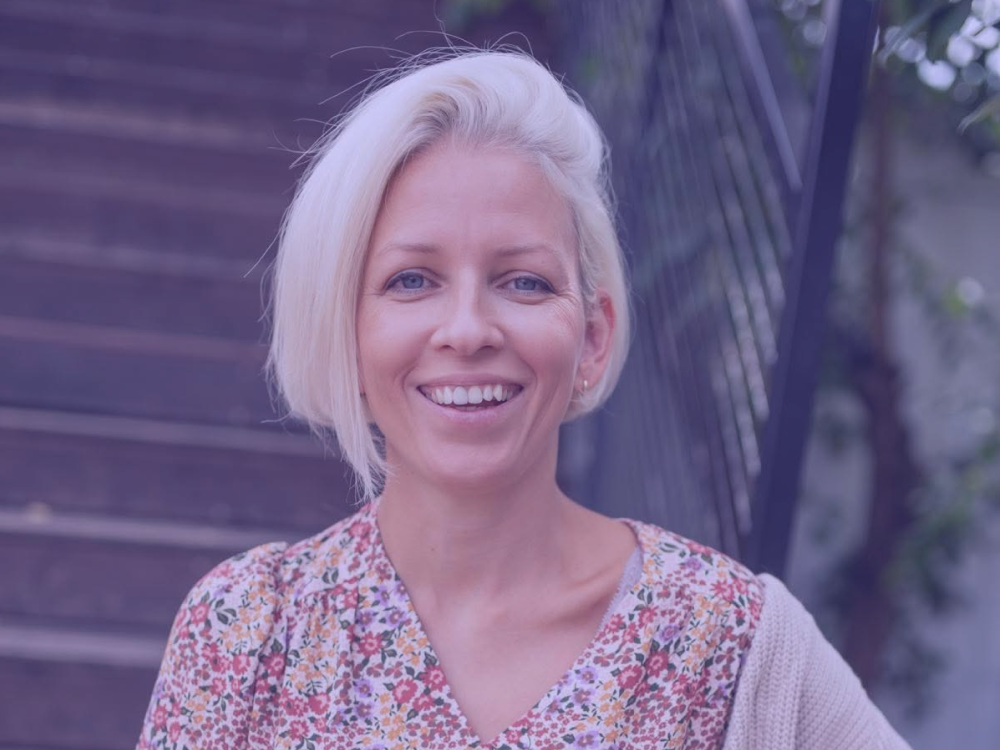
- Name: Karolina
- Mother tongue: Polish
- Lives in: Poznań - Poland (one of the biggest cities in Poland)
Can you tell me a bit about yourself?
For a couple of years, I worked as a project manager (EU funds). Then, I became a stay-at-home mother, taking care of my three kids. When I decided to return to work, I realized that I no longer wanted to manage projects, as I had always been interested in languages (Spanish and English). I was frequently asked by my friends or family to help with some learning problems (grammar, translations) and I really enjoyed it.
I hold a master's degree in political science, so the only way for me to become an English and Spanish teacher was to get international certificates. That is how I started looking for a reliable source of knowledge, vocabulary, and naturally sounding English. I was aware that my listening and speaking skills were the areas in which I needed support.
I set myself a goal to get the Certificate in Advanced English (CAE by Cambridge University) within a year. I pursued this alongside completing postgraduate studies in pedagogy, which are required by Polish law to be able to teach. Luckily, I made it. Since 2023, I have been able to teach children and teenagers at all levels of their education.
What have you found the hardest thing about learning / teaching English?
I was struggling with speaking and listening because the CAE exam is at C1 level, and during my maternity leave, which lasted 11 years, I didn't use English very often. I had forgotten many words, and I felt nervous and insecure when it came to speaking. At that point, I think I was at a B1+ level, so I had to reach C1 within a year, because I wanted to start teaching after that.
I regret that the Polish educational system focuses too much on grammar and writing skills, neglecting speaking and listening in particular.
Can you tell me a bit more about your journey from student to teacher?
To jump to the C1 level, I started with traditional English courses at a language school, but very soon I realized it wasn't enough. I didn't have problems with grammar or writing, as there were many great coursebooks for CAE exams. Speaking a foreign language fluently is an everyday practice, so I couldn't rely only on two lessons a week. The same was true for listening skills. I tried many methods—movies, YouTube videos, online teachers, podcasts—and I found them all helpful.
However, to reach C1, I needed advanced vocabulary, smooth linking words, and what mattered most, I wanted to speak more confidently and more fluently. One day, I typed into my internet browser: "the best podcasts to improve my English," and that's how I found English Learning for Curious Minds.
At first, I used the podcasts only to practice my listening skills. I listened to them while driving, ironing, cleaning, before going to sleep, while shopping for groceries, or even during my holidays. I immediately became fascinated by the stories and the knowledge I could gain and share with my friends. I would summarize the episodes for them, which forced me to use new vocabulary and synonyms, as Alastair is a master at presenting stories in interesting and advanced ways.
After a while, I started to break down some episodes to use them as exam preparation. I focused on words, especially linking words, idioms, and nice phrases, which every episode is packed with.
However, my real game changer was shadowing, as I could follow every word of the episode using the active transcript on the leonardoenglish.com website. At first, it was difficult—I literally felt exhausted after 20 minutes of constant shadowing, repeating every single word out loud after the recording. But after just a week, I noticed progress. What's more, I felt more confident when speaking. I could use exact phrases from the episodes in my speech, and I no longer struggled with linking words, as they came out more naturally and smoothly. It's also worth mentioning that Alastair speaks very clearly, with excellent diction.
Combining my lessons at the language school, my self-study, and the Leonardo English podcasts, I felt that I had powerful tools at my fingertips. I passed my CAE exam with flying colours, and in just a little over a year (14 months), I could proudly call myself an English teacher!
Now, I teach at a primary school, after spending almost two years as a high school teacher.
What are some top tips you give your students?
- Never focus on mistakes.
- Vocabulary is the key to progress.
- English is fascinating.
What are some qualities you see in your most successful students?
Regularity and curiosity—they ask questions, they dig deeper into a topic, and they understand that English is essential for their future.
What are your other favourite ways to improve your English? (e.g. reading books, YouTube videos)
I think it depends on your goals. Currently, I'm focusing on vocabulary, because I want to be a solid and reliable help for my students in improving their skills. Vocabulary still seems to be the hardest part to master. As a non-native speaker, I still need to polish my sentences and make them sound more natural.
So, I watch films on streaming platforms, read English books, and still listen to English Learning for Curious Minds. I no longer need many sources, but I want to continue developing my skills.
Do you have any special tips for someone trying to improve their English?
Focus on vocabulary and use mnemonics to speed up learning new words. I found the Leitner box method extremely effective.
- It's a smart flashcard system that uses spaced repetition to focus study time on difficult material.
- The system involves multiple boxes (e.g., Box 1: daily, Box 2: every other day, Box 3: weekly).
- Cards you answer correctly move to a box with less frequent review, while incorrect ones go back to the daily box.
- This way, you maximize learning efficiency by focusing on what you don't know.
- This method is quite demanding, but very effective.
Do you have any special tips on staying motivated?
- Take small steps, and reward yourself for even a little progress.
- Focus on areas that interest you.
Why did you decide to become a member of Leonardo English?
I wanted to have access to all episodes, the active transcript, and exclusive challenges.
Can you share a little bit about your "podcast" routine? How do you use the podcasts to improve your / your students' English, and do you have any tips for others?
When I was preparing for the CAE exam, I started by just listening to a podcast. If I found it useful (which was most of the time), I analyzed the podcast to pick out phrases and words that were either new or interesting to me. I wrote them down and tried to memorize them.
After that, I moved on to the shadowing part: I played the podcast on my phone while following the active transcript, repeating the words immediately after Alastair said them. Whenever I made a mistake, I didn't stop—I just skipped to the next phrase that I could follow. In the beginning, it was really hard for me to keep up with the recording, but after a while, I got used to it.
I especially focused on phrases and word chunks. It was only thanks to the podcast that I learned expressions like: "To state the obvious," "do something out of the goodness of your heart," the inversion "Not only did they... but also........” “to wrap things up,” “get out of the way,” and many advanced linking words. These were extremely helpful in making me sound like a more advanced speaker, for example: albeit, hence, in addition, furthermore, namely, in particular, and many more.
When it comes to my students, I prepare a handout based on an episode. They listen to it (or just parts of it), then analyze, summarize, and complete listening comprehension exercises. Sometimes, with higher-level students, we start a discussion based on topics from the podcast.
What's your favourite English Learning for Curious Minds episode (and why)?
It's a mini-series about the atomic bomb. The story is brilliantly told, and it is both shocking and fascinating at the same time. I remember learning for the first time what "aftermath" meant.
(You can listen to them here: Part 1: The Manhattan Project, Part 2: Hiroshima & Nagasaki and Part 3: The Aftermath)
Alastair says:
Thank you Karolina for sharing this wonderful story. Your dedication and attitude is seriously impressive, and I'm sure you will be an inspiration to other learners. Well done, and I'm sure that your students are incredibly lucky to have you for a teacher.