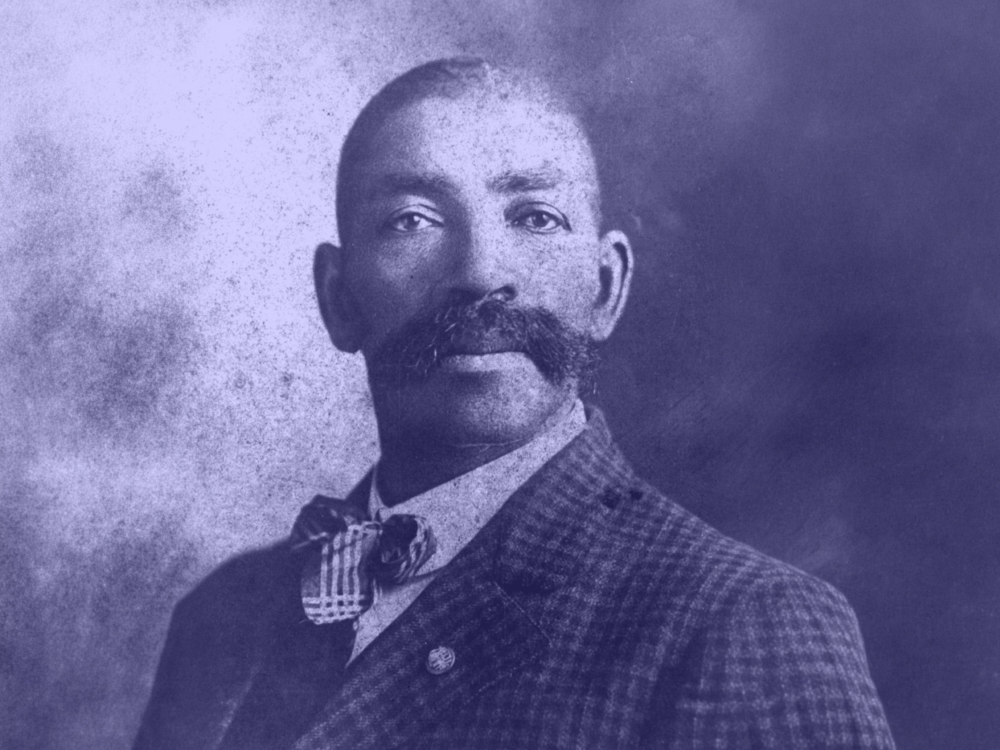
He was born into slavery in Arkansas, became one of the most feared lawmen in the American West, and made more than 3,000 arrests over his career.
Bass Reeves was a master of disguise who once arrested his own son for murder, and who worked for decades without being shot.
Some historians think he was the real inspiration for the Lone Ranger. So why did America forget him?
Tap a purple word for its meaning. Tap a time to play from there.
[00:00:05] Hello, hello, hello, and welcome to English Learning for Curious Minds, by Leonardo English, the show where you can listen to fascinating stories and learn weird and wonderful things about the world at the same time as improving your English.
[00:00:21] Today it is part two of our three-part mini-series on Tales from The Wild West.
[00:00:28] In part one, we looked at Wyatt Earp: perhaps the most famous lawman of the frontier, but one who wasn’t all that good at following the law himself.
[00:00:40] Today, we’re going to meet someone who almost certainly had a more extraordinary life.
[00:00:46] A man who made over three thousand arrests, who was never seriously wounded in the line of duty, who spoke multiple languages and used elaborate disguises to bring fugitives to justice.
[00:01:00] A man who was also almost entirely forgotten to history: Bass Reeves.
[00:01:07] It is an amazing story, so let’s not waste a minute, and get right into it.
[00:01:15] It is 1902, in Muskogee, in Oklahoma.
[00:01:20] A young man is wanted for murder.
[00:01:24] He has discovered that his wife has been having an affair, and in a fit of rage, he pulls out his revolver and shoots her dead. He turns the gun on himself, but somehow the bullet misses, only grazing the side of his head.
[00:01:45] He survives, and instead of turning himself in, he flees the murder scene.
[00:01:53] Unfortunately for him, Muskogee, Oklahoma is also the hunting ground of one of America’s most feared marshals, a man who has arrested thousands of criminals over a career spanning four decades: Bass Reeves.
[00:02:13] The young man, presumably, knows that the odds are stacked against him.
[00:02:20] The accounts of what happened next vary.
[00:02:24] Some have Bass Reeves following his target all the way into the wilderness, arresting him after a long chase. Others have Reeves tracking the man down at his home, and a tense standoff ensuing, with Reeves telling the man he can either give himself up, or he’ll be shot dead.
[00:02:48] Eventually, the man gives himself up, is taken into custody, is charged and sentenced. He escapes the death penalty and ends up serving eleven years in prison.
[00:03:04] For Bass Reeves, this man, Bennie, would be just one of the thousands of criminals he apprehended, and the story of how he was brought in is unremarkable apart from one detail: the man he arrested was his son.
[00:03:25] Now, we will return to this a little later in the episode, but first let me paint you a picture of the early life of Bass Reeves.
[00:03:37] He was born in Crawford County, Arkansas, in 1838.
[00:03:43] He was born into slavery, and given the name Bass. Just: Bass, no surname, as slaves in the American South weren’t generally given family names. The name Reeves would come later, from the family that owned him.
[00:04:02] His owner was a man named William Steele Reeves. He was a farmer and Arkansas state legislator.
[00:04:11] Bass’s early life is not well documented, and what we know about Reeves’s early years comes largely from accounts he gave much later.
[00:04:23] There are three things worth pointing out.
[00:04:27] The first is that, from a young age, he was physically exceptional. He was tall, 190 centimetres as a grown man, and was extraordinarily strong. People were always talking about his hands in particular: enormous hands, and one of his signature moves was to grab a criminal by the throat.
[00:04:52] The second is that he had an extraordinary ability to read people: to watch, to listen, to understand what someone was thinking before they said it, to figure out what someone’s next move would be before they knew it themselves.
[00:05:12] And the final thing is that he was an excellent shot.
[00:05:17] This was unusual for slaves, as they weren’t typically given access to guns by their owners, for obvious reasons. Bass Reeves must have been trusted enough, and he was trained with firearms, primarily for hunting and pest control on his master’s farm.
[00:05:38] He was so good that at local shooting competitions, he was eventually asked not to enter so that other men had a fair chance of winning.
[00:05:49] He was unusual in his abilities, and this meant that he was relieved of the more arduous tasks that most slaves were made to do, and instead became the “personal servant” of his master’s son, George.
[00:06:06] He was still a slave, still the legal property of another man, but his role became more of a butler or personal servant rather than a field labourer.
[00:06:20] And interestingly enough, one account has it that he asked his master, George Reeves, if he could learn to read and write.
[00:06:31] George refused, but said that instead he would teach him how to use weapons, which perhaps hints at what was considered more dangerous: a slave who could read and write or a slave who could shoot.
[00:06:46] Now, when the Civil War broke out in 1861, Bass went with his owner’s son, George, who had been called up to serve in the Confederate Army. Bass would have been in his early 20s at the time.
[00:07:02] And at some point during the war, Bass and George had a confrontation, an argument. The exact circumstances are unclear: some accounts say it was over a card game, some say it was over an order that Reeves refused to follow.
[00:07:23] Whatever happened, Bass hit George.
[00:07:27] And in the Confederacy, for a slave, striking a white man was a potential death sentence.
[00:07:36] Bass Reeves fled.
[00:07:39] He crossed into Indian Territory, the area west of Arkansas that is now the state of Oklahoma.
[00:07:47] And for those of you who aren’t so familiar with the geography of the US, we’re talking the central, southern bit of the United States, immediately above Texas.
[00:08:00] Now, Indian Territory in the 1860s was unlike anywhere else in North America.
[00:08:08] It had been established in the 1830s as the destination for the so-called Five Civilised Tribes, the Native American groups who had been forcibly removed from their homelands in the American South in a catastrophic series of events known as the Trail of Tears.
[00:08:29] Tens of thousands of Native people had been marched westward at gunpoint. Thousands had died on the journey. This territory — Indian Territory — this was what remained to them. It was a sort of ghetto, albeit a very large one in a very large country.
[00:08:51] And by the time Reeves arrived, it was a complex, multilingual, multicultural place. These “Indians”, these Native Americans, were not one, single people. The nations had their own governments, their own courts, their own laws.
[00:09:11] Bass Reeves settled among these people. He learned their languages, five of them, which he could speak fluently. He farmed. He built a life.
[00:09:23] During this time, he got to know the Territory like the back of his hand: the paths, the hiding places, the people, the feuds, and the networks. Which routes went where and who used them. Which families were connected. Who to trust and who not to. Who held grudges against who.
[00:09:45] In 1865, the Civil War ended, and with it came the Thirteenth Amendment and the abolition of slavery.
[00:09:55] Bass Reeves was a free man.
[00:09:59] He returned to Arkansas, and settled just over the border, in a town called Van Buren. He got married, set up his own farm, and had children, eventually eleven in total. For a decade or so, he lived quietly, minding his business, working his farm, raising his family.
[00:10:22] Then, in 1875, a man named Isaac Parker arrived in Fort Smith, Arkansas, to take up the position of federal judge for the Western District of Arkansas, the district that covered Indian Territory.
[00:10:40] Now, Parker was a stickler for justice, and was known as the Hanging Judge.
[00:10:48] In twenty-one years on the bench, he sentenced 160 men to death, 79 of whom were hanged.
[00:10:57] He was strict, moralistic, and completely convinced of his own righteousness, that he was doing the Lord and the State’s work.
[00:11:08] His belief was that Indian Territory was in dire need of order, and he was willing to be ruthless in his pursuit of it.
[00:11:20] And interestingly enough, one more progressive element of his worldview was that, compared to most men of his time, he was unusually willing to hire Black deputies.
[00:11:34] And as for the Territory itself, well, it was a pretty lawless place, and enforcing the law was a problem.
[00:11:44] For starters, it was vast. It covered just under 200,000 square kilometres, which is an area roughly the size of England and Wales put together.
[00:11:57] It had little formal internal law enforcement of its own. Fugitives from Kansas, Texas, Missouri, and Arkansas had learned that if you crossed into Indian Territory, most lawmen wouldn’t follow.
[00:12:14] Parker needed deputies who knew the Territory. Who knew the people. Who spoke the languages. Who could survive alone out there for days or weeks at a time.
[00:12:28] Bass Reeves fit that description better than almost anyone alive.
[00:12:34] In 1875, at the age of thirty-seven, Bass Reeves was appointed as a Deputy United States Marshal. He was one of, if not the first, Black men to hold that position west of the Mississippi River.
[00:12:51] It would be a position he would hold for thirty-two years, and it is not an overstatement to say that he had a legendary law enforcement career.
[00:13:02] He made over three thousand arrests. He killed a reported fourteen men in the line of duty, all of them, by every account, in self-defence.
[00:13:14] Amazingly enough, while hundreds of his fellow US marshals were being killed doing exactly the same job, he was never seriously injured. There is one account of him getting shot in the leg, but if this did happen, it didn’t seriously trouble him. He was going out and bringing in criminals right up into his late 60s.
[00:13:40] And he didn’t bring people in one at a time, either.
[00:13:44] On his best single trip, he brought in seventeen men, all chained together on an open wagon.
[00:13:53] He was paid for every criminal he brought in, and the fees could add up considerably.
[00:14:00] In the case of the seventeen-man haul, the fee he collected came to around nine hundred dollars, which is something like $35,000 in today’s money.
[00:14:13] And as to how he would go about the business of capturing criminals, well, there have been entire books written about these legendary arrests.
[00:14:24] His skin colour was an immediate advantage; lawmen tended to be white, so most outlaws simply wouldn’t expect a black man to arrest them.
[00:14:36] But as his reputation continued to grow, he had to find more and more ingenious ways of getting close enough to his target to arrest them without being shot at first. The key thing was disguising his identity, and the fact that he was an officer of the law, until the very last minute.
[00:14:58] He would sometimes ride into outlaw territory as a travelling preacher, his Bible open on the saddle in front of him. Wanted men would approach him for company, share his campfire, tell him things. He would make the arrest the following morning, or in some cases, the men would awake to find he had put the handcuffs on while they were still asleep.
[00:15:23] He went in as a farmer, as a drifter, as an old man. On at least one occasion, he dressed as a woman and walked into the camp of men he was seeking.
[00:15:36] He was a physically imposing man, 190 centimetres tall, and very strong. Disguising this wasn’t easy. But Reeves had apparently learned a way to make himself seem considerably smaller on horseback, so he could approach his target without them realising who he was.
[00:15:58] He was a fantastic shot, deadly quick to pull out his gun but also incredibly accurate at long range. There is one account of him downing a target at a reported 450 metres. Now, that’s most likely a serious exaggeration, and there are question marks over whether his gun could even shoot that far, let alone hit a target, but it gives you an idea of his reputation.
[00:16:29] He was almost killed multiple times.
[00:16:32] Once, a pair of outlaws caught him. They had their guns pointed straight at him. Before killing him, they asked if he had any last words.
[00:16:45] Reeves said he had a letter from his wife in his pocket, and would very much like to read it before he died. He handed over the letter to his captors, his hand quivering. One took the letter, and when his eyes looked down, this gave Reeves the split second he needed to grab him by the throat and pull out his pistol.
[00:17:10] As it happens, Reeves couldn’t have read that letter even if he’d wanted to. Bass Reeves never learned to read or write, and was one of the few illiterate deputies. For most agents of the law, this would be a problem, as when you arrest someone, you need to read them the warrant for their arrest.
[00:17:34] But Reeves had an exceptional memory. When he received an arrest warrant for the first time, he would ask someone to read it aloud to him. He would look at the document, and remember which warrant referred to which person, through the shapes of certain letters or which warrant had a tear or a coffee stain on it.
[00:17:58] And when it came to the arrest, he would rifle through his satchel, find the appropriate warrant, and be able to recite it from memory.
[00:18:09] And there is one more detail.
[00:18:11] For much of his career, he worked alongside a Native American partner, someone who could move through the Territory even more easily than Reeves could, and who knew the land and the people in ways that even Reeves did not. Remember this, as it’ll be relevant in a minute.
[00:18:31] So, for almost thirty years, Bass Reeves had been doing exactly this: hunting dangerous fugitives through lawless territory, putting his life on the line almost every day, and miraculously, living to tell the tale.
[00:18:49] And then, in 1902, he heard the news that his son was on the list of wanted men.
[00:18:57] We have no record of why Bass Reeves volunteered himself to be the one to bring him in.
[00:19:04] To some people, it’s an example of his devout belief in law and order.
[00:19:10] To others, it’s more practical: he thought he had the best chance of saving his son’s life, and his son was more likely to accept his fate if it was his father that brought him in.
[00:19:24] Whatever the motivation, it worked. His son surrendered without a fight, escaped the death sentence, served eleven years in prison, and by all accounts, was a model citizen on his release.
[00:19:40] Still, Bass Reeves had arrested his own son and handed him over to a court he knew was highly likely to sentence him to death. He said nothing about it, by any account. He was just doing his job.
[00:19:57] It is the kind of thing that, were it done by a white man, no doubt would have been turned into a film. The great American lawman who will not bend the rules even for his own child. The integrity that costs everything.
[00:20:14] But it wasn’t made into a movie, and the story of Bass Reeves faded into obscurity.
[00:20:22] By the early 1900s, Indian Territory was being absorbed into what would become the state of Oklahoma. The districts that Reeves had patrolled for thirty years were being wound down. The Territory, as it had existed, was ending.
[00:20:41] Reeves was not a young man any more. But he did not retire. He took a job as a city police officer in Muskogee and carried on working until he had to stop for health reasons.
[00:20:57] He died in 1910, at the age of 71. It was not marked with great ceremony, no great obituary in the newspaper or large funeral.
[00:21:09] Indeed, to this day, nobody knows where he is buried.
[00:21:16] And as for why he was simply forgotten, well, the simplest explanation is that he didn’t fit the mould of the Wild West hero.
[00:21:26] The myth of the West was built on white heroes. People like Wyatt Earp, who you heard about in the last episode, and who certainly had a less heroic life than Bass Reeves.
[00:21:40] As a black man, Reeves’s story was destined to be forgotten.
[00:21:46] There is one theory, however, that the story of Bass Reeves is widely known, just under a different name: The Lone Ranger.
[00:21:58] Now, this was a radio programme first broadcast in 1933 about a fictional masked hero who has a native American companion called Tonto. He was a crack shot. He was alone. He was mysterious. He had a horse called Silver.
[00:22:18] The parallels with Bass Reeves are striking enough that several historians believe Reeves was the direct inspiration for the character.
[00:22:29] This is disputed, I should add; many lawmen worked with Native American companions, and wearing disguises and being a crack shot could equally be elements of any Western story rather than being directly inspired by Reeves.
[00:22:46] What can’t be disputed is that if the Lone Ranger was inspired by Bass Reeves, the protagonist needed to become white to be acceptable to a mass American audience.
[00:22:59] The Native American companion stayed, as did the skill with a gun and the penchant for disguise. The heroic agency, the man doing the arresting, the man taking all the risks, was simply transferred from a Black man to a white one.
[00:23:18] So, to wrap things up, the Wild West of popular imagination is a story about white men. Cowboys and outlaws and sheriffs. That story is real in the sense that those men existed.
[00:23:33] But the actual West was a far more mixed place. There were black cowboys and black lawmen, Chinese labourers who built much of the railway network, the Native and Mexican communities who were there before everyone else arrived.
[00:23:50] The myth of the Wild West, and the Hollywood version, was built by selecting some of those people and conveniently ignoring the rest.
[00:24:01] Someone like Bass Reeves lived an exceptional life yet was almost forgotten to history.
[00:24:08] He spent thirty-two years doing the hardest law enforcement work in America. He made three thousand arrests. He brought his own son to trial. He never bent the rules.
[00:24:20] He just happened to be the wrong colour.
[00:24:25] OK then, that is it for today’s episode on Bass Reeves.
[00:24:29] As a reminder, this was part two of a three-part mini-series on stories from the Wild West.
[00:24:36] In case you missed part one, it was on Wyatt Earp.
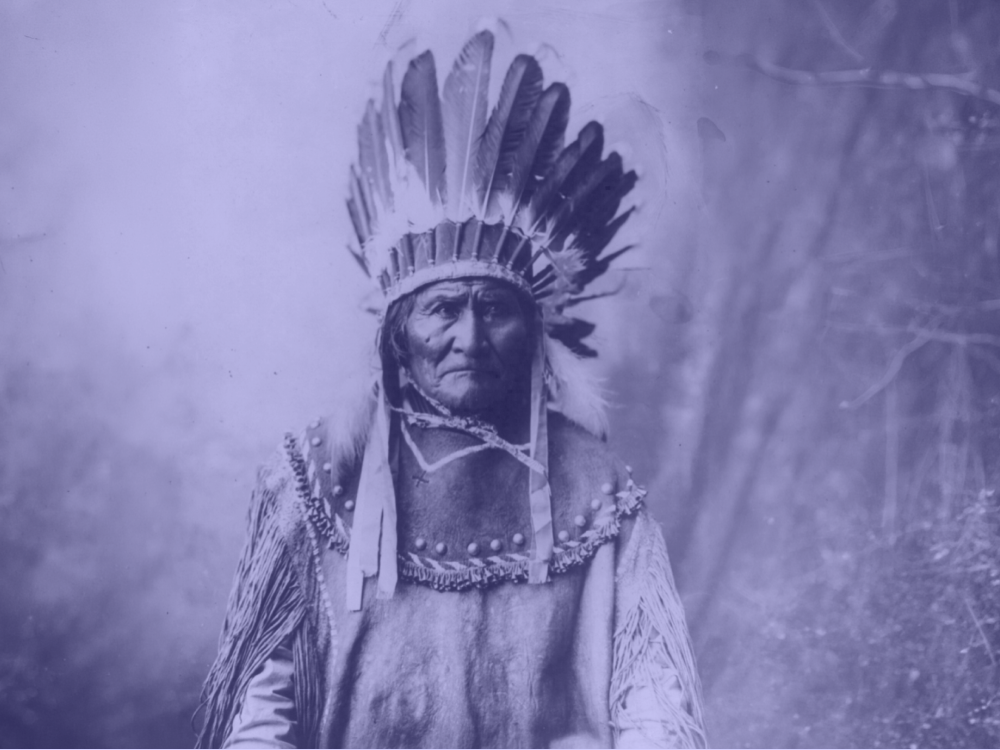
[00:24:39] And next up, in part three, we’ll look at the Wild West from a completely different angle: through the story of Geronimo, the Native American leader.
[00:24:49] You’ve been listening to English Learning for Curious Minds by Leonardo English.
[00:24:54] I’m Alastair Budge, you stay safe, and I’ll catch you in the next episode.
Join today and get instant access to 600+ episodes, interactive transcripts, PDF study packs and more.
Become a memberAlready a member? Login
30-day money back guarantee. Cancel anytime.

He was born into slavery in Arkansas, became one of the most feared lawmen in the American West, and made more than 3,000 arrests over his career.
Bass Reeves was a master of disguise who once arrested his own son for murder, and who worked for decades without being shot.
Some historians think he was the real inspiration for the Lone Ranger. So why did America forget him?

[00:00:05] Hello, hello, hello, and welcome to English Learning for Curious Minds, by Leonardo English, the show where you can listen to fascinating stories and learn weird and wonderful things about the world at the same time as improving your English.
[00:00:21] Today it is part two of our three-part mini-series on Tales from The Wild West.
[00:00:28] In part one, we looked at Wyatt Earp: perhaps the most famous lawman of the frontier, but one who wasn’t all that good at following the law himself.
[00:00:40] Today, we’re going to meet someone who almost certainly had a more extraordinary life.
[00:00:46] A man who made over three thousand arrests, who was never seriously wounded in the line of duty, who spoke multiple languages and used elaborate disguises to bring fugitives to justice.
[00:01:00] A man who was also almost entirely forgotten to history: Bass Reeves.
[00:01:07] It is an amazing story, so let’s not waste a minute, and get right into it.
[00:01:15] It is 1902, in Muskogee, in Oklahoma.
[00:01:20] A young man is wanted for murder.
[00:01:24] He has discovered that his wife has been having an affair, and in a fit of rage, he pulls out his revolver and shoots her dead. He turns the gun on himself, but somehow the bullet misses, only grazing the side of his head.
[00:01:45] He survives, and instead of turning himself in, he flees the murder scene.
[00:01:53] Unfortunately for him, Muskogee, Oklahoma is also the hunting ground of one of America’s most feared marshals, a man who has arrested thousands of criminals over a career spanning four decades: Bass Reeves.
[00:02:13] The young man, presumably, knows that the odds are stacked against him.
[00:02:20] The accounts of what happened next vary.
[00:02:24] Some have Bass Reeves following his target all the way into the wilderness, arresting him after a long chase. Others have Reeves tracking the man down at his home, and a tense standoff ensuing, with Reeves telling the man he can either give himself up, or he’ll be shot dead.
[00:02:48] Eventually, the man gives himself up, is taken into custody, is charged and sentenced. He escapes the death penalty and ends up serving eleven years in prison.
[00:03:04] For Bass Reeves, this man, Bennie, would be just one of the thousands of criminals he apprehended, and the story of how he was brought in is unremarkable apart from one detail: the man he arrested was his son.
[00:03:25] Now, we will return to this a little later in the episode, but first let me paint you a picture of the early life of Bass Reeves.
[00:03:37] He was born in Crawford County, Arkansas, in 1838.
[00:03:43] He was born into slavery, and given the name Bass. Just: Bass, no surname, as slaves in the American South weren’t generally given family names. The name Reeves would come later, from the family that owned him.
[00:04:02] His owner was a man named William Steele Reeves. He was a farmer and Arkansas state legislator.
[00:04:11] Bass’s early life is not well documented, and what we know about Reeves’s early years comes largely from accounts he gave much later.
[00:04:23] There are three things worth pointing out.
[00:04:27] The first is that, from a young age, he was physically exceptional. He was tall, 190 centimetres as a grown man, and was extraordinarily strong. People were always talking about his hands in particular: enormous hands, and one of his signature moves was to grab a criminal by the throat.
[00:04:52] The second is that he had an extraordinary ability to read people: to watch, to listen, to understand what someone was thinking before they said it, to figure out what someone’s next move would be before they knew it themselves.
[00:05:12] And the final thing is that he was an excellent shot.
[00:05:17] This was unusual for slaves, as they weren’t typically given access to guns by their owners, for obvious reasons. Bass Reeves must have been trusted enough, and he was trained with firearms, primarily for hunting and pest control on his master’s farm.
[00:05:38] He was so good that at local shooting competitions, he was eventually asked not to enter so that other men had a fair chance of winning.
[00:05:49] He was unusual in his abilities, and this meant that he was relieved of the more arduous tasks that most slaves were made to do, and instead became the “personal servant” of his master’s son, George.
[00:06:06] He was still a slave, still the legal property of another man, but his role became more of a butler or personal servant rather than a field labourer.
[00:06:20] And interestingly enough, one account has it that he asked his master, George Reeves, if he could learn to read and write.
[00:06:31] George refused, but said that instead he would teach him how to use weapons, which perhaps hints at what was considered more dangerous: a slave who could read and write or a slave who could shoot.
[00:06:46] Now, when the Civil War broke out in 1861, Bass went with his owner’s son, George, who had been called up to serve in the Confederate Army. Bass would have been in his early 20s at the time.
[00:07:02] And at some point during the war, Bass and George had a confrontation, an argument. The exact circumstances are unclear: some accounts say it was over a card game, some say it was over an order that Reeves refused to follow.
[00:07:23] Whatever happened, Bass hit George.
[00:07:27] And in the Confederacy, for a slave, striking a white man was a potential death sentence.
[00:07:36] Bass Reeves fled.
[00:07:39] He crossed into Indian Territory, the area west of Arkansas that is now the state of Oklahoma.
[00:07:47] And for those of you who aren’t so familiar with the geography of the US, we’re talking the central, southern bit of the United States, immediately above Texas.
[00:08:00] Now, Indian Territory in the 1860s was unlike anywhere else in North America.
[00:08:08] It had been established in the 1830s as the destination for the so-called Five Civilised Tribes, the Native American groups who had been forcibly removed from their homelands in the American South in a catastrophic series of events known as the Trail of Tears.
[00:08:29] Tens of thousands of Native people had been marched westward at gunpoint. Thousands had died on the journey. This territory — Indian Territory — this was what remained to them. It was a sort of ghetto, albeit a very large one in a very large country.
[00:08:51] And by the time Reeves arrived, it was a complex, multilingual, multicultural place. These “Indians”, these Native Americans, were not one, single people. The nations had their own governments, their own courts, their own laws.
[00:09:11] Bass Reeves settled among these people. He learned their languages, five of them, which he could speak fluently. He farmed. He built a life.
[00:09:23] During this time, he got to know the Territory like the back of his hand: the paths, the hiding places, the people, the feuds, and the networks. Which routes went where and who used them. Which families were connected. Who to trust and who not to. Who held grudges against who.
[00:09:45] In 1865, the Civil War ended, and with it came the Thirteenth Amendment and the abolition of slavery.
[00:09:55] Bass Reeves was a free man.
[00:09:59] He returned to Arkansas, and settled just over the border, in a town called Van Buren. He got married, set up his own farm, and had children, eventually eleven in total. For a decade or so, he lived quietly, minding his business, working his farm, raising his family.
[00:10:22] Then, in 1875, a man named Isaac Parker arrived in Fort Smith, Arkansas, to take up the position of federal judge for the Western District of Arkansas, the district that covered Indian Territory.
[00:10:40] Now, Parker was a stickler for justice, and was known as the Hanging Judge.
[00:10:48] In twenty-one years on the bench, he sentenced 160 men to death, 79 of whom were hanged.
[00:10:57] He was strict, moralistic, and completely convinced of his own righteousness, that he was doing the Lord and the State’s work.
[00:11:08] His belief was that Indian Territory was in dire need of order, and he was willing to be ruthless in his pursuit of it.
[00:11:20] And interestingly enough, one more progressive element of his worldview was that, compared to most men of his time, he was unusually willing to hire Black deputies.
[00:11:34] And as for the Territory itself, well, it was a pretty lawless place, and enforcing the law was a problem.
[00:11:44] For starters, it was vast. It covered just under 200,000 square kilometres, which is an area roughly the size of England and Wales put together.
[00:11:57] It had little formal internal law enforcement of its own. Fugitives from Kansas, Texas, Missouri, and Arkansas had learned that if you crossed into Indian Territory, most lawmen wouldn’t follow.
[00:12:14] Parker needed deputies who knew the Territory. Who knew the people. Who spoke the languages. Who could survive alone out there for days or weeks at a time.
[00:12:28] Bass Reeves fit that description better than almost anyone alive.
[00:12:34] In 1875, at the age of thirty-seven, Bass Reeves was appointed as a Deputy United States Marshal. He was one of, if not the first, Black men to hold that position west of the Mississippi River.
[00:12:51] It would be a position he would hold for thirty-two years, and it is not an overstatement to say that he had a legendary law enforcement career.
[00:13:02] He made over three thousand arrests. He killed a reported fourteen men in the line of duty, all of them, by every account, in self-defence.
[00:13:14] Amazingly enough, while hundreds of his fellow US marshals were being killed doing exactly the same job, he was never seriously injured. There is one account of him getting shot in the leg, but if this did happen, it didn’t seriously trouble him. He was going out and bringing in criminals right up into his late 60s.
[00:13:40] And he didn’t bring people in one at a time, either.
[00:13:44] On his best single trip, he brought in seventeen men, all chained together on an open wagon.
[00:13:53] He was paid for every criminal he brought in, and the fees could add up considerably.
[00:14:00] In the case of the seventeen-man haul, the fee he collected came to around nine hundred dollars, which is something like $35,000 in today’s money.
[00:14:13] And as to how he would go about the business of capturing criminals, well, there have been entire books written about these legendary arrests.
[00:14:24] His skin colour was an immediate advantage; lawmen tended to be white, so most outlaws simply wouldn’t expect a black man to arrest them.
[00:14:36] But as his reputation continued to grow, he had to find more and more ingenious ways of getting close enough to his target to arrest them without being shot at first. The key thing was disguising his identity, and the fact that he was an officer of the law, until the very last minute.
[00:14:58] He would sometimes ride into outlaw territory as a travelling preacher, his Bible open on the saddle in front of him. Wanted men would approach him for company, share his campfire, tell him things. He would make the arrest the following morning, or in some cases, the men would awake to find he had put the handcuffs on while they were still asleep.
[00:15:23] He went in as a farmer, as a drifter, as an old man. On at least one occasion, he dressed as a woman and walked into the camp of men he was seeking.
[00:15:36] He was a physically imposing man, 190 centimetres tall, and very strong. Disguising this wasn’t easy. But Reeves had apparently learned a way to make himself seem considerably smaller on horseback, so he could approach his target without them realising who he was.
[00:15:58] He was a fantastic shot, deadly quick to pull out his gun but also incredibly accurate at long range. There is one account of him downing a target at a reported 450 metres. Now, that’s most likely a serious exaggeration, and there are question marks over whether his gun could even shoot that far, let alone hit a target, but it gives you an idea of his reputation.
[00:16:29] He was almost killed multiple times.
[00:16:32] Once, a pair of outlaws caught him. They had their guns pointed straight at him. Before killing him, they asked if he had any last words.
[00:16:45] Reeves said he had a letter from his wife in his pocket, and would very much like to read it before he died. He handed over the letter to his captors, his hand quivering. One took the letter, and when his eyes looked down, this gave Reeves the split second he needed to grab him by the throat and pull out his pistol.
[00:17:10] As it happens, Reeves couldn’t have read that letter even if he’d wanted to. Bass Reeves never learned to read or write, and was one of the few illiterate deputies. For most agents of the law, this would be a problem, as when you arrest someone, you need to read them the warrant for their arrest.
[00:17:34] But Reeves had an exceptional memory. When he received an arrest warrant for the first time, he would ask someone to read it aloud to him. He would look at the document, and remember which warrant referred to which person, through the shapes of certain letters or which warrant had a tear or a coffee stain on it.
[00:17:58] And when it came to the arrest, he would rifle through his satchel, find the appropriate warrant, and be able to recite it from memory.
[00:18:09] And there is one more detail.
[00:18:11] For much of his career, he worked alongside a Native American partner, someone who could move through the Territory even more easily than Reeves could, and who knew the land and the people in ways that even Reeves did not. Remember this, as it’ll be relevant in a minute.
[00:18:31] So, for almost thirty years, Bass Reeves had been doing exactly this: hunting dangerous fugitives through lawless territory, putting his life on the line almost every day, and miraculously, living to tell the tale.
[00:18:49] And then, in 1902, he heard the news that his son was on the list of wanted men.
[00:18:57] We have no record of why Bass Reeves volunteered himself to be the one to bring him in.
[00:19:04] To some people, it’s an example of his devout belief in law and order.
[00:19:10] To others, it’s more practical: he thought he had the best chance of saving his son’s life, and his son was more likely to accept his fate if it was his father that brought him in.
[00:19:24] Whatever the motivation, it worked. His son surrendered without a fight, escaped the death sentence, served eleven years in prison, and by all accounts, was a model citizen on his release.
[00:19:40] Still, Bass Reeves had arrested his own son and handed him over to a court he knew was highly likely to sentence him to death. He said nothing about it, by any account. He was just doing his job.
[00:19:57] It is the kind of thing that, were it done by a white man, no doubt would have been turned into a film. The great American lawman who will not bend the rules even for his own child. The integrity that costs everything.
[00:20:14] But it wasn’t made into a movie, and the story of Bass Reeves faded into obscurity.
[00:20:22] By the early 1900s, Indian Territory was being absorbed into what would become the state of Oklahoma. The districts that Reeves had patrolled for thirty years were being wound down. The Territory, as it had existed, was ending.
[00:20:41] Reeves was not a young man any more. But he did not retire. He took a job as a city police officer in Muskogee and carried on working until he had to stop for health reasons.
[00:20:57] He died in 1910, at the age of 71. It was not marked with great ceremony, no great obituary in the newspaper or large funeral.
[00:21:09] Indeed, to this day, nobody knows where he is buried.
[00:21:16] And as for why he was simply forgotten, well, the simplest explanation is that he didn’t fit the mould of the Wild West hero.
[00:21:26] The myth of the West was built on white heroes. People like Wyatt Earp, who you heard about in the last episode, and who certainly had a less heroic life than Bass Reeves.
[00:21:40] As a black man, Reeves’s story was destined to be forgotten.
[00:21:46] There is one theory, however, that the story of Bass Reeves is widely known, just under a different name: The Lone Ranger.
[00:21:58] Now, this was a radio programme first broadcast in 1933 about a fictional masked hero who has a native American companion called Tonto. He was a crack shot. He was alone. He was mysterious. He had a horse called Silver.
[00:22:18] The parallels with Bass Reeves are striking enough that several historians believe Reeves was the direct inspiration for the character.
[00:22:29] This is disputed, I should add; many lawmen worked with Native American companions, and wearing disguises and being a crack shot could equally be elements of any Western story rather than being directly inspired by Reeves.
[00:22:46] What can’t be disputed is that if the Lone Ranger was inspired by Bass Reeves, the protagonist needed to become white to be acceptable to a mass American audience.
[00:22:59] The Native American companion stayed, as did the skill with a gun and the penchant for disguise. The heroic agency, the man doing the arresting, the man taking all the risks, was simply transferred from a Black man to a white one.
[00:23:18] So, to wrap things up, the Wild West of popular imagination is a story about white men. Cowboys and outlaws and sheriffs. That story is real in the sense that those men existed.
[00:23:33] But the actual West was a far more mixed place. There were black cowboys and black lawmen, Chinese labourers who built much of the railway network, the Native and Mexican communities who were there before everyone else arrived.
[00:23:50] The myth of the Wild West, and the Hollywood version, was built by selecting some of those people and conveniently ignoring the rest.
[00:24:01] Someone like Bass Reeves lived an exceptional life yet was almost forgotten to history.
[00:24:08] He spent thirty-two years doing the hardest law enforcement work in America. He made three thousand arrests. He brought his own son to trial. He never bent the rules.
[00:24:20] He just happened to be the wrong colour.
[00:24:25] OK then, that is it for today’s episode on Bass Reeves.
[00:24:29] As a reminder, this was part two of a three-part mini-series on stories from the Wild West.
[00:24:36] In case you missed part one, it was on Wyatt Earp.
[00:24:39] And next up, in part three, we’ll look at the Wild West from a completely different angle: through the story of Geronimo, the Native American leader.
[00:24:49] You’ve been listening to English Learning for Curious Minds by Leonardo English.
[00:24:54] I’m Alastair Budge, you stay safe, and I’ll catch you in the next episode.
[00:00:05] Hello, hello, hello, and welcome to English Learning for Curious Minds, by Leonardo English, the show where you can listen to fascinating stories and learn weird and wonderful things about the world at the same time as improving your English.
[00:00:21] Today it is part two of our three-part mini-series on Tales from The Wild West.
[00:00:28] In part one, we looked at Wyatt Earp: perhaps the most famous lawman of the frontier, but one who wasn’t all that good at following the law himself.
[00:00:40] Today, we’re going to meet someone who almost certainly had a more extraordinary life.
[00:00:46] A man who made over three thousand arrests, who was never seriously wounded in the line of duty, who spoke multiple languages and used elaborate disguises to bring fugitives to justice.
[00:01:00] A man who was also almost entirely forgotten to history: Bass Reeves.
[00:01:07] It is an amazing story, so let’s not waste a minute, and get right into it.
[00:01:15] It is 1902, in Muskogee, in Oklahoma.
[00:01:20] A young man is wanted for murder.
[00:01:24] He has discovered that his wife has been having an affair, and in a fit of rage, he pulls out his revolver and shoots her dead. He turns the gun on himself, but somehow the bullet misses, only grazing the side of his head.
[00:01:45] He survives, and instead of turning himself in, he flees the murder scene.
[00:01:53] Unfortunately for him, Muskogee, Oklahoma is also the hunting ground of one of America’s most feared marshals, a man who has arrested thousands of criminals over a career spanning four decades: Bass Reeves.
[00:02:13] The young man, presumably, knows that the odds are stacked against him.
[00:02:20] The accounts of what happened next vary.
[00:02:24] Some have Bass Reeves following his target all the way into the wilderness, arresting him after a long chase. Others have Reeves tracking the man down at his home, and a tense standoff ensuing, with Reeves telling the man he can either give himself up, or he’ll be shot dead.
[00:02:48] Eventually, the man gives himself up, is taken into custody, is charged and sentenced. He escapes the death penalty and ends up serving eleven years in prison.
[00:03:04] For Bass Reeves, this man, Bennie, would be just one of the thousands of criminals he apprehended, and the story of how he was brought in is unremarkable apart from one detail: the man he arrested was his son.
[00:03:25] Now, we will return to this a little later in the episode, but first let me paint you a picture of the early life of Bass Reeves.
[00:03:37] He was born in Crawford County, Arkansas, in 1838.
[00:03:43] He was born into slavery, and given the name Bass. Just: Bass, no surname, as slaves in the American South weren’t generally given family names. The name Reeves would come later, from the family that owned him.
[00:04:02] His owner was a man named William Steele Reeves. He was a farmer and Arkansas state legislator.
[00:04:11] Bass’s early life is not well documented, and what we know about Reeves’s early years comes largely from accounts he gave much later.
[00:04:23] There are three things worth pointing out.
[00:04:27] The first is that, from a young age, he was physically exceptional. He was tall, 190 centimetres as a grown man, and was extraordinarily strong. People were always talking about his hands in particular: enormous hands, and one of his signature moves was to grab a criminal by the throat.
[00:04:52] The second is that he had an extraordinary ability to read people: to watch, to listen, to understand what someone was thinking before they said it, to figure out what someone’s next move would be before they knew it themselves.
[00:05:12] And the final thing is that he was an excellent shot.
[00:05:17] This was unusual for slaves, as they weren’t typically given access to guns by their owners, for obvious reasons. Bass Reeves must have been trusted enough, and he was trained with firearms, primarily for hunting and pest control on his master’s farm.
[00:05:38] He was so good that at local shooting competitions, he was eventually asked not to enter so that other men had a fair chance of winning.
[00:05:49] He was unusual in his abilities, and this meant that he was relieved of the more arduous tasks that most slaves were made to do, and instead became the “personal servant” of his master’s son, George.
[00:06:06] He was still a slave, still the legal property of another man, but his role became more of a butler or personal servant rather than a field labourer.
[00:06:20] And interestingly enough, one account has it that he asked his master, George Reeves, if he could learn to read and write.
[00:06:31] George refused, but said that instead he would teach him how to use weapons, which perhaps hints at what was considered more dangerous: a slave who could read and write or a slave who could shoot.
[00:06:46] Now, when the Civil War broke out in 1861, Bass went with his owner’s son, George, who had been called up to serve in the Confederate Army. Bass would have been in his early 20s at the time.
[00:07:02] And at some point during the war, Bass and George had a confrontation, an argument. The exact circumstances are unclear: some accounts say it was over a card game, some say it was over an order that Reeves refused to follow.
[00:07:23] Whatever happened, Bass hit George.
[00:07:27] And in the Confederacy, for a slave, striking a white man was a potential death sentence.
[00:07:36] Bass Reeves fled.
[00:07:39] He crossed into Indian Territory, the area west of Arkansas that is now the state of Oklahoma.
[00:07:47] And for those of you who aren’t so familiar with the geography of the US, we’re talking the central, southern bit of the United States, immediately above Texas.
[00:08:00] Now, Indian Territory in the 1860s was unlike anywhere else in North America.
[00:08:08] It had been established in the 1830s as the destination for the so-called Five Civilised Tribes, the Native American groups who had been forcibly removed from their homelands in the American South in a catastrophic series of events known as the Trail of Tears.
[00:08:29] Tens of thousands of Native people had been marched westward at gunpoint. Thousands had died on the journey. This territory — Indian Territory — this was what remained to them. It was a sort of ghetto, albeit a very large one in a very large country.
[00:08:51] And by the time Reeves arrived, it was a complex, multilingual, multicultural place. These “Indians”, these Native Americans, were not one, single people. The nations had their own governments, their own courts, their own laws.
[00:09:11] Bass Reeves settled among these people. He learned their languages, five of them, which he could speak fluently. He farmed. He built a life.
[00:09:23] During this time, he got to know the Territory like the back of his hand: the paths, the hiding places, the people, the feuds, and the networks. Which routes went where and who used them. Which families were connected. Who to trust and who not to. Who held grudges against who.
[00:09:45] In 1865, the Civil War ended, and with it came the Thirteenth Amendment and the abolition of slavery.
[00:09:55] Bass Reeves was a free man.
[00:09:59] He returned to Arkansas, and settled just over the border, in a town called Van Buren. He got married, set up his own farm, and had children, eventually eleven in total. For a decade or so, he lived quietly, minding his business, working his farm, raising his family.
[00:10:22] Then, in 1875, a man named Isaac Parker arrived in Fort Smith, Arkansas, to take up the position of federal judge for the Western District of Arkansas, the district that covered Indian Territory.
[00:10:40] Now, Parker was a stickler for justice, and was known as the Hanging Judge.
[00:10:48] In twenty-one years on the bench, he sentenced 160 men to death, 79 of whom were hanged.
[00:10:57] He was strict, moralistic, and completely convinced of his own righteousness, that he was doing the Lord and the State’s work.
[00:11:08] His belief was that Indian Territory was in dire need of order, and he was willing to be ruthless in his pursuit of it.
[00:11:20] And interestingly enough, one more progressive element of his worldview was that, compared to most men of his time, he was unusually willing to hire Black deputies.
[00:11:34] And as for the Territory itself, well, it was a pretty lawless place, and enforcing the law was a problem.
[00:11:44] For starters, it was vast. It covered just under 200,000 square kilometres, which is an area roughly the size of England and Wales put together.
[00:11:57] It had little formal internal law enforcement of its own. Fugitives from Kansas, Texas, Missouri, and Arkansas had learned that if you crossed into Indian Territory, most lawmen wouldn’t follow.
[00:12:14] Parker needed deputies who knew the Territory. Who knew the people. Who spoke the languages. Who could survive alone out there for days or weeks at a time.
[00:12:28] Bass Reeves fit that description better than almost anyone alive.
[00:12:34] In 1875, at the age of thirty-seven, Bass Reeves was appointed as a Deputy United States Marshal. He was one of, if not the first, Black men to hold that position west of the Mississippi River.
[00:12:51] It would be a position he would hold for thirty-two years, and it is not an overstatement to say that he had a legendary law enforcement career.
[00:13:02] He made over three thousand arrests. He killed a reported fourteen men in the line of duty, all of them, by every account, in self-defence.
[00:13:14] Amazingly enough, while hundreds of his fellow US marshals were being killed doing exactly the same job, he was never seriously injured. There is one account of him getting shot in the leg, but if this did happen, it didn’t seriously trouble him. He was going out and bringing in criminals right up into his late 60s.
[00:13:40] And he didn’t bring people in one at a time, either.
[00:13:44] On his best single trip, he brought in seventeen men, all chained together on an open wagon.
[00:13:53] He was paid for every criminal he brought in, and the fees could add up considerably.
[00:14:00] In the case of the seventeen-man haul, the fee he collected came to around nine hundred dollars, which is something like $35,000 in today’s money.
[00:14:13] And as to how he would go about the business of capturing criminals, well, there have been entire books written about these legendary arrests.
[00:14:24] His skin colour was an immediate advantage; lawmen tended to be white, so most outlaws simply wouldn’t expect a black man to arrest them.
[00:14:36] But as his reputation continued to grow, he had to find more and more ingenious ways of getting close enough to his target to arrest them without being shot at first. The key thing was disguising his identity, and the fact that he was an officer of the law, until the very last minute.
[00:14:58] He would sometimes ride into outlaw territory as a travelling preacher, his Bible open on the saddle in front of him. Wanted men would approach him for company, share his campfire, tell him things. He would make the arrest the following morning, or in some cases, the men would awake to find he had put the handcuffs on while they were still asleep.
[00:15:23] He went in as a farmer, as a drifter, as an old man. On at least one occasion, he dressed as a woman and walked into the camp of men he was seeking.
[00:15:36] He was a physically imposing man, 190 centimetres tall, and very strong. Disguising this wasn’t easy. But Reeves had apparently learned a way to make himself seem considerably smaller on horseback, so he could approach his target without them realising who he was.
[00:15:58] He was a fantastic shot, deadly quick to pull out his gun but also incredibly accurate at long range. There is one account of him downing a target at a reported 450 metres. Now, that’s most likely a serious exaggeration, and there are question marks over whether his gun could even shoot that far, let alone hit a target, but it gives you an idea of his reputation.
[00:16:29] He was almost killed multiple times.
[00:16:32] Once, a pair of outlaws caught him. They had their guns pointed straight at him. Before killing him, they asked if he had any last words.
[00:16:45] Reeves said he had a letter from his wife in his pocket, and would very much like to read it before he died. He handed over the letter to his captors, his hand quivering. One took the letter, and when his eyes looked down, this gave Reeves the split second he needed to grab him by the throat and pull out his pistol.
[00:17:10] As it happens, Reeves couldn’t have read that letter even if he’d wanted to. Bass Reeves never learned to read or write, and was one of the few illiterate deputies. For most agents of the law, this would be a problem, as when you arrest someone, you need to read them the warrant for their arrest.
[00:17:34] But Reeves had an exceptional memory. When he received an arrest warrant for the first time, he would ask someone to read it aloud to him. He would look at the document, and remember which warrant referred to which person, through the shapes of certain letters or which warrant had a tear or a coffee stain on it.
[00:17:58] And when it came to the arrest, he would rifle through his satchel, find the appropriate warrant, and be able to recite it from memory.
[00:18:09] And there is one more detail.
[00:18:11] For much of his career, he worked alongside a Native American partner, someone who could move through the Territory even more easily than Reeves could, and who knew the land and the people in ways that even Reeves did not. Remember this, as it’ll be relevant in a minute.
[00:18:31] So, for almost thirty years, Bass Reeves had been doing exactly this: hunting dangerous fugitives through lawless territory, putting his life on the line almost every day, and miraculously, living to tell the tale.
[00:18:49] And then, in 1902, he heard the news that his son was on the list of wanted men.
[00:18:57] We have no record of why Bass Reeves volunteered himself to be the one to bring him in.
[00:19:04] To some people, it’s an example of his devout belief in law and order.
[00:19:10] To others, it’s more practical: he thought he had the best chance of saving his son’s life, and his son was more likely to accept his fate if it was his father that brought him in.
[00:19:24] Whatever the motivation, it worked. His son surrendered without a fight, escaped the death sentence, served eleven years in prison, and by all accounts, was a model citizen on his release.
[00:19:40] Still, Bass Reeves had arrested his own son and handed him over to a court he knew was highly likely to sentence him to death. He said nothing about it, by any account. He was just doing his job.
[00:19:57] It is the kind of thing that, were it done by a white man, no doubt would have been turned into a film. The great American lawman who will not bend the rules even for his own child. The integrity that costs everything.
[00:20:14] But it wasn’t made into a movie, and the story of Bass Reeves faded into obscurity.
[00:20:22] By the early 1900s, Indian Territory was being absorbed into what would become the state of Oklahoma. The districts that Reeves had patrolled for thirty years were being wound down. The Territory, as it had existed, was ending.
[00:20:41] Reeves was not a young man any more. But he did not retire. He took a job as a city police officer in Muskogee and carried on working until he had to stop for health reasons.
[00:20:57] He died in 1910, at the age of 71. It was not marked with great ceremony, no great obituary in the newspaper or large funeral.
[00:21:09] Indeed, to this day, nobody knows where he is buried.
[00:21:16] And as for why he was simply forgotten, well, the simplest explanation is that he didn’t fit the mould of the Wild West hero.
[00:21:26] The myth of the West was built on white heroes. People like Wyatt Earp, who you heard about in the last episode, and who certainly had a less heroic life than Bass Reeves.
[00:21:40] As a black man, Reeves’s story was destined to be forgotten.
[00:21:46] There is one theory, however, that the story of Bass Reeves is widely known, just under a different name: The Lone Ranger.
[00:21:58] Now, this was a radio programme first broadcast in 1933 about a fictional masked hero who has a native American companion called Tonto. He was a crack shot. He was alone. He was mysterious. He had a horse called Silver.
[00:22:18] The parallels with Bass Reeves are striking enough that several historians believe Reeves was the direct inspiration for the character.
[00:22:29] This is disputed, I should add; many lawmen worked with Native American companions, and wearing disguises and being a crack shot could equally be elements of any Western story rather than being directly inspired by Reeves.
[00:22:46] What can’t be disputed is that if the Lone Ranger was inspired by Bass Reeves, the protagonist needed to become white to be acceptable to a mass American audience.
[00:22:59] The Native American companion stayed, as did the skill with a gun and the penchant for disguise. The heroic agency, the man doing the arresting, the man taking all the risks, was simply transferred from a Black man to a white one.
[00:23:18] So, to wrap things up, the Wild West of popular imagination is a story about white men. Cowboys and outlaws and sheriffs. That story is real in the sense that those men existed.
[00:23:33] But the actual West was a far more mixed place. There were black cowboys and black lawmen, Chinese labourers who built much of the railway network, the Native and Mexican communities who were there before everyone else arrived.
[00:23:50] The myth of the Wild West, and the Hollywood version, was built by selecting some of those people and conveniently ignoring the rest.
[00:24:01] Someone like Bass Reeves lived an exceptional life yet was almost forgotten to history.
[00:24:08] He spent thirty-two years doing the hardest law enforcement work in America. He made three thousand arrests. He brought his own son to trial. He never bent the rules.
[00:24:20] He just happened to be the wrong colour.
[00:24:25] OK then, that is it for today’s episode on Bass Reeves.
[00:24:29] As a reminder, this was part two of a three-part mini-series on stories from the Wild West.
[00:24:36] In case you missed part one, it was on Wyatt Earp.
[00:24:39] And next up, in part three, we’ll look at the Wild West from a completely different angle: through the story of Geronimo, the Native American leader.
[00:24:49] You’ve been listening to English Learning for Curious Minds by Leonardo English.
[00:24:54] I’m Alastair Budge, you stay safe, and I’ll catch you in the next episode.
[00:00:05] Hello, hello, hello, and welcome to English Learning for Curious Minds, by Leonardo English, the show where you can listen to fascinating stories and learn weird and wonderful things about the world at the same time as improving your English.
[00:00:21] Today it is part two of our three-part mini-series on Tales from The Wild West.
[00:00:28] In part one, we looked at Wyatt Earp: perhaps the most famous lawman of the frontier, but one who wasn’t all that good at following the law himself.
[00:00:40] Today, we’re going to meet someone who almost certainly had a more extraordinary life.
[00:00:46] A man who made over three thousand arrests, who was never seriously wounded in the line of duty, who spoke multiple languages and used elaborate disguises to bring fugitives to justice.
[00:01:00] A man who was also almost entirely forgotten to history: Bass Reeves.
[00:01:07] It is an amazing story, so let’s not waste a minute, and get right into it.
[00:01:15] It is 1902, in Muskogee, in Oklahoma.
[00:01:20] A young man is wanted for murder.
[00:01:24] He has discovered that his wife has been having an affair, and in a fit of rage, he pulls out his revolver and shoots her dead. He turns the gun on himself, but somehow the bullet misses, only grazing the side of his head.
[00:01:45] He survives, and instead of turning himself in, he flees the murder scene.
[00:01:53] Unfortunately for him, Muskogee, Oklahoma is also the hunting ground of one of America’s most feared marshals, a man who has arrested thousands of criminals over a career spanning four decades: Bass Reeves.
[00:02:13] The young man, presumably, knows that the odds are stacked against him.
[00:02:20] The accounts of what happened next vary.
[00:02:24] Some have Bass Reeves following his target all the way into the wilderness, arresting him after a long chase. Others have Reeves tracking the man down at his home, and a tense standoff ensuing, with Reeves telling the man he can either give himself up, or he’ll be shot dead.
[00:02:48] Eventually, the man gives himself up, is taken into custody, is charged and sentenced. He escapes the death penalty and ends up serving eleven years in prison.
[00:03:04] For Bass Reeves, this man, Bennie, would be just one of the thousands of criminals he apprehended, and the story of how he was brought in is unremarkable apart from one detail: the man he arrested was his son.
[00:03:25] Now, we will return to this a little later in the episode, but first let me paint you a picture of the early life of Bass Reeves.
[00:03:37] He was born in Crawford County, Arkansas, in 1838.
[00:03:43] He was born into slavery, and given the name Bass. Just: Bass, no surname, as slaves in the American South weren’t generally given family names. The name Reeves would come later, from the family that owned him.
[00:04:02] His owner was a man named William Steele Reeves. He was a farmer and Arkansas state legislator.
[00:04:11] Bass’s early life is not well documented, and what we know about Reeves’s early years comes largely from accounts he gave much later.
[00:04:23] There are three things worth pointing out.
[00:04:27] The first is that, from a young age, he was physically exceptional. He was tall, 190 centimetres as a grown man, and was extraordinarily strong. People were always talking about his hands in particular: enormous hands, and one of his signature moves was to grab a criminal by the throat.
[00:04:52] The second is that he had an extraordinary ability to read people: to watch, to listen, to understand what someone was thinking before they said it, to figure out what someone’s next move would be before they knew it themselves.
[00:05:12] And the final thing is that he was an excellent shot.
[00:05:17] This was unusual for slaves, as they weren’t typically given access to guns by their owners, for obvious reasons. Bass Reeves must have been trusted enough, and he was trained with firearms, primarily for hunting and pest control on his master’s farm.
[00:05:38] He was so good that at local shooting competitions, he was eventually asked not to enter so that other men had a fair chance of winning.
[00:05:49] He was unusual in his abilities, and this meant that he was relieved of the more arduous tasks that most slaves were made to do, and instead became the “personal servant” of his master’s son, George.
[00:06:06] He was still a slave, still the legal property of another man, but his role became more of a butler or personal servant rather than a field labourer.
[00:06:20] And interestingly enough, one account has it that he asked his master, George Reeves, if he could learn to read and write.
[00:06:31] George refused, but said that instead he would teach him how to use weapons, which perhaps hints at what was considered more dangerous: a slave who could read and write or a slave who could shoot.
[00:06:46] Now, when the Civil War broke out in 1861, Bass went with his owner’s son, George, who had been called up to serve in the Confederate Army. Bass would have been in his early 20s at the time.
[00:07:02] And at some point during the war, Bass and George had a confrontation, an argument. The exact circumstances are unclear: some accounts say it was over a card game, some say it was over an order that Reeves refused to follow.
[00:07:23] Whatever happened, Bass hit George.
[00:07:27] And in the Confederacy, for a slave, striking a white man was a potential death sentence.
[00:07:36] Bass Reeves fled.
[00:07:39] He crossed into Indian Territory, the area west of Arkansas that is now the state of Oklahoma.
[00:07:47] And for those of you who aren’t so familiar with the geography of the US, we’re talking the central, southern bit of the United States, immediately above Texas.
[00:08:00] Now, Indian Territory in the 1860s was unlike anywhere else in North America.
[00:08:08] It had been established in the 1830s as the destination for the so-called Five Civilised Tribes, the Native American groups who had been forcibly removed from their homelands in the American South in a catastrophic series of events known as the Trail of Tears.
[00:08:29] Tens of thousands of Native people had been marched westward at gunpoint. Thousands had died on the journey. This territory — Indian Territory — this was what remained to them. It was a sort of ghetto, albeit a very large one in a very large country.
[00:08:51] And by the time Reeves arrived, it was a complex, multilingual, multicultural place. These “Indians”, these Native Americans, were not one, single people. The nations had their own governments, their own courts, their own laws.
[00:09:11] Bass Reeves settled among these people. He learned their languages, five of them, which he could speak fluently. He farmed. He built a life.
[00:09:23] During this time, he got to know the Territory like the back of his hand: the paths, the hiding places, the people, the feuds, and the networks. Which routes went where and who used them. Which families were connected. Who to trust and who not to. Who held grudges against who.
[00:09:45] In 1865, the Civil War ended, and with it came the Thirteenth Amendment and the abolition of slavery.
[00:09:55] Bass Reeves was a free man.
[00:09:59] He returned to Arkansas, and settled just over the border, in a town called Van Buren. He got married, set up his own farm, and had children, eventually eleven in total. For a decade or so, he lived quietly, minding his business, working his farm, raising his family.
[00:10:22] Then, in 1875, a man named Isaac Parker arrived in Fort Smith, Arkansas, to take up the position of federal judge for the Western District of Arkansas, the district that covered Indian Territory.
[00:10:40] Now, Parker was a stickler for justice, and was known as the Hanging Judge.
[00:10:48] In twenty-one years on the bench, he sentenced 160 men to death, 79 of whom were hanged.
[00:10:57] He was strict, moralistic, and completely convinced of his own righteousness, that he was doing the Lord and the State’s work.
[00:11:08] His belief was that Indian Territory was in dire need of order, and he was willing to be ruthless in his pursuit of it.
[00:11:20] And interestingly enough, one more progressive element of his worldview was that, compared to most men of his time, he was unusually willing to hire Black deputies.
[00:11:34] And as for the Territory itself, well, it was a pretty lawless place, and enforcing the law was a problem.
[00:11:44] For starters, it was vast. It covered just under 200,000 square kilometres, which is an area roughly the size of England and Wales put together.
[00:11:57] It had little formal internal law enforcement of its own. Fugitives from Kansas, Texas, Missouri, and Arkansas had learned that if you crossed into Indian Territory, most lawmen wouldn’t follow.
[00:12:14] Parker needed deputies who knew the Territory. Who knew the people. Who spoke the languages. Who could survive alone out there for days or weeks at a time.
[00:12:28] Bass Reeves fit that description better than almost anyone alive.
[00:12:34] In 1875, at the age of thirty-seven, Bass Reeves was appointed as a Deputy United States Marshal. He was one of, if not the first, Black men to hold that position west of the Mississippi River.
[00:12:51] It would be a position he would hold for thirty-two years, and it is not an overstatement to say that he had a legendary law enforcement career.
[00:13:02] He made over three thousand arrests. He killed a reported fourteen men in the line of duty, all of them, by every account, in self-defence.
[00:13:14] Amazingly enough, while hundreds of his fellow US marshals were being killed doing exactly the same job, he was never seriously injured. There is one account of him getting shot in the leg, but if this did happen, it didn’t seriously trouble him. He was going out and bringing in criminals right up into his late 60s.
[00:13:40] And he didn’t bring people in one at a time, either.
[00:13:44] On his best single trip, he brought in seventeen men, all chained together on an open wagon.
[00:13:53] He was paid for every criminal he brought in, and the fees could add up considerably.
[00:14:00] In the case of the seventeen-man haul, the fee he collected came to around nine hundred dollars, which is something like $35,000 in today’s money.
[00:14:13] And as to how he would go about the business of capturing criminals, well, there have been entire books written about these legendary arrests.
[00:14:24] His skin colour was an immediate advantage; lawmen tended to be white, so most outlaws simply wouldn’t expect a black man to arrest them.
[00:14:36] But as his reputation continued to grow, he had to find more and more ingenious ways of getting close enough to his target to arrest them without being shot at first. The key thing was disguising his identity, and the fact that he was an officer of the law, until the very last minute.
[00:14:58] He would sometimes ride into outlaw territory as a travelling preacher, his Bible open on the saddle in front of him. Wanted men would approach him for company, share his campfire, tell him things. He would make the arrest the following morning, or in some cases, the men would awake to find he had put the handcuffs on while they were still asleep.
[00:15:23] He went in as a farmer, as a drifter, as an old man. On at least one occasion, he dressed as a woman and walked into the camp of men he was seeking.
[00:15:36] He was a physically imposing man, 190 centimetres tall, and very strong. Disguising this wasn’t easy. But Reeves had apparently learned a way to make himself seem considerably smaller on horseback, so he could approach his target without them realising who he was.
[00:15:58] He was a fantastic shot, deadly quick to pull out his gun but also incredibly accurate at long range. There is one account of him downing a target at a reported 450 metres. Now, that’s most likely a serious exaggeration, and there are question marks over whether his gun could even shoot that far, let alone hit a target, but it gives you an idea of his reputation.
[00:16:29] He was almost killed multiple times.
[00:16:32] Once, a pair of outlaws caught him. They had their guns pointed straight at him. Before killing him, they asked if he had any last words.
[00:16:45] Reeves said he had a letter from his wife in his pocket, and would very much like to read it before he died. He handed over the letter to his captors, his hand quivering. One took the letter, and when his eyes looked down, this gave Reeves the split second he needed to grab him by the throat and pull out his pistol.
[00:17:10] As it happens, Reeves couldn’t have read that letter even if he’d wanted to. Bass Reeves never learned to read or write, and was one of the few illiterate deputies. For most agents of the law, this would be a problem, as when you arrest someone, you need to read them the warrant for their arrest.
[00:17:34] But Reeves had an exceptional memory. When he received an arrest warrant for the first time, he would ask someone to read it aloud to him. He would look at the document, and remember which warrant referred to which person, through the shapes of certain letters or which warrant had a tear or a coffee stain on it.
[00:17:58] And when it came to the arrest, he would rifle through his satchel, find the appropriate warrant, and be able to recite it from memory.
[00:18:09] And there is one more detail.
[00:18:11] For much of his career, he worked alongside a Native American partner, someone who could move through the Territory even more easily than Reeves could, and who knew the land and the people in ways that even Reeves did not. Remember this, as it’ll be relevant in a minute.
[00:18:31] So, for almost thirty years, Bass Reeves had been doing exactly this: hunting dangerous fugitives through lawless territory, putting his life on the line almost every day, and miraculously, living to tell the tale.
[00:18:49] And then, in 1902, he heard the news that his son was on the list of wanted men.
[00:18:57] We have no record of why Bass Reeves volunteered himself to be the one to bring him in.
[00:19:04] To some people, it’s an example of his devout belief in law and order.
[00:19:10] To others, it’s more practical: he thought he had the best chance of saving his son’s life, and his son was more likely to accept his fate if it was his father that brought him in.
[00:19:24] Whatever the motivation, it worked. His son surrendered without a fight, escaped the death sentence, served eleven years in prison, and by all accounts, was a model citizen on his release.
[00:19:40] Still, Bass Reeves had arrested his own son and handed him over to a court he knew was highly likely to sentence him to death. He said nothing about it, by any account. He was just doing his job.
[00:19:57] It is the kind of thing that, were it done by a white man, no doubt would have been turned into a film. The great American lawman who will not bend the rules even for his own child. The integrity that costs everything.
[00:20:14] But it wasn’t made into a movie, and the story of Bass Reeves faded into obscurity.
[00:20:22] By the early 1900s, Indian Territory was being absorbed into what would become the state of Oklahoma. The districts that Reeves had patrolled for thirty years were being wound down. The Territory, as it had existed, was ending.
[00:20:41] Reeves was not a young man any more. But he did not retire. He took a job as a city police officer in Muskogee and carried on working until he had to stop for health reasons.
[00:20:57] He died in 1910, at the age of 71. It was not marked with great ceremony, no great obituary in the newspaper or large funeral.
[00:21:09] Indeed, to this day, nobody knows where he is buried.
[00:21:16] And as for why he was simply forgotten, well, the simplest explanation is that he didn’t fit the mould of the Wild West hero.
[00:21:26] The myth of the West was built on white heroes. People like Wyatt Earp, who you heard about in the last episode, and who certainly had a less heroic life than Bass Reeves.
[00:21:40] As a black man, Reeves’s story was destined to be forgotten.
[00:21:46] There is one theory, however, that the story of Bass Reeves is widely known, just under a different name: The Lone Ranger.
[00:21:58] Now, this was a radio programme first broadcast in 1933 about a fictional masked hero who has a native American companion called Tonto. He was a crack shot. He was alone. He was mysterious. He had a horse called Silver.
[00:22:18] The parallels with Bass Reeves are striking enough that several historians believe Reeves was the direct inspiration for the character.
[00:22:29] This is disputed, I should add; many lawmen worked with Native American companions, and wearing disguises and being a crack shot could equally be elements of any Western story rather than being directly inspired by Reeves.
[00:22:46] What can’t be disputed is that if the Lone Ranger was inspired by Bass Reeves, the protagonist needed to become white to be acceptable to a mass American audience.
[00:22:59] The Native American companion stayed, as did the skill with a gun and the penchant for disguise. The heroic agency, the man doing the arresting, the man taking all the risks, was simply transferred from a Black man to a white one.
[00:23:18] So, to wrap things up, the Wild West of popular imagination is a story about white men. Cowboys and outlaws and sheriffs. That story is real in the sense that those men existed.
[00:23:33] But the actual West was a far more mixed place. There were black cowboys and black lawmen, Chinese labourers who built much of the railway network, the Native and Mexican communities who were there before everyone else arrived.
[00:23:50] The myth of the Wild West, and the Hollywood version, was built by selecting some of those people and conveniently ignoring the rest.
[00:24:01] Someone like Bass Reeves lived an exceptional life yet was almost forgotten to history.
[00:24:08] He spent thirty-two years doing the hardest law enforcement work in America. He made three thousand arrests. He brought his own son to trial. He never bent the rules.
[00:24:20] He just happened to be the wrong colour.
[00:24:25] OK then, that is it for today’s episode on Bass Reeves.
[00:24:29] As a reminder, this was part two of a three-part mini-series on stories from the Wild West.
[00:24:36] In case you missed part one, it was on Wyatt Earp.
[00:24:39] And next up, in part three, we’ll look at the Wild West from a completely different angle: through the story of Geronimo, the Native American leader.
[00:24:49] You’ve been listening to English Learning for Curious Minds by Leonardo English.
[00:24:54] I’m Alastair Budge, you stay safe, and I’ll catch you in the next episode.