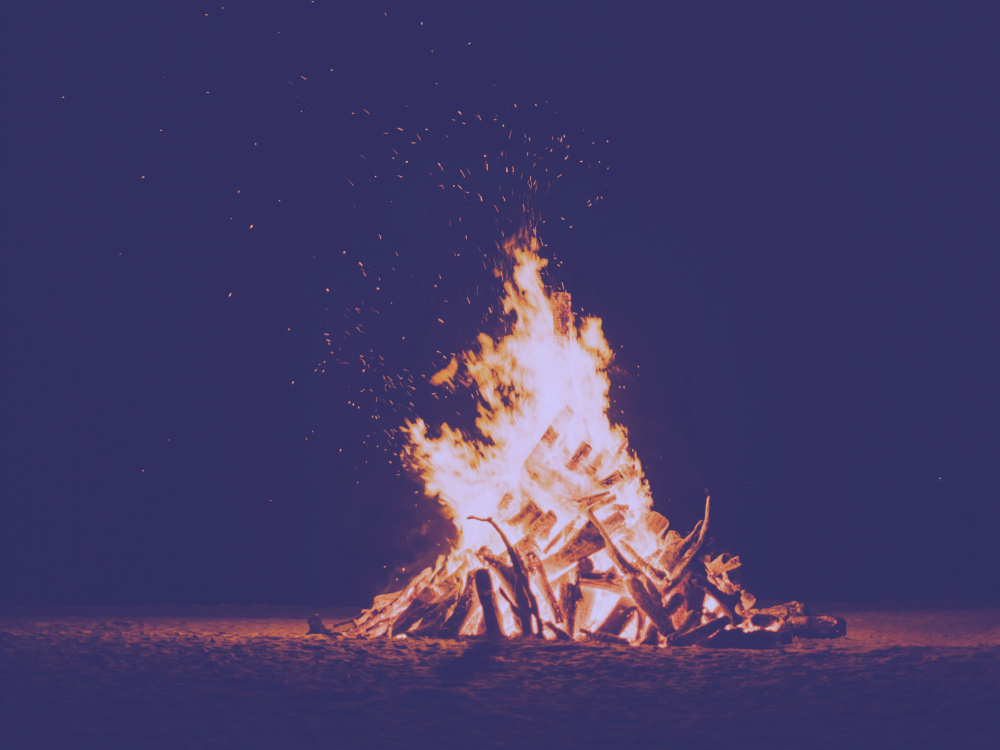
A million years ago, in a cave in South Africa, our ancestors did something no other animal has ever done: they controlled fire.
Fire cooked our food, shrank our guts, grew our brains, and gave us the deep sleep and fireside stories that made us human.
This is the story of our species' oldest technology, and how the same flames that built the modern world may now threaten it.
Tap a purple word for its meaning. Tap a time to play from there.
[00:00:05] Hello, hello, hello, and welcome to English Learning for Curious Minds, by Leonardo English, the show where you can listen to fascinating stories and learn weird and wonderful things about the world at the same time as improving your English.
[00:00:21] I'm Alastair Budge, and today we are going to be talking about the history of fire.
[00:00:28] We humans are the only animal on Earth that has truly mastered fire: that has learned to keep it, make it, cook with it, and build entire civilisations around it.
[00:00:41] And today, we are going to trace that story. How fire changed our bodies, our minds, the way we interact with one another, and made the modern world possible.
[00:00:53] OK then, let's not waste a minute and get right into it.
[00:01:00] There is a cave in South Africa called Wonderwerk.
[00:01:05] The name means "miracle" in Afrikaans.
[00:01:10] This cave contains up to 7 metres of sediment, deposits, layers that had built up, millimetre by millimetre, over hundreds of thousands of years. Like a huge tower of human, and even pre-human, history.
[00:01:29] About one metre down, in a layer dating to roughly one million years ago, researchers from Boston University found charred plant material and burned bone fragments.
[00:01:45] Both had been heated to temperatures of around 500 degrees Celsius, almost 1,000 degrees Fahrenheit.
[00:01:55] This was not a wildfire that swept through. The burning had happened inside the cave, repeatedly, over time, in the same spot.
[00:02:06] It was the oldest known fireplace in the world.
[00:02:12] The creatures who most probably made this fire were called Homo erectus.
[00:02:17] That name, as the Latin scholars among you will know, simply means upright human. They were not Homo sapiens, not quite us. Their brains were smaller, their bones heavier, their foreheads thick and heavy.
[00:02:35] But they walked on two legs, they made stone tools, and, importantly for what we're talking about today, they used fire.
[00:02:45] Now, nobody knows exactly when the first of our ancestors started using fire; one million years ago is simply as far back as the reliable evidence goes.
[00:02:57] What we do know is that for a very long period, our ancestors were not making fire. They were finding it.
[00:03:07] Fire breaks out in the wild, as it always has and always will.
[00:03:12] Lightning strikes a dry tree. A lava flow ignites grassland. Dry grass catches in the heat of a long summer.
[00:03:23] And almost every animal on Earth, when this happens, does the same thing.
[00:03:30] It runs. Fire is scary. It's hot. Instinct kicks in, and even the fiercest predator will run in the opposite direction.
[00:03:42] Homo erectus did something different. At some point, they approached.
[00:03:49] Perhaps they picked up a burning branch and carried it back. Perhaps they found smouldering wood and kept it alive. However it happened, the crucial step was this: they stopped merely fleeing fire and started managing it.
[00:04:08] Of course, this wasn't a simple task. As any seasoned camper will know, tending a fire and keeping it alight requires real effort. You have to find wood to burn, carry it, arrange it properly, and protect the flame from wind and rain.
[00:04:28] So keeping a fire alive required attention, planning, and cooperation.
[00:04:35] It required something that looks, in other words, very much like care.
[00:04:41] And as for why Homo erectus would want to have a fire, well, there are numerous immediate benefits. Warmth through cold nights. Light to see by. And perhaps most importantly, safety.
[00:04:57] A fire keeps large predators away. And in a world where leopards, lions, hyenas, and sabre-toothed cats were a constant menace, especially in the darkness of night, fire was a wonderful deterrent.
[00:05:15] But fire changed humans in ways that go far deeper than warmth and safety.
[00:05:23] In 2009, a Harvard professor named Richard Wrangham published a book called Catching Fire: How Cooking Made Us Human.
[00:05:36] The argument, as you might guess from the title, is that cooking food rather than eating it raw is one of the fundamental differences between humans and every other animal.
[00:05:51] And the consequences go far deeper than simply getting to enjoy a hotter, and dare I say, tastier meal.
[00:06:00] His argument is this. Raw food is hard to digest. Your body has to work extremely hard to extract calories from uncooked meats, roots, and plant material.
[00:06:17] Cooking changes all of that.
[00:06:20] It breaks down the cellular structure of food before it even enters your mouth. Proteins unravel. Starches become easier to absorb. Tough fibres soften. And cooked food releases anywhere between 30 and 100 percent more calories than the same food eaten raw.
[00:06:45] So if you are getting more energy from the same amount of food, you do not need such a large, energy-hungry digestive system to process it. And the energy you are no longer spending on digestion becomes available for something else.
[00:07:05] Wrangham's argument is that this surplus energy went to the brain.
[00:07:11] He points to Homo erectus, who appeared roughly 1.8 million years ago.
[00:07:18] Earlier hominins, like Australopithecus, had large guts, small brains, and big teeth suited to chewing tough, raw food.
[00:07:31] Homo erectus had dramatically smaller teeth and a smaller gut.
[00:07:38] But a noticeably larger brain. This shift happens at roughly the time we see the first signs of fire use.
[00:07:51] Wrangham's claim is that this is not a coincidence. Cooking made this transition possible. Perhaps cooking drove it.
[00:08:02] Now, not everyone agrees.
[00:08:05] Some researchers argue the energy came from raw meat and bone marrow. Their argument is that eating more animal protein, not cooking, explains the anatomical changes.
[00:08:18] But here is what is not in dispute: we are the only animal on earth that cooks its food.
[00:08:27] Chimpanzees are our closest living relatives. They share roughly 98 percent of our DNA. And they have never, in any documented setting, cooked anything.
[00:08:41] And it is not because they don't want to.
[00:08:44] In a series of experiments by researchers at Harvard and Yale, chimpanzees were given a choice between a raw piece of food and a cooked one.
[00:08:57] All 29 chimpanzees in the study chose the cooked option. And more strikingly: when the chimps were shown that they could place a raw piece of food into a device that would produce a cooked version afterwards, they were willing to wait.
[00:09:17] So even though they wanted to eat, they held back from eating the raw food, specifically in order to get the cooked version.
[00:09:28] So chimpanzees understand the transformation, from raw to cooked food. They prefer the result. They will even delay gratification to get it.
[00:09:41] They just don't know how to use or make fire.
[00:09:46] Humans do. And that single difference may be the most consequential in the entire history of life on Earth.
[00:09:56] Now, there is one more physical consequence of fire we need to talk about. It concerns sleep.
[00:10:05] Before fire, our ancestors almost certainly slept in trees, as most great apes still do.
[00:10:13] Trees are safer from predators.
[00:10:16] But you don't have to have slept in many trees yourself to know that trees are not particularly comfortable places to spend the night.
[00:10:25] You wake up frequently, you sleep lightly and uncomfortably.
[00:10:31] Chimpanzees sleep around ten hours a night because their sleep is so frequently disturbed.
[00:10:38] Humans sleep seven to eight hours. And we sleep deeply.
[00:10:45] And to bring this back to fire, with a fire burning through the night, you could sleep on the ground and be safe. And because you felt safe, and you were safe, you could sleep properly. The deep, dreaming sleep that consolidates memory, repairs the body, and allows the brain to do its work.
[00:11:09] The depth of human sleep, tied to memory, learning, creativity, and health, may itself be, in part, a consequence of learning to manage fire.
[00:11:24] And by moving our beds from the branches to the ground, we created a new physical space: the circle.
[00:11:34] And it was in this circle, protected by the flames, that the second great transformation happened: we started to talk in a different way.
[00:11:47] An anthropologist at the University of Utah named Polly Wiessner spent four decades studying a group of Kalahari Desert bushmen in southern Africa.
[00:12:00] This group is one of the oldest-surviving hunter-gatherer cultures on earth. She analysed hundreds of their conversations. And she found a very clear pattern.
[00:12:14] During the day, conversations were mostly practical. Economic decisions. Disputes. Complaints. Discussions about food and hunting.
[00:12:26] Around the fire at night, the topics were very different.
[00:12:31] Storytelling accounted for 81 percent of all conversations, compared to only 6 percent during the day.
[00:12:41] At night, by firelight, people told stories about distant lands, about people they had never met, about ancestors and spirits and the distant past. They speculated about things they could not see. They laughed. They imagined.
[00:13:01] Many researchers argue this is where human language, storytelling, and imagination really grew, around the calm of the fire.
[00:13:13] Stories bind communities. They carry knowledge across generations. They let us think about distant places and people, past events, and futures that have not yet happened.
[00:13:28] And the fire restructured domestic life in practical ways too.
[00:13:34] Cooking with fire requires different tasks: collecting the wood, starting the fire, tending the fire, doing the cooking, and, of course, someone still needs to go and hunt the unfortunate animal everyone is going to eat.
[00:13:49] This requires co-operation, specialisation, and division of labour. Often, though not always, cooking became associated more with women, and hunting more with men.
[00:14:04] And Wrangham, in the book I mentioned earlier, makes another, more provocative suggestion.
[00:14:12] He argues that cooking may have been one of the early drivers of pair bonding, of a more stable relationship between a man and a woman, based less on romantic love than on mutual advantage.
[00:14:29] Imagine a woman crouching over a fire, with cooked food in front of her. That food was valuable. It had taken time to prepare. And because it was soft, warm, and ready to eat, it could also be stolen.
[00:14:48] Wrangham’s argument is that a man could provide protection, especially from other members of the group, in exchange for a share of that cooked food.
[00:15:01] Over time, he suggests, this practical arrangement may have helped shape something closer to human pair bonding: not marriage as we understand it today, but an early form of domestic partnership.
[00:15:18] It is, I should stress, simply a theory, but an interesting one nonetheless, that the first human couples got together and stayed together in order to protect their dinner.
[00:15:32] So, for hundreds of thousands of years, then, early humans found fire, kept it, and built their lives around it.
[00:15:41] But, importantly, they were entirely at the mercy of finding it.
[00:15:48] If the flame went out, that was it. You had to wait for lightning to strike again, or travel far to find fire somewhere else. The warmth, the safety, the cooked food, the community — all of it depended on a flame that someone, somewhere, had to have been lucky enough to find.
[00:16:11] That dependence is what changed around 400,000 years ago.
[00:16:17] We stopped waiting for the lightning, and learned how to make fire ourselves.
[00:16:24] First, it's thought it was through percussion, striking pieces of flint against iron pyrite to create sparks that could catch in a small bundle of tinder: small, dry pieces of wood or leaves.
[00:16:39] Later came the friction method: spinning a dry wooden rod against a flat piece of softer wood until there's enough heat built up to set dry leaves or wood alight.
[00:16:53] There is of course no way to know what it felt like when the first person, wherever he or she was, figured out how to create fire.
[00:17:03] But it must have felt like magic, like you had just figured out the secret to one of the world's greatest puzzles.
[00:17:11] And they had, really.
[00:17:14] But for most of the million-year story of fire, the fuel was simple. It was wood, for the most part.
[00:17:24] Sometimes dried grass, peat, charcoal, or animal dung. Things that had grown under the sun, stored its energy, and released it again as heat and light when they burned.
[00:17:38] And it was enough. Enough to build every civilisation before roughly 300 years ago.
[00:17:46] The ancient Egyptians, classical Greece, the Roman Empire, medieval Europe: all of it ran on burning wood and charcoal. You could smelt metals, fire pottery, heat homes, cook food, and light streets.
[00:18:04] Then, gradually, the wood started to run out.
[00:18:10] In Britain, by the 17th century, forests had been stripped.
[00:18:16] Wood for building ships, for building houses, for heating: all of it was scarce and getting increasingly expensive.
[00:18:26] But people still needed fire, or rather, the heat that fire gave out.
[00:18:32] The answer was right under their noses, or to be precise, under their feet: coal, and later, oil.
[00:18:42] Now, the existence of coal had been common knowledge for centuries. It washed up on the beach, and you could collect it in small quantities from hillsides, or from relatively close to the surface. And people in northeast England and South Wales had been burning it in small quantities for generations.
[00:19:06] But it was regarded as a poor substitute: dirtier, smellier, and compared to wood, which you just got from trees, it was much harder to get at in any sort of useful quantity.
[00:19:20] But there wasn't an alternative; England was running out of trees, it was running out of wood.
[00:19:29] And this need, this desperation, was the first domino in the Industrial Revolution, and you could even argue every technological development that you and I benefit from today.
[00:19:44] In 1709, a man named Abraham Darby worked out how to make iron using coke, a purified, high-carbon form of coal.
[00:19:59] This was the first time someone had managed to make iron with coal, rather than charcoal, burnt wood.
[00:20:07] And this had considerable advantages.
[00:20:11] Using coal was much cheaper. It turned iron, and later steel, from scarce, expensive materials into industrial commodities.
[00:20:23] And more importantly, coal appeared to be virtually limitless.
[00:20:30] Before this, iron production was limited by the rate at which forests could grow back.
[00:20:37] After Darby, it was limited only by how fast you could dig.
[00:20:43] And Britain dug very fast. In 1700, roughly five-sixths of all coal mined in the entire world came from Britain.
[00:20:56] Annual iron output, which stood at around 2,500 tons in the early 1700s, reached 2.5 million tons by 1850. A thousand-fold increase in just a century and a half.
[00:21:14] Now, I don't want to turn this into an episode about the Industrial Revolution [we already have one on that, it's episode number 150], but the main point is that this was primarily a fire revolution.
[00:21:29] It was about inventing better and better ways to create energy, to create heat, and then transform that into different forms of energy and industrial output.
[00:21:43] And after that, came oil, which is an even more energy-dense fuel than coal, and being liquid, is far easier to transport.
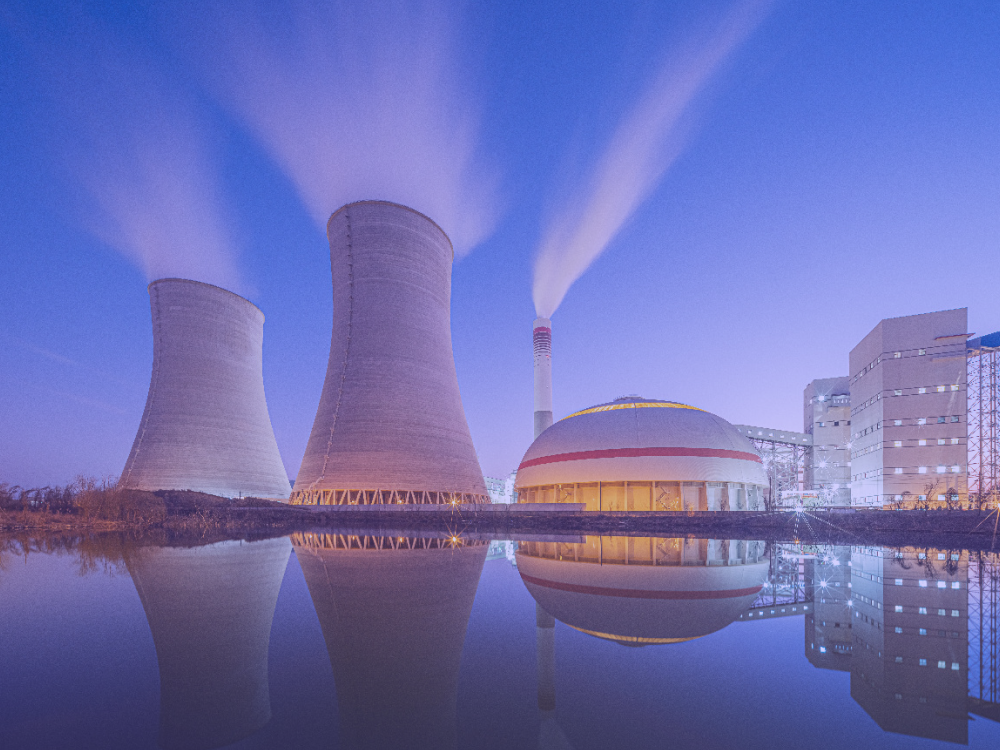
[00:21:53] What followed was the fastest transformation of human life in the entire million-year story of fire. Cars, aeroplanes, ships, factories, central heating, electric light: all of it, at its root, a consequence of setting fire to stuff and using its heat.
[00:22:15] Now, it would be remiss of me not to mention the environmental side-effects of all of this, the trillions of tonnes of CO2 this is all estimated to have released into the atmosphere, and what this might mean for the planet's future.
[00:22:31] But to come back to where we started.
[00:22:34] Sometime around a million years ago, our early ancestors found fire in the wild and kept it burning. Then we learned how to make it ourselves. We used it to cook our food, shape our societies, and build things our ancestors could never have imagined.
[00:22:54] Fire might seem like just another part of the natural world. But for us humans, it changed everything.
[00:23:02] OK then, that is it for today's episode on the history of fire.
[00:23:08] I hope it's been an interesting one, and that you've learnt something new.
[00:23:12] As always, I would love to know what you thought of this episode. Let me know in the comments below, if you're listening somewhere where you can comment. And for the members among you, you can head right into our community forum at community.leonardoenglish.com and get chatting away to other curious minds.
[00:23:29] You've been listening to English Learning for Curious Minds by Leonardo English.
[00:23:34] I'm Alastair Budge, you stay safe, and I'll catch you in the next episode.
Join today and get instant access to 600+ episodes, interactive transcripts, PDF study packs and more.
Become a memberAlready a member? Login
30-day money back guarantee. Cancel anytime.

A million years ago, in a cave in South Africa, our ancestors did something no other animal has ever done: they controlled fire.
Fire cooked our food, shrank our guts, grew our brains, and gave us the deep sleep and fireside stories that made us human.
This is the story of our species' oldest technology, and how the same flames that built the modern world may now threaten it.

[00:00:05] Hello, hello, hello, and welcome to English Learning for Curious Minds, by Leonardo English, the show where you can listen to fascinating stories and learn weird and wonderful things about the world at the same time as improving your English.
[00:00:21] I'm Alastair Budge, and today we are going to be talking about the history of fire.
[00:00:28] We humans are the only animal on Earth that has truly mastered fire: that has learned to keep it, make it, cook with it, and build entire civilisations around it.
[00:00:41] And today, we are going to trace that story. How fire changed our bodies, our minds, the way we interact with one another, and made the modern world possible.
[00:00:53] OK then, let's not waste a minute and get right into it.
[00:01:00] There is a cave in South Africa called Wonderwerk.
[00:01:05] The name means "miracle" in Afrikaans.
[00:01:10] This cave contains up to 7 metres of sediment, deposits, layers that had built up, millimetre by millimetre, over hundreds of thousands of years. Like a huge tower of human, and even pre-human, history.
[00:01:29] About one metre down, in a layer dating to roughly one million years ago, researchers from Boston University found charred plant material and burned bone fragments.
[00:01:45] Both had been heated to temperatures of around 500 degrees Celsius, almost 1,000 degrees Fahrenheit.
[00:01:55] This was not a wildfire that swept through. The burning had happened inside the cave, repeatedly, over time, in the same spot.
[00:02:06] It was the oldest known fireplace in the world.
[00:02:12] The creatures who most probably made this fire were called Homo erectus.
[00:02:17] That name, as the Latin scholars among you will know, simply means upright human. They were not Homo sapiens, not quite us. Their brains were smaller, their bones heavier, their foreheads thick and heavy.
[00:02:35] But they walked on two legs, they made stone tools, and, importantly for what we're talking about today, they used fire.
[00:02:45] Now, nobody knows exactly when the first of our ancestors started using fire; one million years ago is simply as far back as the reliable evidence goes.
[00:02:57] What we do know is that for a very long period, our ancestors were not making fire. They were finding it.
[00:03:07] Fire breaks out in the wild, as it always has and always will.
[00:03:12] Lightning strikes a dry tree. A lava flow ignites grassland. Dry grass catches in the heat of a long summer.
[00:03:23] And almost every animal on Earth, when this happens, does the same thing.
[00:03:30] It runs. Fire is scary. It's hot. Instinct kicks in, and even the fiercest predator will run in the opposite direction.
[00:03:42] Homo erectus did something different. At some point, they approached.
[00:03:49] Perhaps they picked up a burning branch and carried it back. Perhaps they found smouldering wood and kept it alive. However it happened, the crucial step was this: they stopped merely fleeing fire and started managing it.
[00:04:08] Of course, this wasn't a simple task. As any seasoned camper will know, tending a fire and keeping it alight requires real effort. You have to find wood to burn, carry it, arrange it properly, and protect the flame from wind and rain.
[00:04:28] So keeping a fire alive required attention, planning, and cooperation.
[00:04:35] It required something that looks, in other words, very much like care.
[00:04:41] And as for why Homo erectus would want to have a fire, well, there are numerous immediate benefits. Warmth through cold nights. Light to see by. And perhaps most importantly, safety.
[00:04:57] A fire keeps large predators away. And in a world where leopards, lions, hyenas, and sabre-toothed cats were a constant menace, especially in the darkness of night, fire was a wonderful deterrent.
[00:05:15] But fire changed humans in ways that go far deeper than warmth and safety.
[00:05:23] In 2009, a Harvard professor named Richard Wrangham published a book called Catching Fire: How Cooking Made Us Human.
[00:05:36] The argument, as you might guess from the title, is that cooking food rather than eating it raw is one of the fundamental differences between humans and every other animal.
[00:05:51] And the consequences go far deeper than simply getting to enjoy a hotter, and dare I say, tastier meal.
[00:06:00] His argument is this. Raw food is hard to digest. Your body has to work extremely hard to extract calories from uncooked meats, roots, and plant material.
[00:06:17] Cooking changes all of that.
[00:06:20] It breaks down the cellular structure of food before it even enters your mouth. Proteins unravel. Starches become easier to absorb. Tough fibres soften. And cooked food releases anywhere between 30 and 100 percent more calories than the same food eaten raw.
[00:06:45] So if you are getting more energy from the same amount of food, you do not need such a large, energy-hungry digestive system to process it. And the energy you are no longer spending on digestion becomes available for something else.
[00:07:05] Wrangham's argument is that this surplus energy went to the brain.
[00:07:11] He points to Homo erectus, who appeared roughly 1.8 million years ago.
[00:07:18] Earlier hominins, like Australopithecus, had large guts, small brains, and big teeth suited to chewing tough, raw food.
[00:07:31] Homo erectus had dramatically smaller teeth and a smaller gut.
[00:07:38] But a noticeably larger brain. This shift happens at roughly the time we see the first signs of fire use.
[00:07:51] Wrangham's claim is that this is not a coincidence. Cooking made this transition possible. Perhaps cooking drove it.
[00:08:02] Now, not everyone agrees.
[00:08:05] Some researchers argue the energy came from raw meat and bone marrow. Their argument is that eating more animal protein, not cooking, explains the anatomical changes.
[00:08:18] But here is what is not in dispute: we are the only animal on earth that cooks its food.
[00:08:27] Chimpanzees are our closest living relatives. They share roughly 98 percent of our DNA. And they have never, in any documented setting, cooked anything.
[00:08:41] And it is not because they don't want to.
[00:08:44] In a series of experiments by researchers at Harvard and Yale, chimpanzees were given a choice between a raw piece of food and a cooked one.
[00:08:57] All 29 chimpanzees in the study chose the cooked option. And more strikingly: when the chimps were shown that they could place a raw piece of food into a device that would produce a cooked version afterwards, they were willing to wait.
[00:09:17] So even though they wanted to eat, they held back from eating the raw food, specifically in order to get the cooked version.
[00:09:28] So chimpanzees understand the transformation, from raw to cooked food. They prefer the result. They will even delay gratification to get it.
[00:09:41] They just don't know how to use or make fire.
[00:09:46] Humans do. And that single difference may be the most consequential in the entire history of life on Earth.
[00:09:56] Now, there is one more physical consequence of fire we need to talk about. It concerns sleep.
[00:10:05] Before fire, our ancestors almost certainly slept in trees, as most great apes still do.
[00:10:13] Trees are safer from predators.
[00:10:16] But you don't have to have slept in many trees yourself to know that trees are not particularly comfortable places to spend the night.
[00:10:25] You wake up frequently, you sleep lightly and uncomfortably.
[00:10:31] Chimpanzees sleep around ten hours a night because their sleep is so frequently disturbed.
[00:10:38] Humans sleep seven to eight hours. And we sleep deeply.
[00:10:45] And to bring this back to fire, with a fire burning through the night, you could sleep on the ground and be safe. And because you felt safe, and you were safe, you could sleep properly. The deep, dreaming sleep that consolidates memory, repairs the body, and allows the brain to do its work.
[00:11:09] The depth of human sleep, tied to memory, learning, creativity, and health, may itself be, in part, a consequence of learning to manage fire.
[00:11:24] And by moving our beds from the branches to the ground, we created a new physical space: the circle.
[00:11:34] And it was in this circle, protected by the flames, that the second great transformation happened: we started to talk in a different way.
[00:11:47] An anthropologist at the University of Utah named Polly Wiessner spent four decades studying a group of Kalahari Desert bushmen in southern Africa.
[00:12:00] This group is one of the oldest-surviving hunter-gatherer cultures on earth. She analysed hundreds of their conversations. And she found a very clear pattern.
[00:12:14] During the day, conversations were mostly practical. Economic decisions. Disputes. Complaints. Discussions about food and hunting.
[00:12:26] Around the fire at night, the topics were very different.
[00:12:31] Storytelling accounted for 81 percent of all conversations, compared to only 6 percent during the day.
[00:12:41] At night, by firelight, people told stories about distant lands, about people they had never met, about ancestors and spirits and the distant past. They speculated about things they could not see. They laughed. They imagined.
[00:13:01] Many researchers argue this is where human language, storytelling, and imagination really grew, around the calm of the fire.
[00:13:13] Stories bind communities. They carry knowledge across generations. They let us think about distant places and people, past events, and futures that have not yet happened.
[00:13:28] And the fire restructured domestic life in practical ways too.
[00:13:34] Cooking with fire requires different tasks: collecting the wood, starting the fire, tending the fire, doing the cooking, and, of course, someone still needs to go and hunt the unfortunate animal everyone is going to eat.
[00:13:49] This requires co-operation, specialisation, and division of labour. Often, though not always, cooking became associated more with women, and hunting more with men.
[00:14:04] And Wrangham, in the book I mentioned earlier, makes another, more provocative suggestion.
[00:14:12] He argues that cooking may have been one of the early drivers of pair bonding, of a more stable relationship between a man and a woman, based less on romantic love than on mutual advantage.
[00:14:29] Imagine a woman crouching over a fire, with cooked food in front of her. That food was valuable. It had taken time to prepare. And because it was soft, warm, and ready to eat, it could also be stolen.
[00:14:48] Wrangham’s argument is that a man could provide protection, especially from other members of the group, in exchange for a share of that cooked food.
[00:15:01] Over time, he suggests, this practical arrangement may have helped shape something closer to human pair bonding: not marriage as we understand it today, but an early form of domestic partnership.
[00:15:18] It is, I should stress, simply a theory, but an interesting one nonetheless, that the first human couples got together and stayed together in order to protect their dinner.
[00:15:32] So, for hundreds of thousands of years, then, early humans found fire, kept it, and built their lives around it.
[00:15:41] But, importantly, they were entirely at the mercy of finding it.
[00:15:48] If the flame went out, that was it. You had to wait for lightning to strike again, or travel far to find fire somewhere else. The warmth, the safety, the cooked food, the community — all of it depended on a flame that someone, somewhere, had to have been lucky enough to find.
[00:16:11] That dependence is what changed around 400,000 years ago.
[00:16:17] We stopped waiting for the lightning, and learned how to make fire ourselves.
[00:16:24] First, it's thought it was through percussion, striking pieces of flint against iron pyrite to create sparks that could catch in a small bundle of tinder: small, dry pieces of wood or leaves.
[00:16:39] Later came the friction method: spinning a dry wooden rod against a flat piece of softer wood until there's enough heat built up to set dry leaves or wood alight.
[00:16:53] There is of course no way to know what it felt like when the first person, wherever he or she was, figured out how to create fire.
[00:17:03] But it must have felt like magic, like you had just figured out the secret to one of the world's greatest puzzles.
[00:17:11] And they had, really.
[00:17:14] But for most of the million-year story of fire, the fuel was simple. It was wood, for the most part.
[00:17:24] Sometimes dried grass, peat, charcoal, or animal dung. Things that had grown under the sun, stored its energy, and released it again as heat and light when they burned.
[00:17:38] And it was enough. Enough to build every civilisation before roughly 300 years ago.
[00:17:46] The ancient Egyptians, classical Greece, the Roman Empire, medieval Europe: all of it ran on burning wood and charcoal. You could smelt metals, fire pottery, heat homes, cook food, and light streets.
[00:18:04] Then, gradually, the wood started to run out.
[00:18:10] In Britain, by the 17th century, forests had been stripped.
[00:18:16] Wood for building ships, for building houses, for heating: all of it was scarce and getting increasingly expensive.
[00:18:26] But people still needed fire, or rather, the heat that fire gave out.
[00:18:32] The answer was right under their noses, or to be precise, under their feet: coal, and later, oil.
[00:18:42] Now, the existence of coal had been common knowledge for centuries. It washed up on the beach, and you could collect it in small quantities from hillsides, or from relatively close to the surface. And people in northeast England and South Wales had been burning it in small quantities for generations.
[00:19:06] But it was regarded as a poor substitute: dirtier, smellier, and compared to wood, which you just got from trees, it was much harder to get at in any sort of useful quantity.
[00:19:20] But there wasn't an alternative; England was running out of trees, it was running out of wood.
[00:19:29] And this need, this desperation, was the first domino in the Industrial Revolution, and you could even argue every technological development that you and I benefit from today.
[00:19:44] In 1709, a man named Abraham Darby worked out how to make iron using coke, a purified, high-carbon form of coal.
[00:19:59] This was the first time someone had managed to make iron with coal, rather than charcoal, burnt wood.
[00:20:07] And this had considerable advantages.
[00:20:11] Using coal was much cheaper. It turned iron, and later steel, from scarce, expensive materials into industrial commodities.
[00:20:23] And more importantly, coal appeared to be virtually limitless.
[00:20:30] Before this, iron production was limited by the rate at which forests could grow back.
[00:20:37] After Darby, it was limited only by how fast you could dig.
[00:20:43] And Britain dug very fast. In 1700, roughly five-sixths of all coal mined in the entire world came from Britain.
[00:20:56] Annual iron output, which stood at around 2,500 tons in the early 1700s, reached 2.5 million tons by 1850. A thousand-fold increase in just a century and a half.
[00:21:14] Now, I don't want to turn this into an episode about the Industrial Revolution [we already have one on that, it's episode number 150], but the main point is that this was primarily a fire revolution.
[00:21:29] It was about inventing better and better ways to create energy, to create heat, and then transform that into different forms of energy and industrial output.
[00:21:43] And after that, came oil, which is an even more energy-dense fuel than coal, and being liquid, is far easier to transport.
[00:21:53] What followed was the fastest transformation of human life in the entire million-year story of fire. Cars, aeroplanes, ships, factories, central heating, electric light: all of it, at its root, a consequence of setting fire to stuff and using its heat.
[00:22:15] Now, it would be remiss of me not to mention the environmental side-effects of all of this, the trillions of tonnes of CO2 this is all estimated to have released into the atmosphere, and what this might mean for the planet's future.
[00:22:31] But to come back to where we started.
[00:22:34] Sometime around a million years ago, our early ancestors found fire in the wild and kept it burning. Then we learned how to make it ourselves. We used it to cook our food, shape our societies, and build things our ancestors could never have imagined.
[00:22:54] Fire might seem like just another part of the natural world. But for us humans, it changed everything.
[00:23:02] OK then, that is it for today's episode on the history of fire.
[00:23:08] I hope it's been an interesting one, and that you've learnt something new.
[00:23:12] As always, I would love to know what you thought of this episode. Let me know in the comments below, if you're listening somewhere where you can comment. And for the members among you, you can head right into our community forum at community.leonardoenglish.com and get chatting away to other curious minds.
[00:23:29] You've been listening to English Learning for Curious Minds by Leonardo English.
[00:23:34] I'm Alastair Budge, you stay safe, and I'll catch you in the next episode.
[00:00:05] Hello, hello, hello, and welcome to English Learning for Curious Minds, by Leonardo English, the show where you can listen to fascinating stories and learn weird and wonderful things about the world at the same time as improving your English.
[00:00:21] I'm Alastair Budge, and today we are going to be talking about the history of fire.
[00:00:28] We humans are the only animal on Earth that has truly mastered fire: that has learned to keep it, make it, cook with it, and build entire civilisations around it.
[00:00:41] And today, we are going to trace that story. How fire changed our bodies, our minds, the way we interact with one another, and made the modern world possible.
[00:00:53] OK then, let's not waste a minute and get right into it.
[00:01:00] There is a cave in South Africa called Wonderwerk.
[00:01:05] The name means "miracle" in Afrikaans.
[00:01:10] This cave contains up to 7 metres of sediment, deposits, layers that had built up, millimetre by millimetre, over hundreds of thousands of years. Like a huge tower of human, and even pre-human, history.
[00:01:29] About one metre down, in a layer dating to roughly one million years ago, researchers from Boston University found charred plant material and burned bone fragments.
[00:01:45] Both had been heated to temperatures of around 500 degrees Celsius, almost 1,000 degrees Fahrenheit.
[00:01:55] This was not a wildfire that swept through. The burning had happened inside the cave, repeatedly, over time, in the same spot.
[00:02:06] It was the oldest known fireplace in the world.
[00:02:12] The creatures who most probably made this fire were called Homo erectus.
[00:02:17] That name, as the Latin scholars among you will know, simply means upright human. They were not Homo sapiens, not quite us. Their brains were smaller, their bones heavier, their foreheads thick and heavy.
[00:02:35] But they walked on two legs, they made stone tools, and, importantly for what we're talking about today, they used fire.
[00:02:45] Now, nobody knows exactly when the first of our ancestors started using fire; one million years ago is simply as far back as the reliable evidence goes.
[00:02:57] What we do know is that for a very long period, our ancestors were not making fire. They were finding it.
[00:03:07] Fire breaks out in the wild, as it always has and always will.
[00:03:12] Lightning strikes a dry tree. A lava flow ignites grassland. Dry grass catches in the heat of a long summer.
[00:03:23] And almost every animal on Earth, when this happens, does the same thing.
[00:03:30] It runs. Fire is scary. It's hot. Instinct kicks in, and even the fiercest predator will run in the opposite direction.
[00:03:42] Homo erectus did something different. At some point, they approached.
[00:03:49] Perhaps they picked up a burning branch and carried it back. Perhaps they found smouldering wood and kept it alive. However it happened, the crucial step was this: they stopped merely fleeing fire and started managing it.
[00:04:08] Of course, this wasn't a simple task. As any seasoned camper will know, tending a fire and keeping it alight requires real effort. You have to find wood to burn, carry it, arrange it properly, and protect the flame from wind and rain.
[00:04:28] So keeping a fire alive required attention, planning, and cooperation.
[00:04:35] It required something that looks, in other words, very much like care.
[00:04:41] And as for why Homo erectus would want to have a fire, well, there are numerous immediate benefits. Warmth through cold nights. Light to see by. And perhaps most importantly, safety.
[00:04:57] A fire keeps large predators away. And in a world where leopards, lions, hyenas, and sabre-toothed cats were a constant menace, especially in the darkness of night, fire was a wonderful deterrent.
[00:05:15] But fire changed humans in ways that go far deeper than warmth and safety.
[00:05:23] In 2009, a Harvard professor named Richard Wrangham published a book called Catching Fire: How Cooking Made Us Human.
[00:05:36] The argument, as you might guess from the title, is that cooking food rather than eating it raw is one of the fundamental differences between humans and every other animal.
[00:05:51] And the consequences go far deeper than simply getting to enjoy a hotter, and dare I say, tastier meal.
[00:06:00] His argument is this. Raw food is hard to digest. Your body has to work extremely hard to extract calories from uncooked meats, roots, and plant material.
[00:06:17] Cooking changes all of that.
[00:06:20] It breaks down the cellular structure of food before it even enters your mouth. Proteins unravel. Starches become easier to absorb. Tough fibres soften. And cooked food releases anywhere between 30 and 100 percent more calories than the same food eaten raw.
[00:06:45] So if you are getting more energy from the same amount of food, you do not need such a large, energy-hungry digestive system to process it. And the energy you are no longer spending on digestion becomes available for something else.
[00:07:05] Wrangham's argument is that this surplus energy went to the brain.
[00:07:11] He points to Homo erectus, who appeared roughly 1.8 million years ago.
[00:07:18] Earlier hominins, like Australopithecus, had large guts, small brains, and big teeth suited to chewing tough, raw food.
[00:07:31] Homo erectus had dramatically smaller teeth and a smaller gut.
[00:07:38] But a noticeably larger brain. This shift happens at roughly the time we see the first signs of fire use.
[00:07:51] Wrangham's claim is that this is not a coincidence. Cooking made this transition possible. Perhaps cooking drove it.
[00:08:02] Now, not everyone agrees.
[00:08:05] Some researchers argue the energy came from raw meat and bone marrow. Their argument is that eating more animal protein, not cooking, explains the anatomical changes.
[00:08:18] But here is what is not in dispute: we are the only animal on earth that cooks its food.
[00:08:27] Chimpanzees are our closest living relatives. They share roughly 98 percent of our DNA. And they have never, in any documented setting, cooked anything.
[00:08:41] And it is not because they don't want to.
[00:08:44] In a series of experiments by researchers at Harvard and Yale, chimpanzees were given a choice between a raw piece of food and a cooked one.
[00:08:57] All 29 chimpanzees in the study chose the cooked option. And more strikingly: when the chimps were shown that they could place a raw piece of food into a device that would produce a cooked version afterwards, they were willing to wait.
[00:09:17] So even though they wanted to eat, they held back from eating the raw food, specifically in order to get the cooked version.
[00:09:28] So chimpanzees understand the transformation, from raw to cooked food. They prefer the result. They will even delay gratification to get it.
[00:09:41] They just don't know how to use or make fire.
[00:09:46] Humans do. And that single difference may be the most consequential in the entire history of life on Earth.
[00:09:56] Now, there is one more physical consequence of fire we need to talk about. It concerns sleep.
[00:10:05] Before fire, our ancestors almost certainly slept in trees, as most great apes still do.
[00:10:13] Trees are safer from predators.
[00:10:16] But you don't have to have slept in many trees yourself to know that trees are not particularly comfortable places to spend the night.
[00:10:25] You wake up frequently, you sleep lightly and uncomfortably.
[00:10:31] Chimpanzees sleep around ten hours a night because their sleep is so frequently disturbed.
[00:10:38] Humans sleep seven to eight hours. And we sleep deeply.
[00:10:45] And to bring this back to fire, with a fire burning through the night, you could sleep on the ground and be safe. And because you felt safe, and you were safe, you could sleep properly. The deep, dreaming sleep that consolidates memory, repairs the body, and allows the brain to do its work.
[00:11:09] The depth of human sleep, tied to memory, learning, creativity, and health, may itself be, in part, a consequence of learning to manage fire.
[00:11:24] And by moving our beds from the branches to the ground, we created a new physical space: the circle.
[00:11:34] And it was in this circle, protected by the flames, that the second great transformation happened: we started to talk in a different way.
[00:11:47] An anthropologist at the University of Utah named Polly Wiessner spent four decades studying a group of Kalahari Desert bushmen in southern Africa.
[00:12:00] This group is one of the oldest-surviving hunter-gatherer cultures on earth. She analysed hundreds of their conversations. And she found a very clear pattern.
[00:12:14] During the day, conversations were mostly practical. Economic decisions. Disputes. Complaints. Discussions about food and hunting.
[00:12:26] Around the fire at night, the topics were very different.
[00:12:31] Storytelling accounted for 81 percent of all conversations, compared to only 6 percent during the day.
[00:12:41] At night, by firelight, people told stories about distant lands, about people they had never met, about ancestors and spirits and the distant past. They speculated about things they could not see. They laughed. They imagined.
[00:13:01] Many researchers argue this is where human language, storytelling, and imagination really grew, around the calm of the fire.
[00:13:13] Stories bind communities. They carry knowledge across generations. They let us think about distant places and people, past events, and futures that have not yet happened.
[00:13:28] And the fire restructured domestic life in practical ways too.
[00:13:34] Cooking with fire requires different tasks: collecting the wood, starting the fire, tending the fire, doing the cooking, and, of course, someone still needs to go and hunt the unfortunate animal everyone is going to eat.
[00:13:49] This requires co-operation, specialisation, and division of labour. Often, though not always, cooking became associated more with women, and hunting more with men.
[00:14:04] And Wrangham, in the book I mentioned earlier, makes another, more provocative suggestion.
[00:14:12] He argues that cooking may have been one of the early drivers of pair bonding, of a more stable relationship between a man and a woman, based less on romantic love than on mutual advantage.
[00:14:29] Imagine a woman crouching over a fire, with cooked food in front of her. That food was valuable. It had taken time to prepare. And because it was soft, warm, and ready to eat, it could also be stolen.
[00:14:48] Wrangham’s argument is that a man could provide protection, especially from other members of the group, in exchange for a share of that cooked food.
[00:15:01] Over time, he suggests, this practical arrangement may have helped shape something closer to human pair bonding: not marriage as we understand it today, but an early form of domestic partnership.
[00:15:18] It is, I should stress, simply a theory, but an interesting one nonetheless, that the first human couples got together and stayed together in order to protect their dinner.
[00:15:32] So, for hundreds of thousands of years, then, early humans found fire, kept it, and built their lives around it.
[00:15:41] But, importantly, they were entirely at the mercy of finding it.
[00:15:48] If the flame went out, that was it. You had to wait for lightning to strike again, or travel far to find fire somewhere else. The warmth, the safety, the cooked food, the community — all of it depended on a flame that someone, somewhere, had to have been lucky enough to find.
[00:16:11] That dependence is what changed around 400,000 years ago.
[00:16:17] We stopped waiting for the lightning, and learned how to make fire ourselves.
[00:16:24] First, it's thought it was through percussion, striking pieces of flint against iron pyrite to create sparks that could catch in a small bundle of tinder: small, dry pieces of wood or leaves.
[00:16:39] Later came the friction method: spinning a dry wooden rod against a flat piece of softer wood until there's enough heat built up to set dry leaves or wood alight.
[00:16:53] There is of course no way to know what it felt like when the first person, wherever he or she was, figured out how to create fire.
[00:17:03] But it must have felt like magic, like you had just figured out the secret to one of the world's greatest puzzles.
[00:17:11] And they had, really.
[00:17:14] But for most of the million-year story of fire, the fuel was simple. It was wood, for the most part.
[00:17:24] Sometimes dried grass, peat, charcoal, or animal dung. Things that had grown under the sun, stored its energy, and released it again as heat and light when they burned.
[00:17:38] And it was enough. Enough to build every civilisation before roughly 300 years ago.
[00:17:46] The ancient Egyptians, classical Greece, the Roman Empire, medieval Europe: all of it ran on burning wood and charcoal. You could smelt metals, fire pottery, heat homes, cook food, and light streets.
[00:18:04] Then, gradually, the wood started to run out.
[00:18:10] In Britain, by the 17th century, forests had been stripped.
[00:18:16] Wood for building ships, for building houses, for heating: all of it was scarce and getting increasingly expensive.
[00:18:26] But people still needed fire, or rather, the heat that fire gave out.
[00:18:32] The answer was right under their noses, or to be precise, under their feet: coal, and later, oil.
[00:18:42] Now, the existence of coal had been common knowledge for centuries. It washed up on the beach, and you could collect it in small quantities from hillsides, or from relatively close to the surface. And people in northeast England and South Wales had been burning it in small quantities for generations.
[00:19:06] But it was regarded as a poor substitute: dirtier, smellier, and compared to wood, which you just got from trees, it was much harder to get at in any sort of useful quantity.
[00:19:20] But there wasn't an alternative; England was running out of trees, it was running out of wood.
[00:19:29] And this need, this desperation, was the first domino in the Industrial Revolution, and you could even argue every technological development that you and I benefit from today.
[00:19:44] In 1709, a man named Abraham Darby worked out how to make iron using coke, a purified, high-carbon form of coal.
[00:19:59] This was the first time someone had managed to make iron with coal, rather than charcoal, burnt wood.
[00:20:07] And this had considerable advantages.
[00:20:11] Using coal was much cheaper. It turned iron, and later steel, from scarce, expensive materials into industrial commodities.
[00:20:23] And more importantly, coal appeared to be virtually limitless.
[00:20:30] Before this, iron production was limited by the rate at which forests could grow back.
[00:20:37] After Darby, it was limited only by how fast you could dig.
[00:20:43] And Britain dug very fast. In 1700, roughly five-sixths of all coal mined in the entire world came from Britain.
[00:20:56] Annual iron output, which stood at around 2,500 tons in the early 1700s, reached 2.5 million tons by 1850. A thousand-fold increase in just a century and a half.
[00:21:14] Now, I don't want to turn this into an episode about the Industrial Revolution [we already have one on that, it's episode number 150], but the main point is that this was primarily a fire revolution.
[00:21:29] It was about inventing better and better ways to create energy, to create heat, and then transform that into different forms of energy and industrial output.
[00:21:43] And after that, came oil, which is an even more energy-dense fuel than coal, and being liquid, is far easier to transport.
[00:21:53] What followed was the fastest transformation of human life in the entire million-year story of fire. Cars, aeroplanes, ships, factories, central heating, electric light: all of it, at its root, a consequence of setting fire to stuff and using its heat.
[00:22:15] Now, it would be remiss of me not to mention the environmental side-effects of all of this, the trillions of tonnes of CO2 this is all estimated to have released into the atmosphere, and what this might mean for the planet's future.
[00:22:31] But to come back to where we started.
[00:22:34] Sometime around a million years ago, our early ancestors found fire in the wild and kept it burning. Then we learned how to make it ourselves. We used it to cook our food, shape our societies, and build things our ancestors could never have imagined.
[00:22:54] Fire might seem like just another part of the natural world. But for us humans, it changed everything.
[00:23:02] OK then, that is it for today's episode on the history of fire.
[00:23:08] I hope it's been an interesting one, and that you've learnt something new.
[00:23:12] As always, I would love to know what you thought of this episode. Let me know in the comments below, if you're listening somewhere where you can comment. And for the members among you, you can head right into our community forum at community.leonardoenglish.com and get chatting away to other curious minds.
[00:23:29] You've been listening to English Learning for Curious Minds by Leonardo English.
[00:23:34] I'm Alastair Budge, you stay safe, and I'll catch you in the next episode.
[00:00:05] Hello, hello, hello, and welcome to English Learning for Curious Minds, by Leonardo English, the show where you can listen to fascinating stories and learn weird and wonderful things about the world at the same time as improving your English.
[00:00:21] I'm Alastair Budge, and today we are going to be talking about the history of fire.
[00:00:28] We humans are the only animal on Earth that has truly mastered fire: that has learned to keep it, make it, cook with it, and build entire civilisations around it.
[00:00:41] And today, we are going to trace that story. How fire changed our bodies, our minds, the way we interact with one another, and made the modern world possible.
[00:00:53] OK then, let's not waste a minute and get right into it.
[00:01:00] There is a cave in South Africa called Wonderwerk.
[00:01:05] The name means "miracle" in Afrikaans.
[00:01:10] This cave contains up to 7 metres of sediment, deposits, layers that had built up, millimetre by millimetre, over hundreds of thousands of years. Like a huge tower of human, and even pre-human, history.
[00:01:29] About one metre down, in a layer dating to roughly one million years ago, researchers from Boston University found charred plant material and burned bone fragments.
[00:01:45] Both had been heated to temperatures of around 500 degrees Celsius, almost 1,000 degrees Fahrenheit.
[00:01:55] This was not a wildfire that swept through. The burning had happened inside the cave, repeatedly, over time, in the same spot.
[00:02:06] It was the oldest known fireplace in the world.
[00:02:12] The creatures who most probably made this fire were called Homo erectus.
[00:02:17] That name, as the Latin scholars among you will know, simply means upright human. They were not Homo sapiens, not quite us. Their brains were smaller, their bones heavier, their foreheads thick and heavy.
[00:02:35] But they walked on two legs, they made stone tools, and, importantly for what we're talking about today, they used fire.
[00:02:45] Now, nobody knows exactly when the first of our ancestors started using fire; one million years ago is simply as far back as the reliable evidence goes.
[00:02:57] What we do know is that for a very long period, our ancestors were not making fire. They were finding it.
[00:03:07] Fire breaks out in the wild, as it always has and always will.
[00:03:12] Lightning strikes a dry tree. A lava flow ignites grassland. Dry grass catches in the heat of a long summer.
[00:03:23] And almost every animal on Earth, when this happens, does the same thing.
[00:03:30] It runs. Fire is scary. It's hot. Instinct kicks in, and even the fiercest predator will run in the opposite direction.
[00:03:42] Homo erectus did something different. At some point, they approached.
[00:03:49] Perhaps they picked up a burning branch and carried it back. Perhaps they found smouldering wood and kept it alive. However it happened, the crucial step was this: they stopped merely fleeing fire and started managing it.
[00:04:08] Of course, this wasn't a simple task. As any seasoned camper will know, tending a fire and keeping it alight requires real effort. You have to find wood to burn, carry it, arrange it properly, and protect the flame from wind and rain.
[00:04:28] So keeping a fire alive required attention, planning, and cooperation.
[00:04:35] It required something that looks, in other words, very much like care.
[00:04:41] And as for why Homo erectus would want to have a fire, well, there are numerous immediate benefits. Warmth through cold nights. Light to see by. And perhaps most importantly, safety.
[00:04:57] A fire keeps large predators away. And in a world where leopards, lions, hyenas, and sabre-toothed cats were a constant menace, especially in the darkness of night, fire was a wonderful deterrent.
[00:05:15] But fire changed humans in ways that go far deeper than warmth and safety.
[00:05:23] In 2009, a Harvard professor named Richard Wrangham published a book called Catching Fire: How Cooking Made Us Human.
[00:05:36] The argument, as you might guess from the title, is that cooking food rather than eating it raw is one of the fundamental differences between humans and every other animal.
[00:05:51] And the consequences go far deeper than simply getting to enjoy a hotter, and dare I say, tastier meal.
[00:06:00] His argument is this. Raw food is hard to digest. Your body has to work extremely hard to extract calories from uncooked meats, roots, and plant material.
[00:06:17] Cooking changes all of that.
[00:06:20] It breaks down the cellular structure of food before it even enters your mouth. Proteins unravel. Starches become easier to absorb. Tough fibres soften. And cooked food releases anywhere between 30 and 100 percent more calories than the same food eaten raw.
[00:06:45] So if you are getting more energy from the same amount of food, you do not need such a large, energy-hungry digestive system to process it. And the energy you are no longer spending on digestion becomes available for something else.
[00:07:05] Wrangham's argument is that this surplus energy went to the brain.
[00:07:11] He points to Homo erectus, who appeared roughly 1.8 million years ago.
[00:07:18] Earlier hominins, like Australopithecus, had large guts, small brains, and big teeth suited to chewing tough, raw food.
[00:07:31] Homo erectus had dramatically smaller teeth and a smaller gut.
[00:07:38] But a noticeably larger brain. This shift happens at roughly the time we see the first signs of fire use.
[00:07:51] Wrangham's claim is that this is not a coincidence. Cooking made this transition possible. Perhaps cooking drove it.
[00:08:02] Now, not everyone agrees.
[00:08:05] Some researchers argue the energy came from raw meat and bone marrow. Their argument is that eating more animal protein, not cooking, explains the anatomical changes.
[00:08:18] But here is what is not in dispute: we are the only animal on earth that cooks its food.
[00:08:27] Chimpanzees are our closest living relatives. They share roughly 98 percent of our DNA. And they have never, in any documented setting, cooked anything.
[00:08:41] And it is not because they don't want to.
[00:08:44] In a series of experiments by researchers at Harvard and Yale, chimpanzees were given a choice between a raw piece of food and a cooked one.
[00:08:57] All 29 chimpanzees in the study chose the cooked option. And more strikingly: when the chimps were shown that they could place a raw piece of food into a device that would produce a cooked version afterwards, they were willing to wait.
[00:09:17] So even though they wanted to eat, they held back from eating the raw food, specifically in order to get the cooked version.
[00:09:28] So chimpanzees understand the transformation, from raw to cooked food. They prefer the result. They will even delay gratification to get it.
[00:09:41] They just don't know how to use or make fire.
[00:09:46] Humans do. And that single difference may be the most consequential in the entire history of life on Earth.
[00:09:56] Now, there is one more physical consequence of fire we need to talk about. It concerns sleep.
[00:10:05] Before fire, our ancestors almost certainly slept in trees, as most great apes still do.
[00:10:13] Trees are safer from predators.
[00:10:16] But you don't have to have slept in many trees yourself to know that trees are not particularly comfortable places to spend the night.
[00:10:25] You wake up frequently, you sleep lightly and uncomfortably.
[00:10:31] Chimpanzees sleep around ten hours a night because their sleep is so frequently disturbed.
[00:10:38] Humans sleep seven to eight hours. And we sleep deeply.
[00:10:45] And to bring this back to fire, with a fire burning through the night, you could sleep on the ground and be safe. And because you felt safe, and you were safe, you could sleep properly. The deep, dreaming sleep that consolidates memory, repairs the body, and allows the brain to do its work.
[00:11:09] The depth of human sleep, tied to memory, learning, creativity, and health, may itself be, in part, a consequence of learning to manage fire.
[00:11:24] And by moving our beds from the branches to the ground, we created a new physical space: the circle.
[00:11:34] And it was in this circle, protected by the flames, that the second great transformation happened: we started to talk in a different way.
[00:11:47] An anthropologist at the University of Utah named Polly Wiessner spent four decades studying a group of Kalahari Desert bushmen in southern Africa.
[00:12:00] This group is one of the oldest-surviving hunter-gatherer cultures on earth. She analysed hundreds of their conversations. And she found a very clear pattern.
[00:12:14] During the day, conversations were mostly practical. Economic decisions. Disputes. Complaints. Discussions about food and hunting.
[00:12:26] Around the fire at night, the topics were very different.
[00:12:31] Storytelling accounted for 81 percent of all conversations, compared to only 6 percent during the day.
[00:12:41] At night, by firelight, people told stories about distant lands, about people they had never met, about ancestors and spirits and the distant past. They speculated about things they could not see. They laughed. They imagined.
[00:13:01] Many researchers argue this is where human language, storytelling, and imagination really grew, around the calm of the fire.
[00:13:13] Stories bind communities. They carry knowledge across generations. They let us think about distant places and people, past events, and futures that have not yet happened.
[00:13:28] And the fire restructured domestic life in practical ways too.
[00:13:34] Cooking with fire requires different tasks: collecting the wood, starting the fire, tending the fire, doing the cooking, and, of course, someone still needs to go and hunt the unfortunate animal everyone is going to eat.
[00:13:49] This requires co-operation, specialisation, and division of labour. Often, though not always, cooking became associated more with women, and hunting more with men.
[00:14:04] And Wrangham, in the book I mentioned earlier, makes another, more provocative suggestion.
[00:14:12] He argues that cooking may have been one of the early drivers of pair bonding, of a more stable relationship between a man and a woman, based less on romantic love than on mutual advantage.
[00:14:29] Imagine a woman crouching over a fire, with cooked food in front of her. That food was valuable. It had taken time to prepare. And because it was soft, warm, and ready to eat, it could also be stolen.
[00:14:48] Wrangham’s argument is that a man could provide protection, especially from other members of the group, in exchange for a share of that cooked food.
[00:15:01] Over time, he suggests, this practical arrangement may have helped shape something closer to human pair bonding: not marriage as we understand it today, but an early form of domestic partnership.
[00:15:18] It is, I should stress, simply a theory, but an interesting one nonetheless, that the first human couples got together and stayed together in order to protect their dinner.
[00:15:32] So, for hundreds of thousands of years, then, early humans found fire, kept it, and built their lives around it.
[00:15:41] But, importantly, they were entirely at the mercy of finding it.
[00:15:48] If the flame went out, that was it. You had to wait for lightning to strike again, or travel far to find fire somewhere else. The warmth, the safety, the cooked food, the community — all of it depended on a flame that someone, somewhere, had to have been lucky enough to find.
[00:16:11] That dependence is what changed around 400,000 years ago.
[00:16:17] We stopped waiting for the lightning, and learned how to make fire ourselves.
[00:16:24] First, it's thought it was through percussion, striking pieces of flint against iron pyrite to create sparks that could catch in a small bundle of tinder: small, dry pieces of wood or leaves.
[00:16:39] Later came the friction method: spinning a dry wooden rod against a flat piece of softer wood until there's enough heat built up to set dry leaves or wood alight.
[00:16:53] There is of course no way to know what it felt like when the first person, wherever he or she was, figured out how to create fire.
[00:17:03] But it must have felt like magic, like you had just figured out the secret to one of the world's greatest puzzles.
[00:17:11] And they had, really.
[00:17:14] But for most of the million-year story of fire, the fuel was simple. It was wood, for the most part.
[00:17:24] Sometimes dried grass, peat, charcoal, or animal dung. Things that had grown under the sun, stored its energy, and released it again as heat and light when they burned.
[00:17:38] And it was enough. Enough to build every civilisation before roughly 300 years ago.
[00:17:46] The ancient Egyptians, classical Greece, the Roman Empire, medieval Europe: all of it ran on burning wood and charcoal. You could smelt metals, fire pottery, heat homes, cook food, and light streets.
[00:18:04] Then, gradually, the wood started to run out.
[00:18:10] In Britain, by the 17th century, forests had been stripped.
[00:18:16] Wood for building ships, for building houses, for heating: all of it was scarce and getting increasingly expensive.
[00:18:26] But people still needed fire, or rather, the heat that fire gave out.
[00:18:32] The answer was right under their noses, or to be precise, under their feet: coal, and later, oil.
[00:18:42] Now, the existence of coal had been common knowledge for centuries. It washed up on the beach, and you could collect it in small quantities from hillsides, or from relatively close to the surface. And people in northeast England and South Wales had been burning it in small quantities for generations.
[00:19:06] But it was regarded as a poor substitute: dirtier, smellier, and compared to wood, which you just got from trees, it was much harder to get at in any sort of useful quantity.
[00:19:20] But there wasn't an alternative; England was running out of trees, it was running out of wood.
[00:19:29] And this need, this desperation, was the first domino in the Industrial Revolution, and you could even argue every technological development that you and I benefit from today.
[00:19:44] In 1709, a man named Abraham Darby worked out how to make iron using coke, a purified, high-carbon form of coal.
[00:19:59] This was the first time someone had managed to make iron with coal, rather than charcoal, burnt wood.
[00:20:07] And this had considerable advantages.
[00:20:11] Using coal was much cheaper. It turned iron, and later steel, from scarce, expensive materials into industrial commodities.
[00:20:23] And more importantly, coal appeared to be virtually limitless.
[00:20:30] Before this, iron production was limited by the rate at which forests could grow back.
[00:20:37] After Darby, it was limited only by how fast you could dig.
[00:20:43] And Britain dug very fast. In 1700, roughly five-sixths of all coal mined in the entire world came from Britain.
[00:20:56] Annual iron output, which stood at around 2,500 tons in the early 1700s, reached 2.5 million tons by 1850. A thousand-fold increase in just a century and a half.
[00:21:14] Now, I don't want to turn this into an episode about the Industrial Revolution [we already have one on that, it's episode number 150], but the main point is that this was primarily a fire revolution.
[00:21:29] It was about inventing better and better ways to create energy, to create heat, and then transform that into different forms of energy and industrial output.
[00:21:43] And after that, came oil, which is an even more energy-dense fuel than coal, and being liquid, is far easier to transport.
[00:21:53] What followed was the fastest transformation of human life in the entire million-year story of fire. Cars, aeroplanes, ships, factories, central heating, electric light: all of it, at its root, a consequence of setting fire to stuff and using its heat.
[00:22:15] Now, it would be remiss of me not to mention the environmental side-effects of all of this, the trillions of tonnes of CO2 this is all estimated to have released into the atmosphere, and what this might mean for the planet's future.
[00:22:31] But to come back to where we started.
[00:22:34] Sometime around a million years ago, our early ancestors found fire in the wild and kept it burning. Then we learned how to make it ourselves. We used it to cook our food, shape our societies, and build things our ancestors could never have imagined.
[00:22:54] Fire might seem like just another part of the natural world. But for us humans, it changed everything.
[00:23:02] OK then, that is it for today's episode on the history of fire.
[00:23:08] I hope it's been an interesting one, and that you've learnt something new.
[00:23:12] As always, I would love to know what you thought of this episode. Let me know in the comments below, if you're listening somewhere where you can comment. And for the members among you, you can head right into our community forum at community.leonardoenglish.com and get chatting away to other curious minds.
[00:23:29] You've been listening to English Learning for Curious Minds by Leonardo English.
[00:23:34] I'm Alastair Budge, you stay safe, and I'll catch you in the next episode.