


Table of contents
Over the last few years, I've had quite a few emails from people I didn't expect to hear from.
Many of them were native English speakers. Odd, I thought, for a podcast to learn English.
What they had in common was a cochlear implant.
Their audiologist had told them to practise listening with podcasts that come with a transcript. They went looking for one, and they ended up with us.
So this page is for anyone in the same position.
Why Podcasts With Transcripts?
After an implant is switched on, the brain has to learn to make sense of a new kind of sound.
That takes practice. Lots of it.
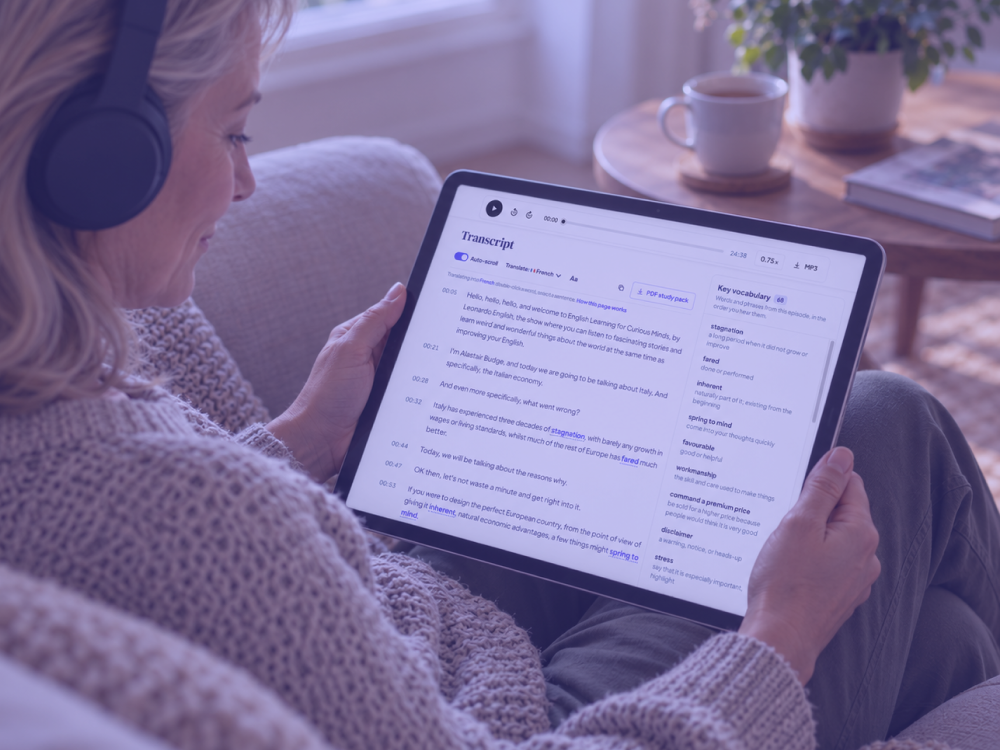
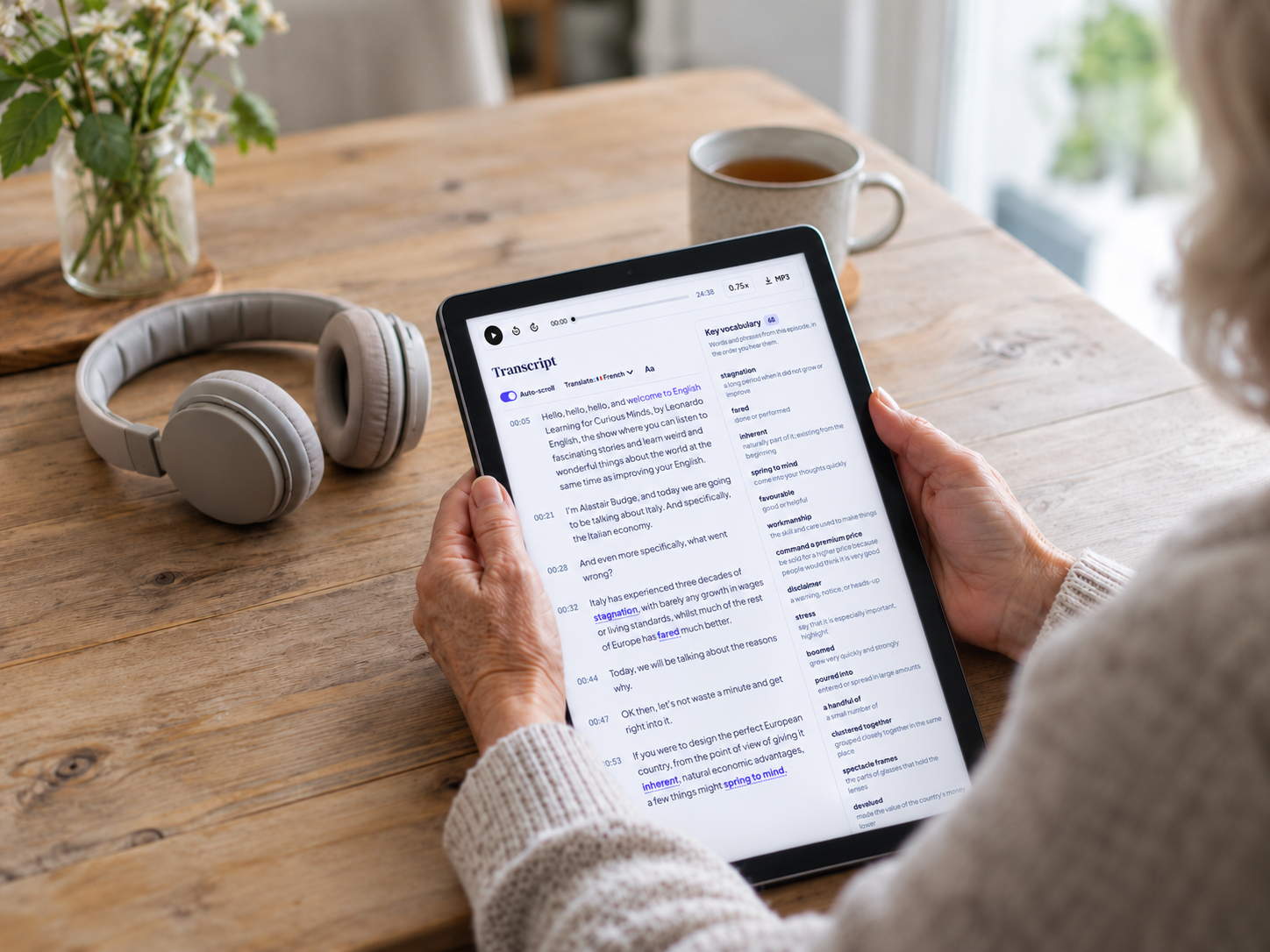
One of the most common pieces of advice from audiologists and rehab specialists is to listen to speech while reading along with the words. The text tells you what you're hearing, and over time your brain starts to match the two up.
Audiobooks work for this. So do podcasts.
The tricky part is finding podcasts that are easy enough to follow.
Most podcasts are conversations. Two or three people talk over each other, change topic quickly and speak fast. For someone getting used to an implant, that can be very hard work.
What Makes English Learning for Curious Minds a Good Fit
I started the podcast to help people learning English, so every episode was made to be clear. That turns out to be exactly what helps here too.
- One voice. Each episode is a single narrator telling a story. There's no switching between speakers.
- A steady, clear pace. I speak slowly and deliberately, without rushing.
- Clean audio. There's music only at the start and the end, and nothing in the background while I'm talking.
- A full transcript for every episode. You can read along as you listen, or read it first and then listen. On our website, the transcript follows the audio, so you never lose your place.
- Adjustable speed. You can slow an episode down when you need to, then build back up.
- Bigger text. You can make the transcript text larger if that's easier to read.
- Interesting topics. Episodes cover history, science, culture and people. It's much easier to keep practising when you actually want to know what happens next.
The American Cochlear Implant Alliance has even recommended one of our episodes as a good podcast to start with for adults with an implant.
Where to Start
If you're new, start with a topic you already know a little about. Familiar subjects are easier to follow, because your brain can fill in some of the gaps.
Here are a few episodes I'd suggest:
- The Lilfe of Leonardo da Vinci (free transcript)
- Man's Best Friend: The Remarkable History of Dogs
- A Beginner’s Guide To British Politics
Listen with the transcript open. Pause when you lose track, find your place in the text, and carry on.
If it feels too fast, slow it down. There's no prize for listening at full speed.
For more on how to practise, see how to practise listening at home after a cochlear implant.
A Note on English Learners
You'll notice the podcast is called English Learning for Curious Minds, and that most of our listeners are learning English.
You don't need to be one of them. The stories are the same, and so is the clear audio.
You can ignore the vocabulary notes, or use them if you like.
Try It
You can listen to a selection of free episodes with transcripts here.
If you find it helps, membership gives you the full archive, with a transcript for every episode.
And if you've had an implant and use the podcast this way, I'd love to hear how you get on. Just email me at alastair@leonardoenglish.com.
This page isn't medical advice. Your audiologist knows your situation best, so please follow their guidance on your rehabilitation.


