Table of contents
Podcasts are one of the best tools for listening practice after a cochlear implant.
But some podcasts are far easier to follow than others, and picking the wrong one can be discouraging.
Here's what to look for.
1. A Transcript
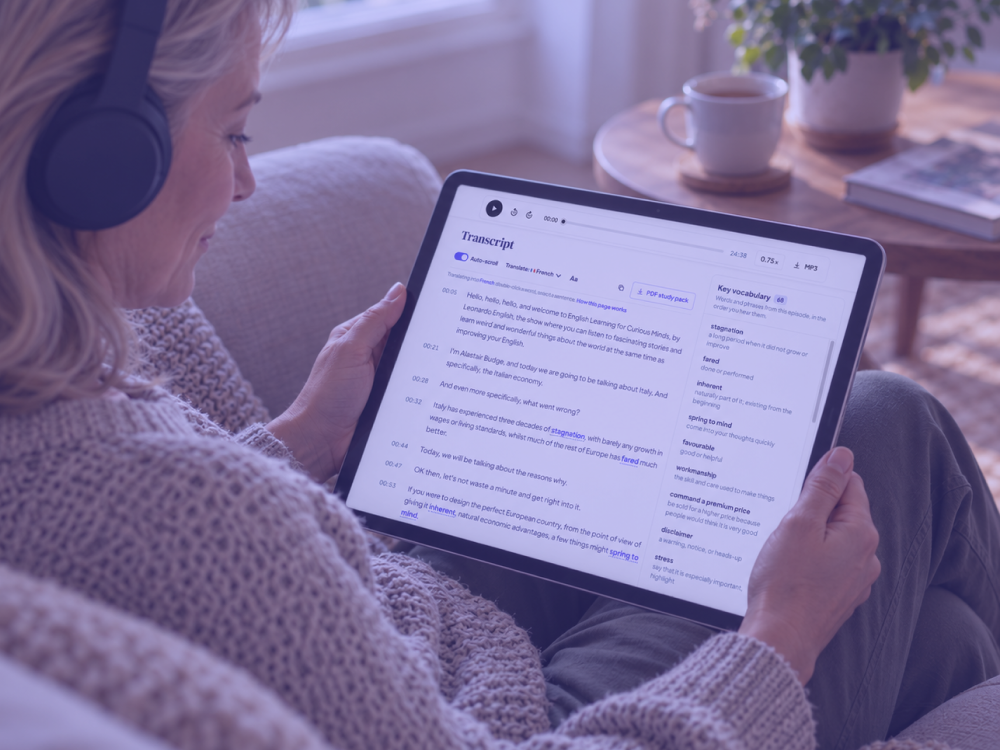
This is the most important thing.
A transcript lets you read along as you listen, which is one of the most common pieces of advice from audiologists.
Check that it's a proper, full transcript, written out word for word. Automatic captions can help, but they often contain mistakes, and a mistake in the text makes it much harder to match what you read with what you hear.
2. One Speaker
Podcasts where two or three people chat are the hardest to follow.
You have to tell different voices apart, keep up when someone interrupts, and follow quick changes of subject.
A single narrator is much easier. You get used to one voice, and you can concentrate on the words.
3. A Clear, Steady Pace
Some podcast hosts speak very quickly. Others mumble, or trail off at the end of sentences.
Look for someone who speaks clearly and doesn't rush. Professional narrators and presenters are usually a safe bet.
You can always slow a podcast down in your player too, so a slightly quick speaker isn't the end of the world.
4. Clean Audio
Background music, sound effects and noisy recordings all make speech harder to pick out.
The best podcasts for practice have music only at the beginning and end, and nothing behind the voice while someone is talking.
5. A Topic You Care About
You're going to be listening a lot. It helps enormously if you actually enjoy it.
It also helps if you know something about the subject already. Familiar topics are easier to understand, because you can guess the words that are coming.
So start with what you love, whether that's history, science, or even Shakespeare.
6. Plenty of Episodes
Daily practice gets through episodes quickly.
A podcast with a large archive means you won't run out, and you can keep using a voice you've already got used to.
A Quick Checklist
Before you commit to a podcast, ask:
- Is there a full, accurate transcript?
- Is it mostly one speaker?
- Is the speech clear and not too fast?
- Is the audio clean, without background music?
- Is it about something I'm interested in?
- Are there enough episodes to keep me going?
Where We Fit In
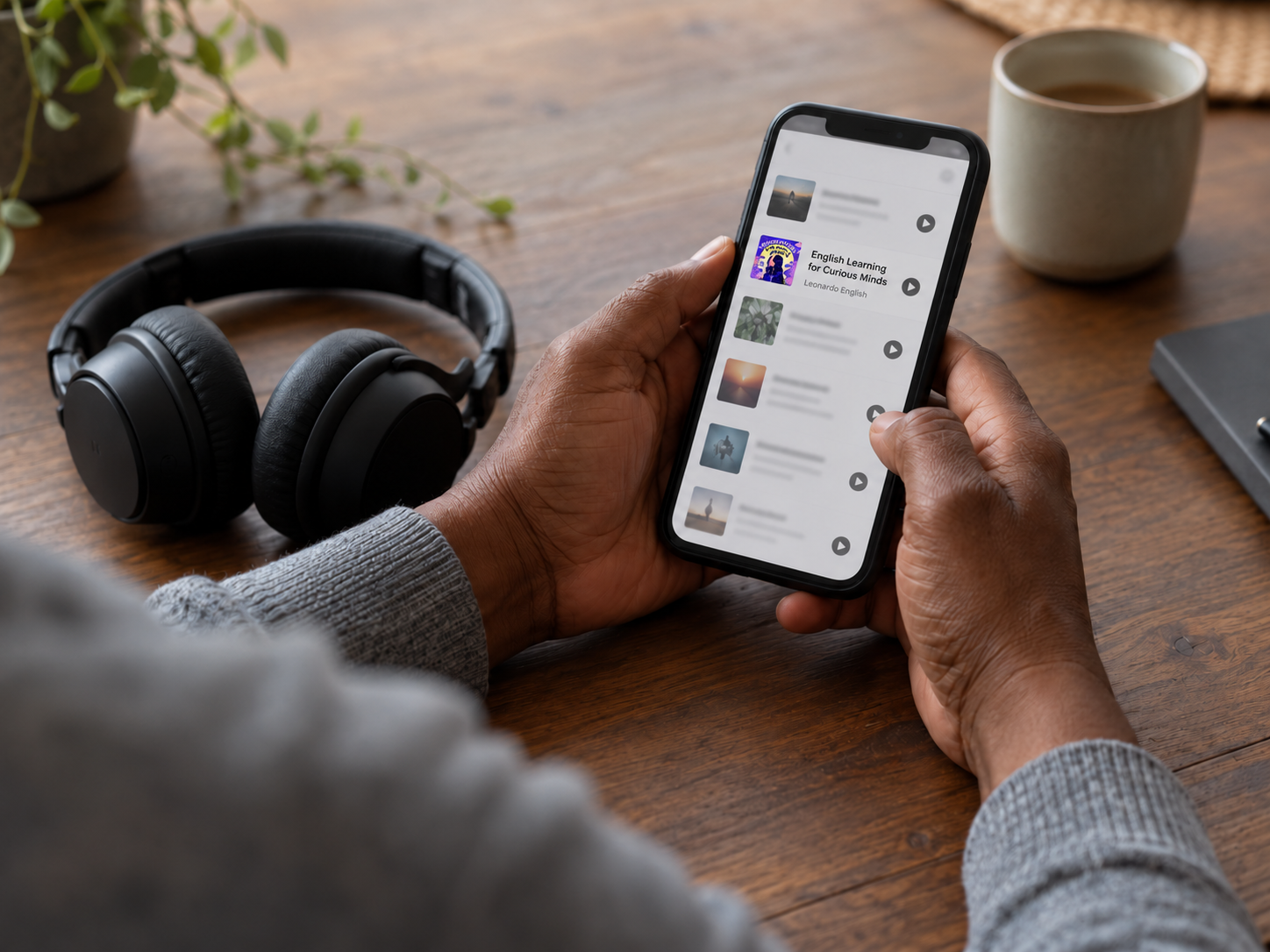
English Learning for Curious Minds is one such option. It was made for people learning English, but it ticks every box on this list. Each episode is one narrator, telling one story, at a clear pace, with a full transcript.
We've heard from a lot of people with cochlear implants who use it for exactly this, so I've put together a page with some suggested episodes.
For more on how to actually practise, see how to practise listening at home after a cochlear implant.
This article isn't medical advice. Please follow your audiologist's guidance on your rehabilitation.