Table of contents
If you've recently had a cochlear implant, you'll probably have been told to practise listening every day.
That's easy to say. It's harder to know what to actually do.
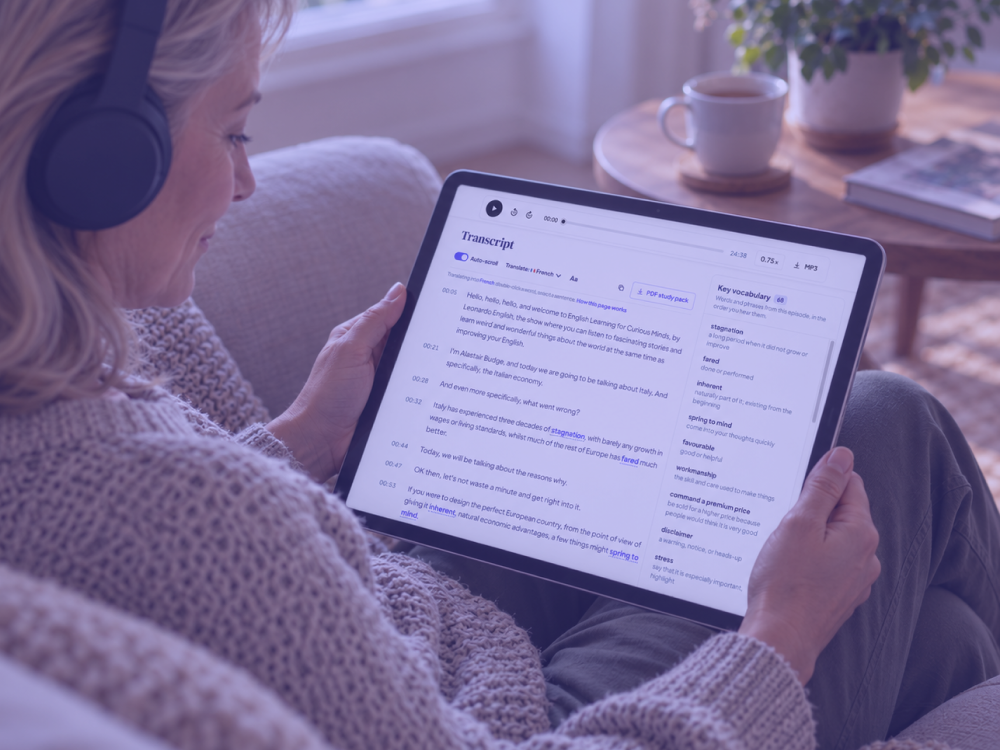
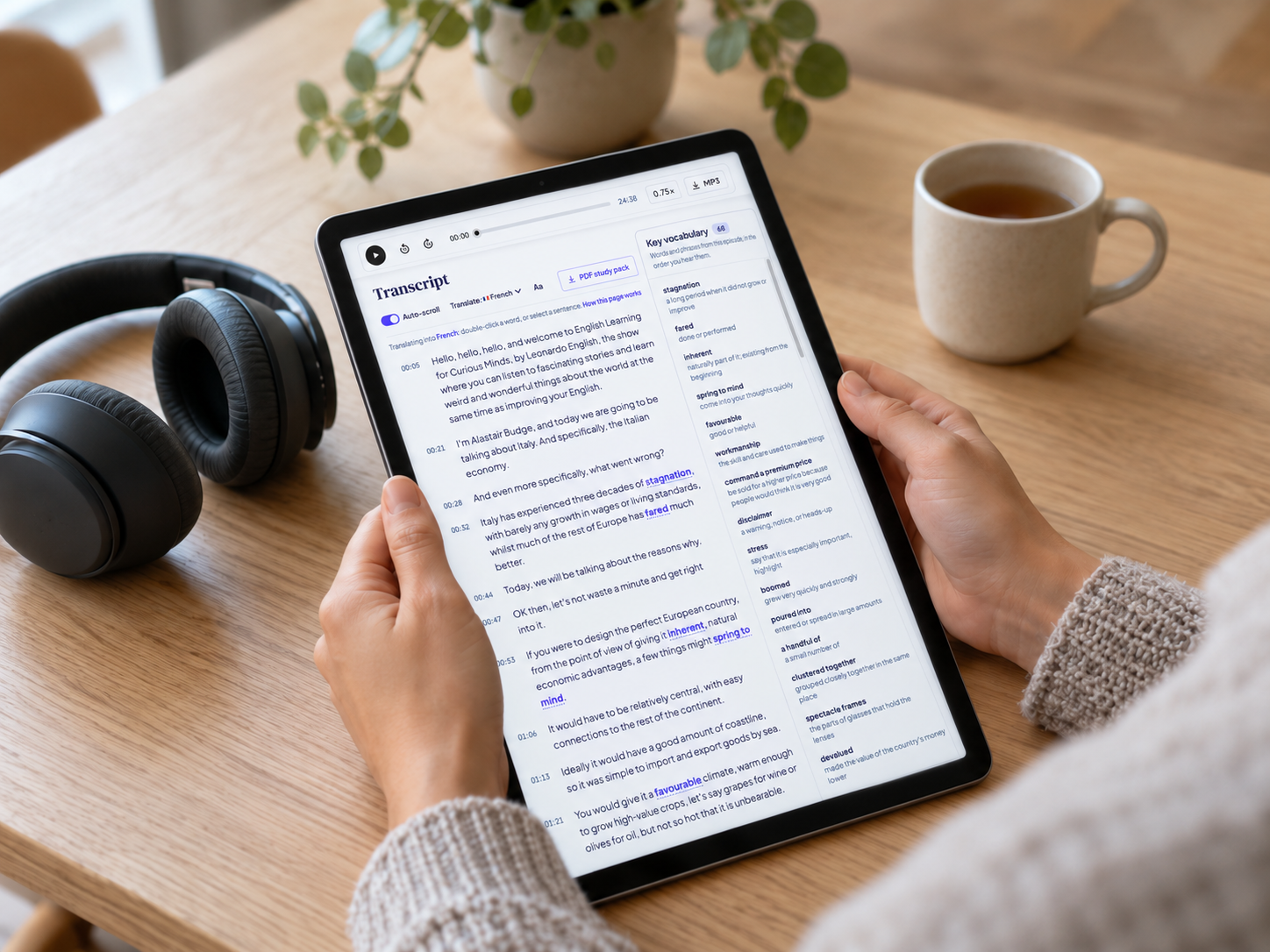
This guide covers one simple method that many audiologists recommend: listening to podcasts while reading the transcript.
It's a method I know well, because it's how many of our listeners use our podcast to learn English. The idea is the same. You're teaching your brain to connect the sounds you hear with words you already know.
Why Reading Along Helps
When you read the words at the same time as you hear them, you take away the guesswork.
Your brain doesn't have to work out what was said. It already knows. So it can focus on learning what those words sound like through your implant.
Repeat that often enough and the sounds start to become familiar.
Then, little by little, you can rely on the text less and on your ears more.
Set Yourself Up Properly
A few things make a big difference:
- Find a quiet room. Background noise makes everything harder.
- Stream the audio directly to your processor, if you can. Many implants can connect to a phone or tablet. Your audiologist can show you how.
- Keep sessions short. Fifteen to thirty minutes a day is better than two hours once a week.
- Choose something you're interested in. You'll stick at it far longer.
A Simple Routine That Works
This is a routine you can follow with almost any podcast that has a transcript. You can move through the stages at your own pace.
- Read first, then listen. Read a short section of the transcript, then listen to that same section. You know what's coming, so it's easier to follow.
- Listen and read together. Play the episode with the transcript in front of you and follow along word by word.
- Listen first, then check. Listen to a short section without looking, then read it to see how much you caught.
- Listen without the text. Once a section feels comfortable, try it with the transcript closed. Go back to the text whenever you need to.
Don't rush through these stages. Spending weeks on the first two is completely normal.
Use the Speed Control
Most podcast players, and our own episode pages, let you slow the audio down.
Start slower than feels necessary. When it gets comfortable, nudge it up a little.
This is one of the most useful tools you have, so use it without any guilt.
Start With Familiar Topics
It's much easier to understand speech when you already know a bit about the subject.
If you love history, start with history. If you know a lot about science, start there. We've even got episodes for the Shakespeare fans out there.
Your existing knowledge fills in the gaps that your ears can't yet manage.
Choose the Right Kind of Podcast
This is where a lot of people go wrong.
Most popular podcasts are conversations between two or more people. They interrupt each other, change topic and speak quickly. That makes them very hard to follow at first.
You'll get on much better with podcasts that have one clear narrator, clean audio and a proper transcript. I've written a separate guide on how to choose podcasts for listening practice.
Keep Going
Some days will feel like real progress. Other days it will feel as if nothing has changed.
That's normal. Keep your sessions short, keep them regular, and keep notes on what you can follow now that you couldn't a month ago.
If you'd like somewhere to start, I've put together a page for cochlear implant users, with a few episodes I'd suggest.
This article isn't medical advice. Please follow your audiologist's guidance on your rehabilitation.
Further Reading
- Listening to Podcasts, American Cochlear Implant Alliance
- Self-training listening skills at home with a cochlear implant, MED-EL
- Tips for learning to hear with your cochlear implant, Cochlear